
Loading, please wait...
LOT 0555
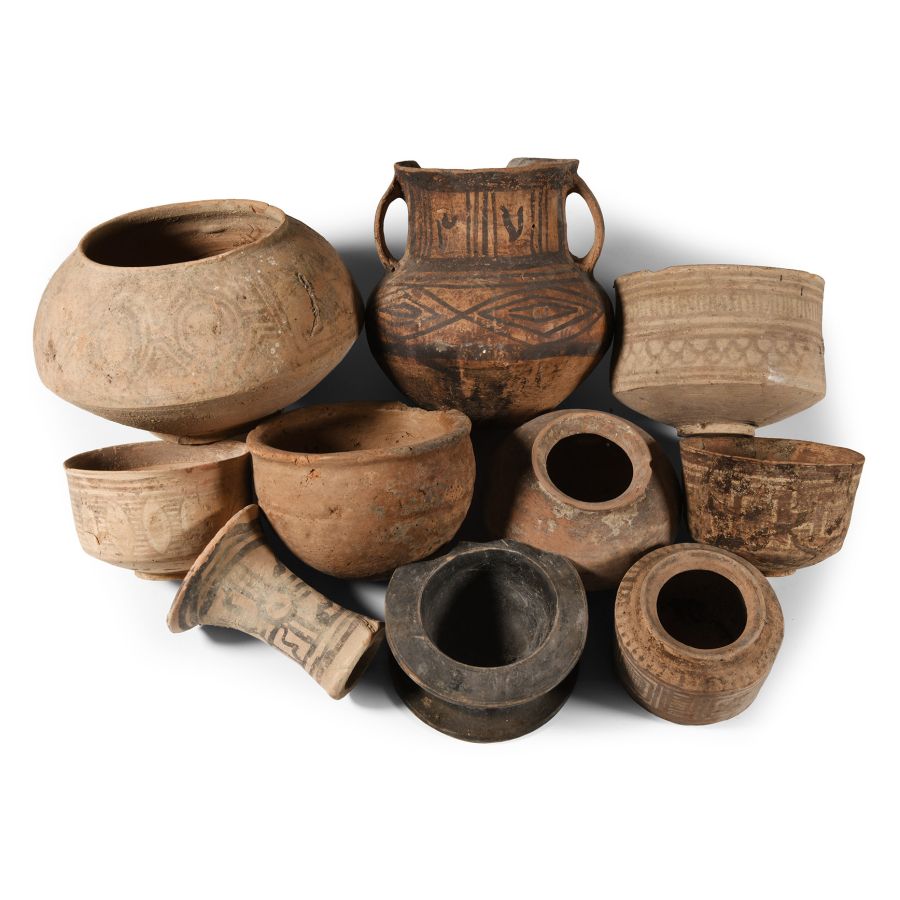
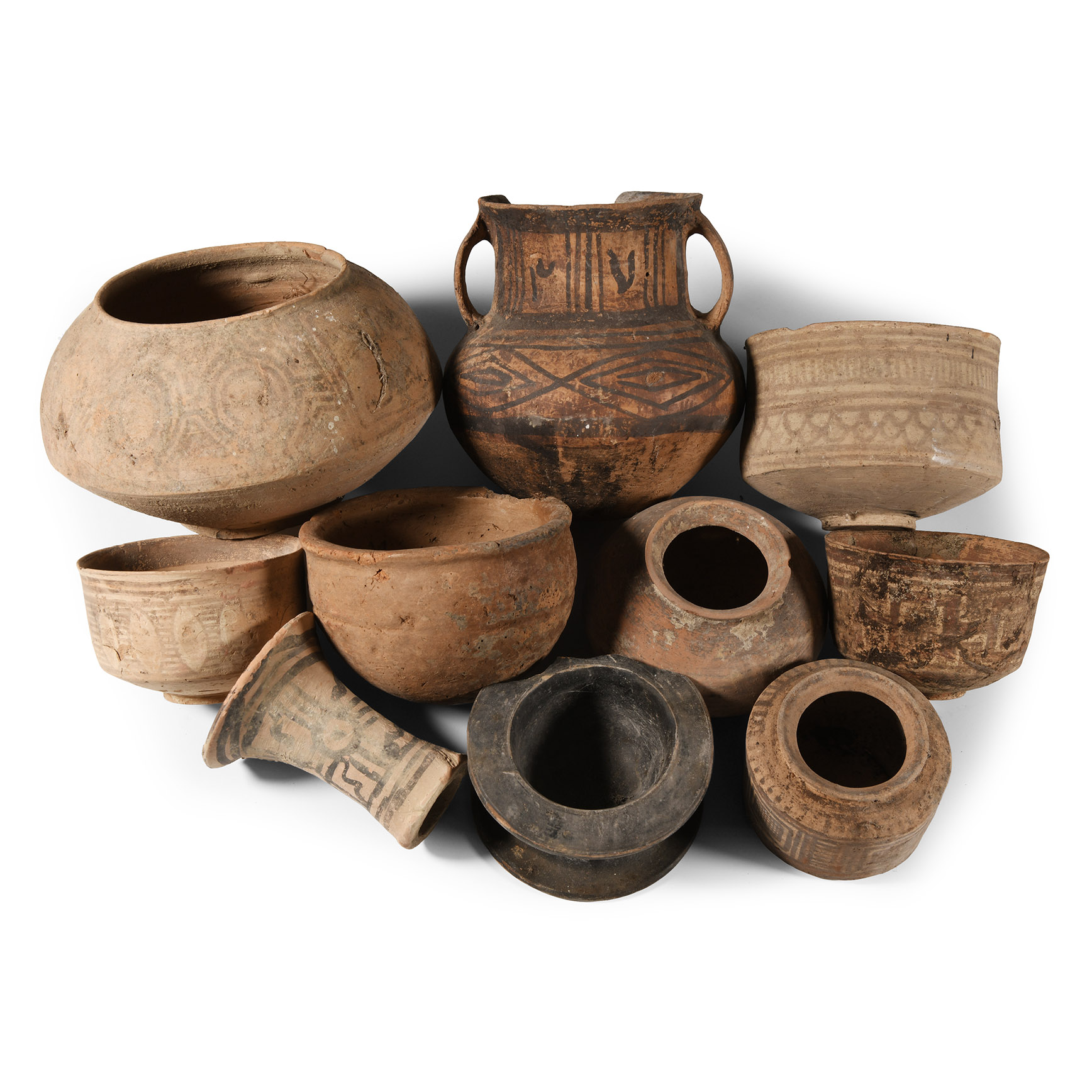
Greek and Indus Valley Terracotta Vessel Collection
3RD-1ST MILLENNIUM B.C.
3 - 7 1/8 in. (2.1 kg total, 7.8-18 cm).
Mixed group of vessels including biconvex bowl, drum-shaped jar and other types, some with painted ornament. [10, No Reserve]
ProvenanceFrom a collection acquired on the UK art market from various auction houses and collections mostly before 2000.
From an important Cambridgeshire estate; thence by descent.
TimeLine Auctions follows a vetting process to ensure the authenticity and legality of all items, reinforcing our commitment to integrity and responsible trading. Each antiquity, antique, and coin lot undergoes thorough examination by a vetting committee of at least ten external specialists, professional trade association members, scientists, and archaeologists: Our Vetting Process
AUCTIONS:
TimeLine is a leading auction house specialising in antiquities, ancient art, collectables, natural history, coins, medals, and books. Our auctions offer museums, collectors, historians, and enthusiasts the opportunity to acquire unique and historically significant pieces.
-
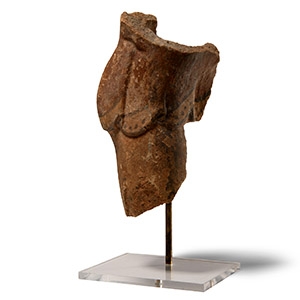
Etruscan Terracotta Warrior Statue Leg Fragment
Circa 6th century B.C.Estimate: £300 - 400 (+bp*)
Opening Bid: £150
Fragment of a hollow-formed statue of a warrior, the thigh and hip area with painted armour detailing; mounted on a custom-made stand. 535 grams total, 16 cm high (20.5 cm high including stand)
Ex private collection L.G., The Netherlands. Acquired from Treasuregate Art of the Ancients, Brussels, Belgium, in 2015. Property of a South Australian private collector, with collection reference 15.10. Accompanied by a copy of a Treasuregate Art of the Ancients certificate of authenticity with ref no.2015-11-22-03. Accompanied by detailed collector's catalogue pages including description and photographs.
The armour on the figure is the short-sleeved chitoniskos which was worn under the cuirass and protected the flexing areas around the groin and buttocks. The figure probably formed part of a frieze on a temple. -
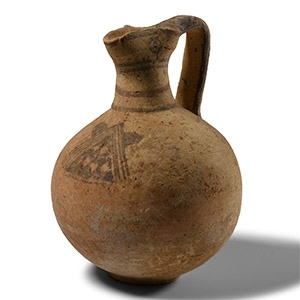
Cypriot 'Eyed' Trefoil-Mouthed Pottery Jug with Geometric Motif
Iron Age, circa 1200-600 B.C.Sold for (Inc. bp): £520
White ware globular jug with pinched trefoil mouth and strap handle to the rear; painted 'eye' detailing to mouth, serpent pattern to handle, hatched triangle motif to the body. 300 grams, 16 cm high
Ex Peter Cran collection, Scotland, who worked as an engineer for the Cypriot public works department 1931-1946; thence by descent. Acquired from Bonhams, London, 23 May 2012, no.6 (part). From an important Cambridgeshire estate; thence by descent. Accompanied by copies of the relevant Bonhams catalogue pages and original lot tag. -
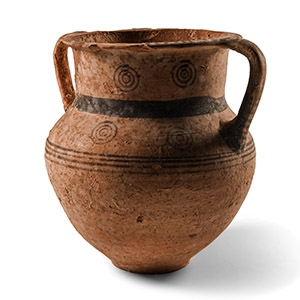
Cypriot Buff Pottery Neck Amphora
Late Bronze Age, circa 850-600 B.C.Sold for (Inc. bp): £195
Squat unglazed vessel with conical body, narrow shoulder, broad tubular neck and everted rim, two strap handles; painted with radiating segments to rim, ring-and-dot motifs to neck and shoulder, horizontal bands. 341 grams, 14 cm wide
Private American collection. Acquired from Bonhams, London, 29 April 2009, no.341 (part). From an important Cambridgeshire estate; thence by descent. Accompanied by copies of the relevant Bonhams catalogue pages and original lot tag.
