
Loading, please wait...
LOT 0655
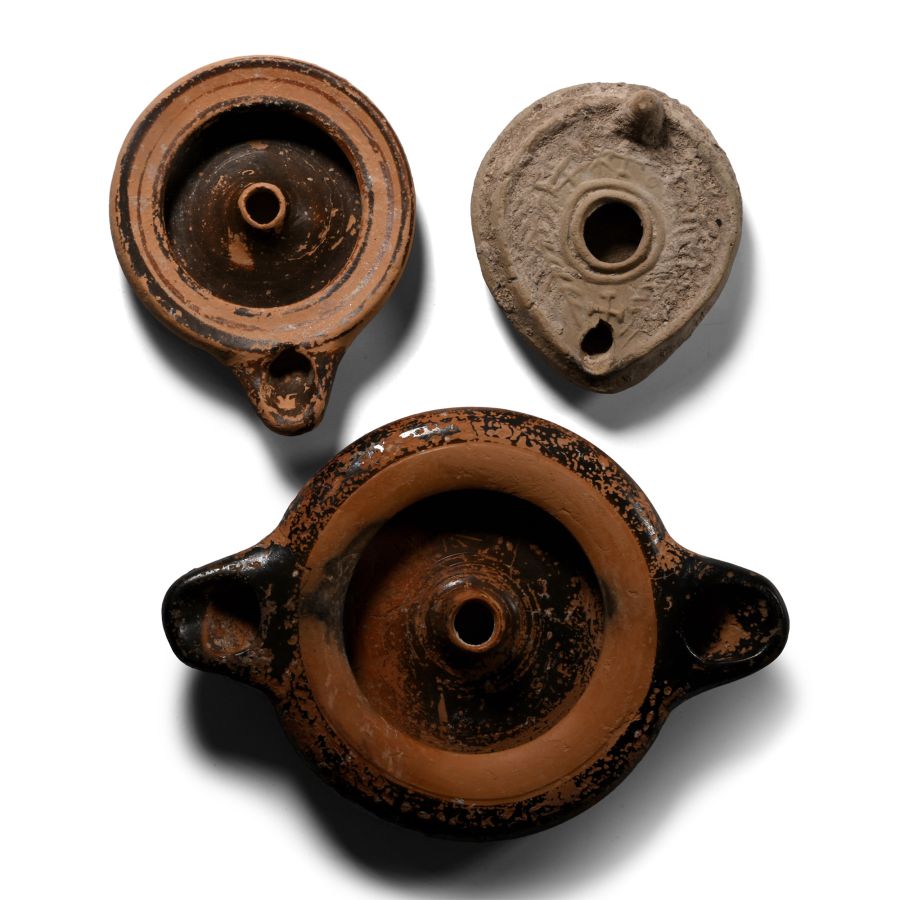
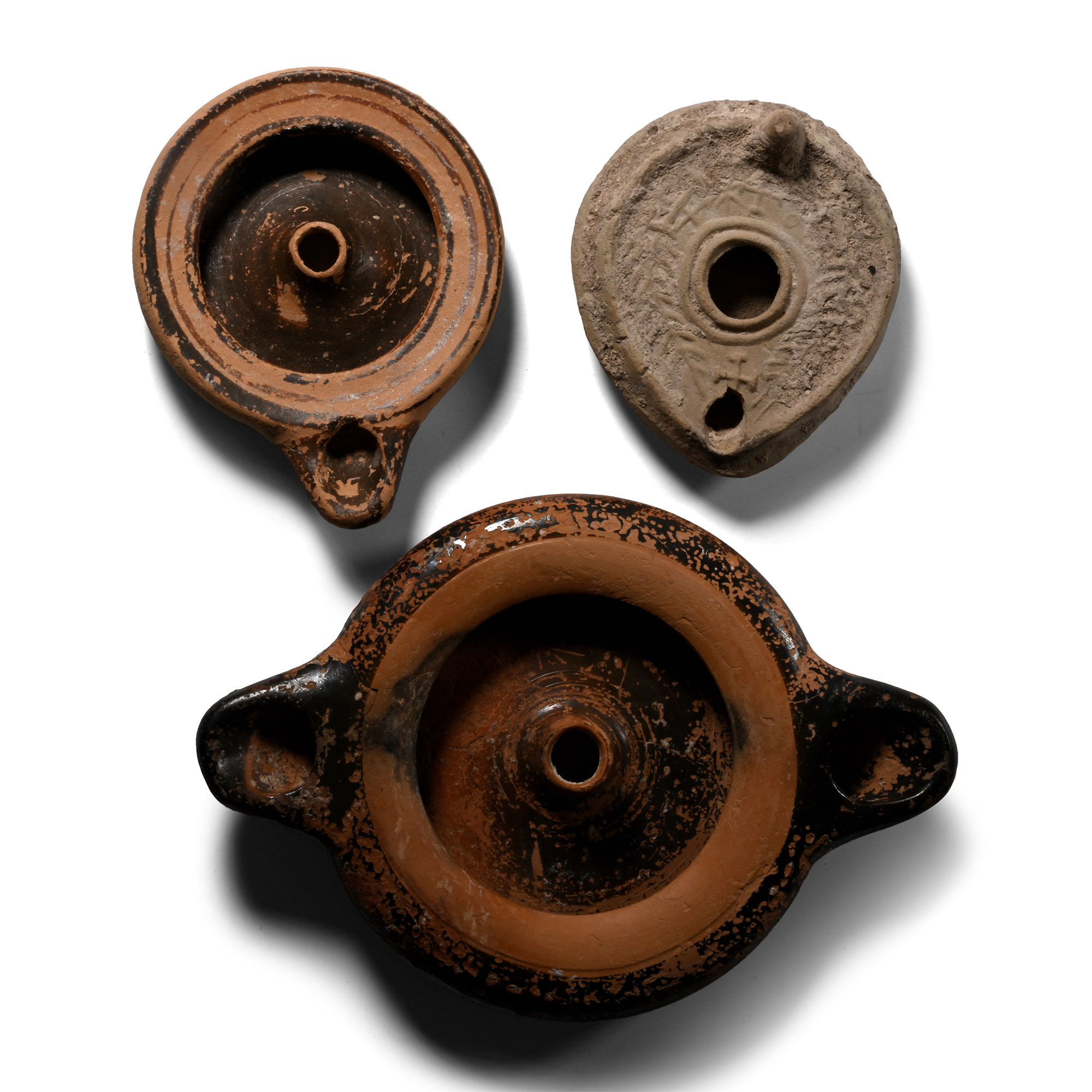
Greek and Byzantine Ceramic Oil Lamp Collection
5TH CENTURY B.C.-6TH CENTURY A.D.
3 5/8 - 7 in. (473 grams total, 9.2-17.8 cm).
Comprising: a squat oil lamp with wreath surrounding the large filler hole, radiating sun motif on the base; the two larger terracotta lamps with open reservoirs with a central cone open beneath, short nozzle. [3]
ProvenanceEx R.C. collection.
Acquired by Galerie Rhéa, Zurich, from the above in 2010.
TimeLine Auctions follows a vetting process to ensure the authenticity and legality of all items, reinforcing our commitment to integrity and responsible trading. Each antiquity, antique, and coin lot undergoes thorough examination by a vetting committee of at least ten external specialists, professional trade association members, scientists, and archaeologists: Our Vetting Process
AUCTIONS:
TimeLine is a leading auction house specialising in antiquities, ancient art, collectables, natural history, coins, medals, and books. Our auctions offer museums, collectors, historians, and enthusiasts the opportunity to acquire unique and historically significant pieces.
LOT 0655
Greek and Byzantine Ceramic Oil Lamp Collection
Estimate £250 - 350€290 - 410 (for guidance only)$340 - 470 (for guidance only)
-
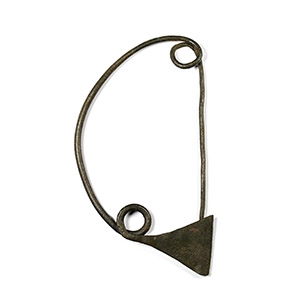
Large Greek Bronze Fibula
Iron Age, 8th-4th century B.C.Sold for (Inc. bp): £111
Single-piece fibula comprising a curved bow with integral coiled spring to one end developing to a sturdy pin; to the other end, a flared catchplate on a single-coil spring. 15.7 grams, 10 cm
Ex important German collection of brooches, 1980s. This lot is accompanied by an illustrated lot declaration signed by the Head of the Antiquities Department, Dr Raffaele D'Amato. -
.jpg)
Greek Terracotta Fragment Group
4th century B.C. and laterSold for (Inc. bp): £52
Including a trumpet-shaped pot lid, D-section model animal and other items. 120 grams total, 39-73 mm
Acquired 1979-1999. London collection of the late Mr S.M., thence by descent. -
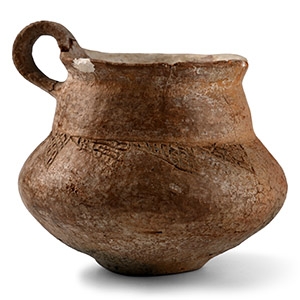
Greek Terracotta Juglet
5th century B.C.Sold for (Inc. bp): £91
Biconvex in profile with tapering shoulder, flared rim, loop handle; hatched triangles to the shoulder. 66 grams, 69 mm
From an old European collection formed mainly in the 1980s. From the property of a late Lincolnshire, UK, gentleman.
