
LOT 3723
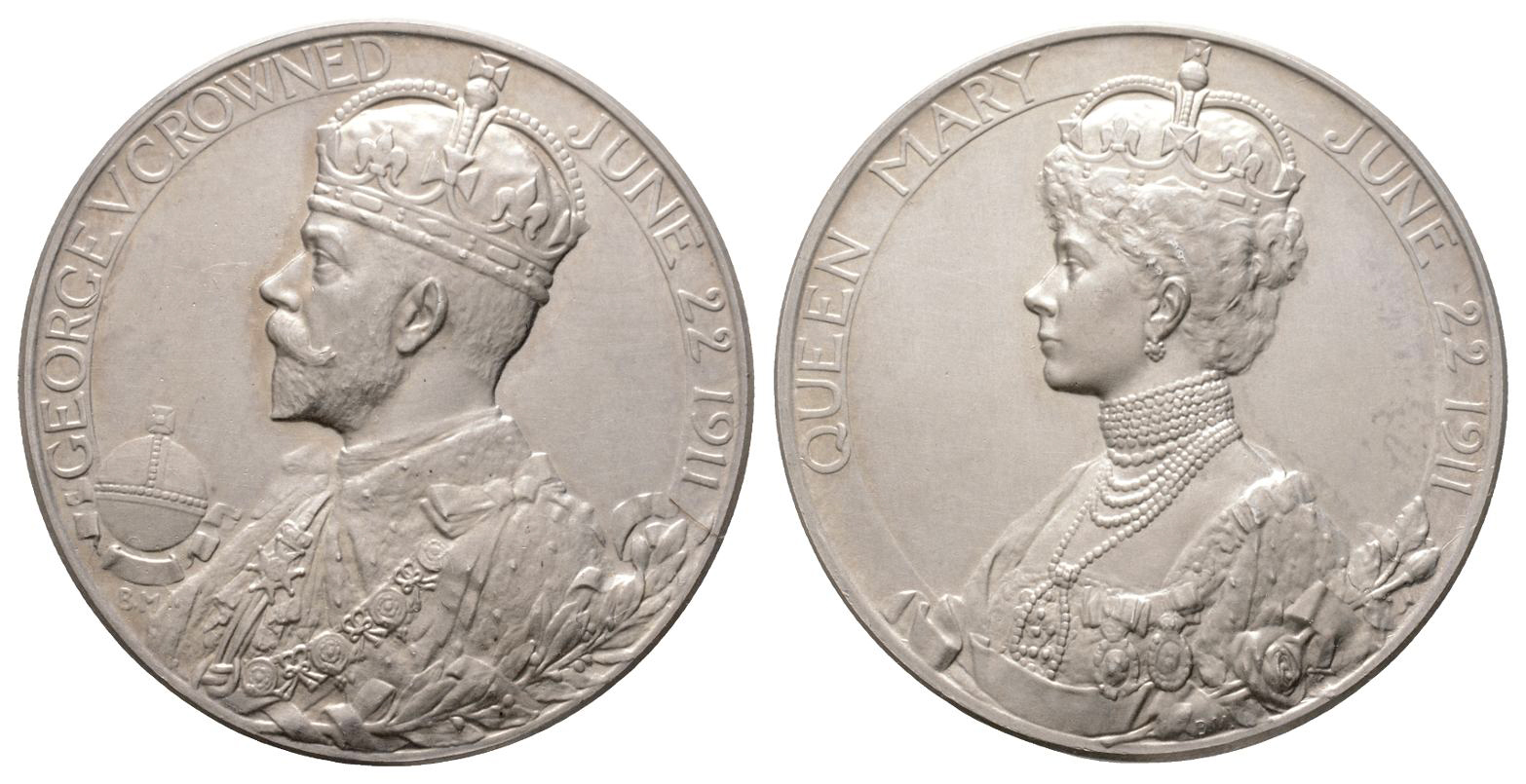
Great Britain. Hanover, George V AR Coronation Medal. 1911.
Design by B. Mackennal. GEORGE V CROWNED JUNE 22 1911, crowned bust to left, holding orb / QUEEN MARY JUNE 22 1911, crowned bust to left. BHM 4022; E 1922. Mint State. Matt Proof with a few marks.(12.00gr, 30mm, 12h). [No Reserve]
ProvenanceAcquired on the UK art market;
Property of an Essex, UK, collector;
Accompanied by its original Royal Mint envelope.
TimeLine Auctions follows a vetting process to ensure the authenticity and legality of all items, reinforcing our commitment to integrity and responsible trading. Each antiquity, antique, and coin lot undergoes thorough examination by a vetting committee of at least ten external specialists, professional trade association members, scientists, and archaeologists: Our Vetting Process
AUCTIONS:
TimeLine is a leading auction house specialising in antiquities, ancient art, collectables, natural history, coins, medals, and books. Our auctions offer museums, collectors, historians, and enthusiasts the opportunity to acquire unique and historically significant pieces.
-
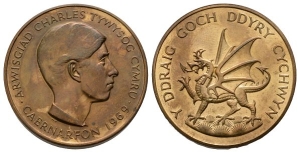
Great Britain. Charles, Prince of Wales AE Investiture Medal. Dated 1969.
Sold for (Inc. bp): £13
Design by M. Rizzello. ARWISGIAD CHARLES TYWYSOG CYMRU . CAERNARFON 1969 ., bareheaded bust to right / Y DDRAIG GOCH DDYRY CYCHWYN, Welsh dragon prancing to left. Eimer 2116b. 27.14gr, 31mm, 12h
Uncirculated.
Acquired on the UK art market; Property of an Essex, UK, collector. -
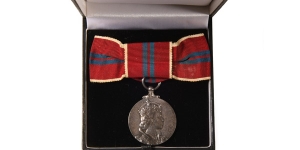
Great Britain. Elizabeth II, Ladies AR Coronation Medal. 1953.
Sold for (Inc. bp): £72
Facing profile of Queen Elizabeth II wearing a Tudor crown / crowned royal monogram of EIIR with the monarchs name and date of coronation around the edge, the ribbon is dark red with two narrow blue stripes in the centre and narrow white edges, with original ladies bow ribbon. 127gr total, case 93mm
Brilliant Uncirculated, toned.
Acquired on the UK art market; Property of an Essex, UK, collector.
The 1953 Coronation Medal was made to celebrate the coronation of Queen Elizabeth II on the 2nd June 1953. For Coronation and Jubilee medals, the practice up until 1977 was that United Kingdom authorities decided on a total number to be produced, then allocated a proportion to each of the Commonwealth countries and Crown dependencies and possessions. More than 153,000 medals were issued and the award of these medals was then at the discretion of the local government authority, who were free to decide who got a medal and why. -
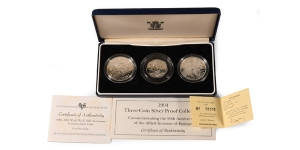
World War II. 50th Anniversary Cased Proof Silver Commemorative Coin Collection. 1994.
Sold for (Inc. bp): £91
Silver Proof Three-Coin Collection, FDC Commemorating the 50th Anniversary of the Allied Invasion of Europe, to mark the Anniversary of the D-Day Landings, two countries have joined forces with the United Kingdom to form a superb three-coin silver collection containing from France a one franc piece, from the United States of America a one dollar coin and from the United Kingdom a fifty pence coin. 258gr total, case 16.5cm
Proof.
Acquired on the UK art market; Property of a Essex, UK, collector. Accompanied by two certificates of authenticity issued by the Royal mint and one from Monnaie de Paris.
'Operation Overlord’, the Allied invasion of Europe, was undoubtedly the greatest amphibious operation ever undertaken in the history of warfare. To Winston Churchill writing to President Roosevelt, it was 'by far the greatest thing we have ever attempted'. Its outstanding success was to spell the beginning of the end of Nazi oppression in Europe. Almost from the fall of France in 1940, plans began for her liberation and by the spring of 1944 more than three million troops had assembled in southern England in readiness for the landings on Utah, Omaha, Gold, Juno and Sword, the five Normandy beaches which covered a fifty mile front between Le Havre and Cherbourg. The exact date and location of the planned invasion was one of the best kept secrets of the war and Operation Overlord was able to begin after midnight on 6 June 1944, in the first hours of that 'longest day' that would forever be known as D-Day. The successful assault on the five beaches, the fierce battles that followed and the Allied breakout into France led to the victorious liberation of Paris on 25 August. By September most of France was free and within a year western Europe too, was free.
