
Loading, please wait...
_900x900.jpg "Grand Tour Green Glazed Egyptian Shabti")
_200x200.jpg "Grand Tour Green Glazed Egyptian Shabti")
.jpg "Grand Tour Green Glazed Egyptian Shabti")
LOT 2087
Grand Tour Green Glazed Egyptian Shabti
19TH-EARLY 20TH CENTURY A.D.
6 in. (153 grams, 15.5 cm).
With black detailing to the tripartite wig, bands of hieroglyphic text to the lower body.
ProvenanceProperty of a Devon, UK collector, acquired at auction; previously in a private UK collection.
FootnotesShabtis have been a popular tourist souvenir for centuries. Perhaps the earliest example is a reproduction shabti of the Renaissance period that was once part of the collection of Archbishop William Laud (1573-1645). While most reproduction shabtis originate from Egypt, some figurines were made in Europe. For instance, in the late 19th century, the Sèvres factory in France produced soft-paste porcelain shabtis with a beautiful bright turquoise glaze.
CONDITIONTimeLine Auctions follows a vetting process to ensure the authenticity and legality of all items, reinforcing our commitment to integrity and responsible trading. Each antiquity, antique, and coin lot undergoes thorough examination by a vetting committee of at least ten external specialists, professional trade association members, scientists, and archaeologists: Our Vetting Process
AUCTIONS:
TimeLine is a leading auction house specialising in antiquities, ancient art, collectables, natural history, coins, medals, and books. Our auctions offer museums, collectors, historians, and enthusiasts the opportunity to acquire unique and historically significant pieces.
-
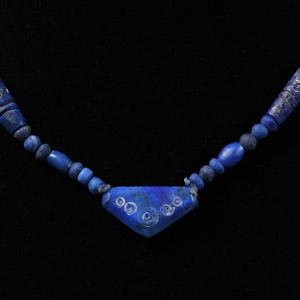
Bactrian Style Lapis Lazuli Bead Necklace String
20th century A.D.Sold for (Inc. bp): £26
Graduated group of beads, mainly tubular, fusiform and annular types with triangular 'elbow' bead centrepiece. 39 grams, 46 cm
London, UK, art market, 1980-2000s -
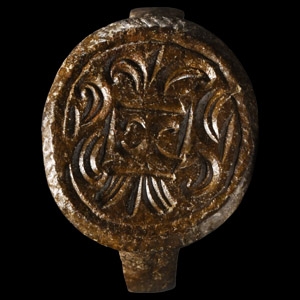
Tudor Period Bronze Armorial Ring
16th-17th century A.D.Sold for (Inc. bp): £65
With discoid bezel, ropework border, central square with crescent motifs, surrounding fronds in imitation of heraldic design. 4.63 grams, 23.47 mm overall, 20.05 mm internal diameter (approximate size British U 1/2, USA 10 1/4, Europe 23.15, Japan 22)
Private collection formed since the 1940s. UK art market. Property of an Essex, UK, gentleman. -
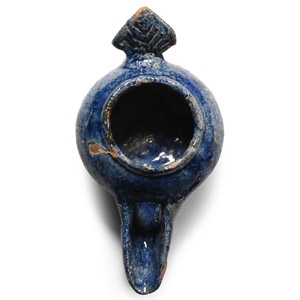
Seljuk Style Blue-Glazed Oil Lamp
20th century A.D.Sold for (Inc. bp): £65
Squat in profile with loop handle and leaf-shaped reflector, rolled rim to the discus, long scoop nozzle. 201 grams, 15.2 cm
From an old British collection formed 1970s-1980s. From a Leicestershire, UK, collection.
