
Loading, please wait...
LOT 0089
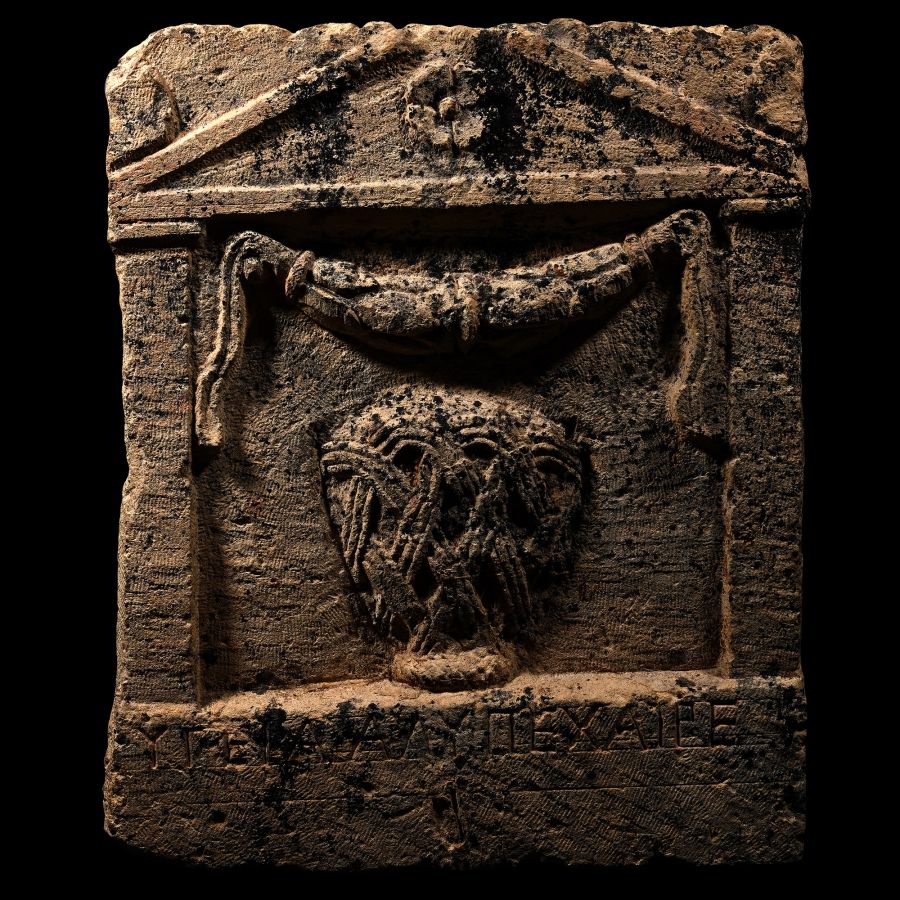
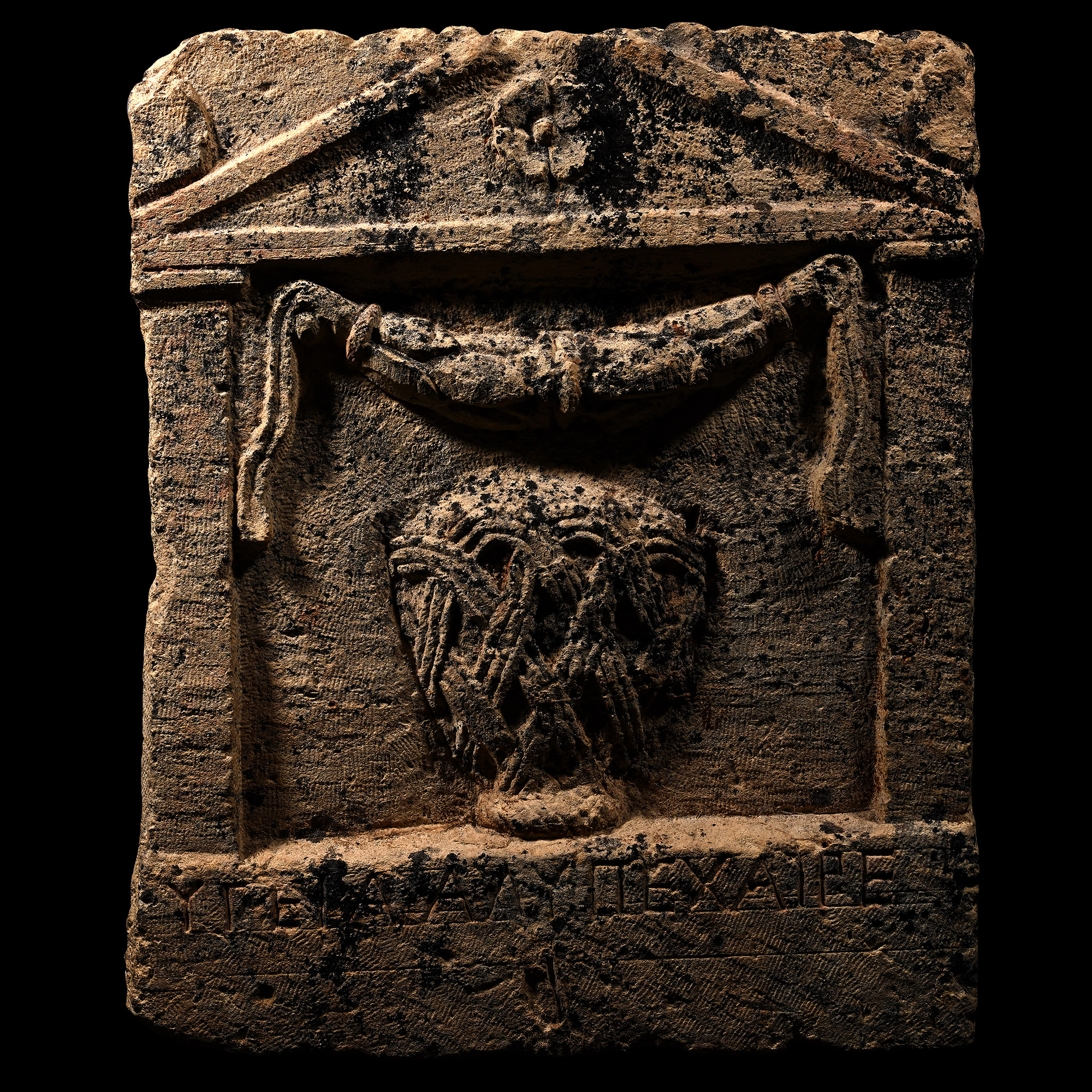
Graeco-Roman Naiskos-Type Limestone Stele with 'Long Life, Free from Sorrow, Farewell' Inscription
ASIA MINOR, 1ST CENTURY B.C.-1ST CENTURY A.D.
27 3/4 in. (88 kg, 70.5 cm).
With rosette in the gable, a basket filled with wool and a garland above it; inscription in Greek reading: 'ΥΓΕΙΑ ΑΛΥΠΕ ΧΑΙΡΕ (HEGHIA ALYPE CHAERE' (Long life [or health], free from sorrow, farewell!).
ProvenanceEx Schloss Solitude, Stuttgart, Germany, during the 19th century.
with Galerie Rhéa, Zurich, Switzerland.
This lot has been checked against the Interpol Database of stolen works of art and is accompanied by a search certificate number no.12657-236384.
This lot has been cleared against the Art Loss Register database, and is accompanied by an illustrated lot declaration signed by the Head of the Antiquities Department, Dr Raffaele D'Amato.
See Wagner, J., Seleukia am Euphrat/Zeugma, Wiesbaden, 1976.
FootnotesThis type of stele is comparatively rare, and highly gendered: it is intended to represent a woman when decorated with a basket of wool, and for a man when decorated with an eagle. They are typical of the Zeugma area of the Euphrates river in ancient Seleukia.
CONDITIONTimeLine Auctions follows a vetting process to ensure the authenticity and legality of all items, reinforcing our commitment to integrity and responsible trading. Each antiquity, antique, and coin lot undergoes thorough examination by a vetting committee of at least ten external specialists, professional trade association members, scientists, and archaeologists: Our Vetting Process
AUCTIONS:
TimeLine is a leading auction house specialising in antiquities, ancient art, collectables, natural history, coins, medals, and books. Our auctions offer museums, collectors, historians, and enthusiasts the opportunity to acquire unique and historically significant pieces.
LOT 0089
Graeco-Roman Naiskos-Type Limestone Stele with 'Long Life, Free from Sorrow, Farewell' Inscription
Sold for (Inc. bp): £11,700
-
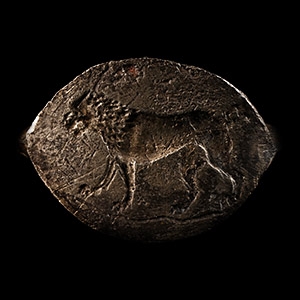
Large Greek Silver Ring with Advancing Lion
5th century B.C.Sold for (Inc. bp): £4,680
With round-section hoop and scaphoid plaque, incuse advancing lion in profile on a baseline. 16.12 grams, 30.64 mm overall, 19.55 x 22.66 mm internal diameter (approximate size British V 1/2, USA 10 3/4, Europe 24.4, Japan 23)
with Artemis Gallery, Munich, 1990s. Acquired from Artemis Gallery, 8 February 2006. European private collection. This lot has been checked against the Interpol Database of stolen works of art and is accompanied by a search certificate number no.12659-234646. This lot has been cleared against the Art Loss Register database, and is accompanied by an illustrated lot declaration signed by the Head of the Antiquities Department, Dr Raffaele D'Amato. -
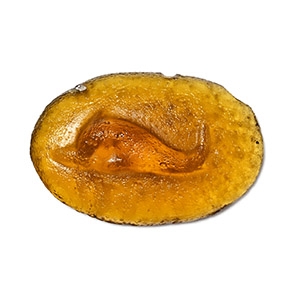
Greek Glass Cameo with Dolphin
Late 1st millennium B.C.Sold for (Inc. bp): £455
Ellipsoid in plan and plano-convex in section with low-relief dolphin modelled in the half-round. 2.75 grams, 26 mm
Acquired on the German art market, 1989-1995. with The Museum Gallery, 19 Bury Place, London, WC1, UK, 1998-2003. Property of a London based academic, 2003 to present. This lot is accompanied by an illustrated lot declaration signed by the Head of the Antiquities Department, Dr Raffaele D'Amato. -
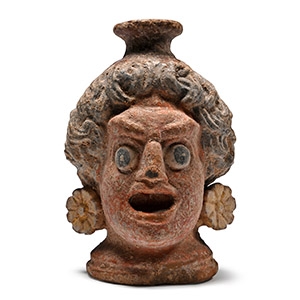
Greek Terracotta Head of an Actor
Circa 4th century B.C.Estimate: £4,000 - 6,000 (‡+bp*)
Opening Bid: £2,000
An expressive polychrome vase formed as the head of an actor wearing rosette earrings, open mouth and applied pupils, short neck with everted rim above and a small strap handle to the rear. 69.3 grams, 75 mm
Ex Louis-Gabriel Bellon, France, (1819-1899). with Galerie Rhéa, Zurich, Switzerland. This lot has been checked against the Interpol Database of stolen works of art and is accompanied by a search certificate number no.12667-236389. This lot has been cleared against the Art Loss Register database, and is accompanied by an illustrated lot declaration signed by the Head of the Antiquities Department, Dr Raffaele D'Amato.
