
Loading, please wait...

LOT 0044
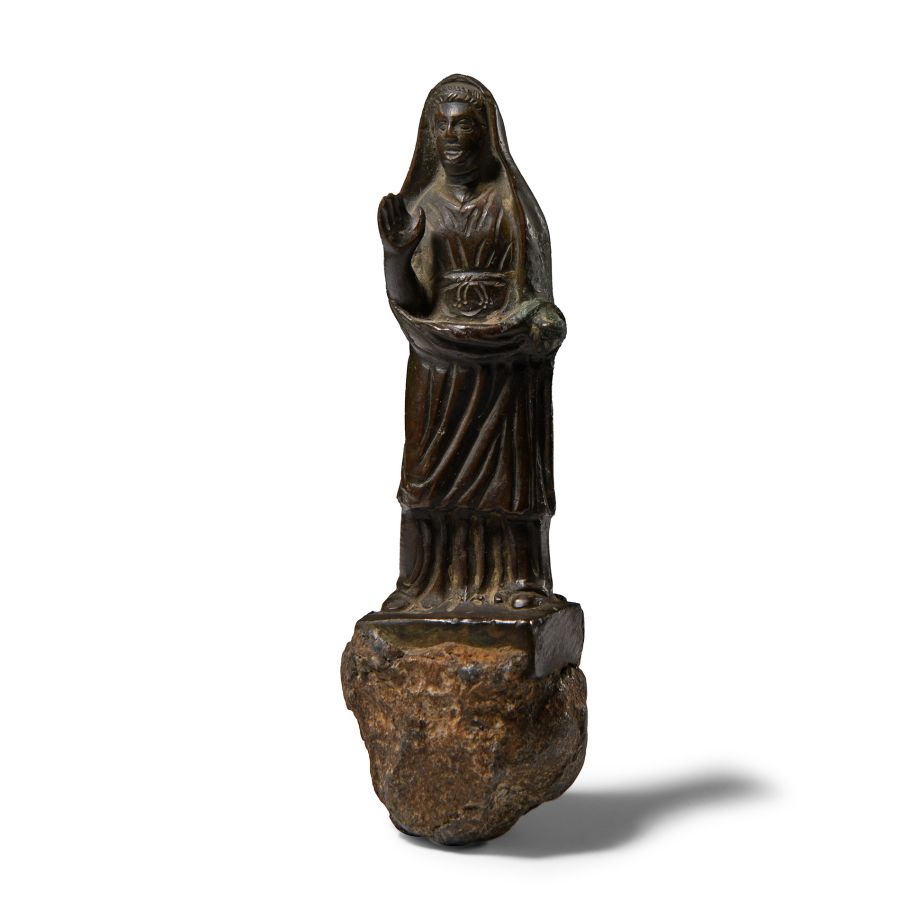
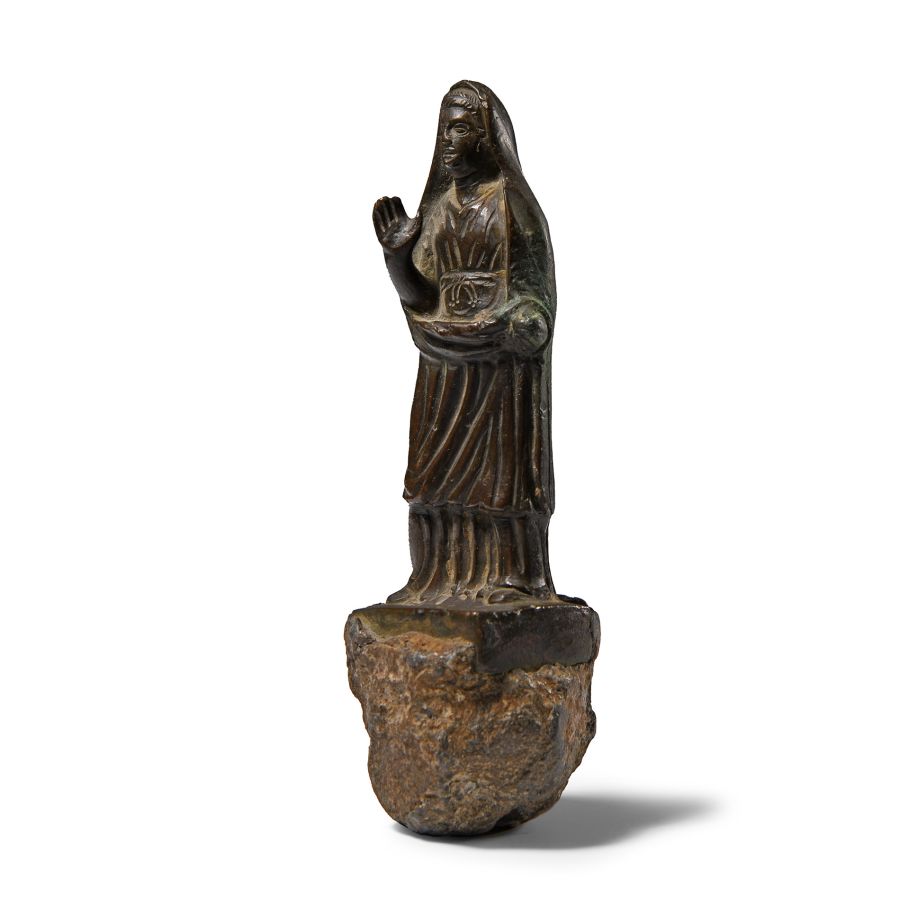
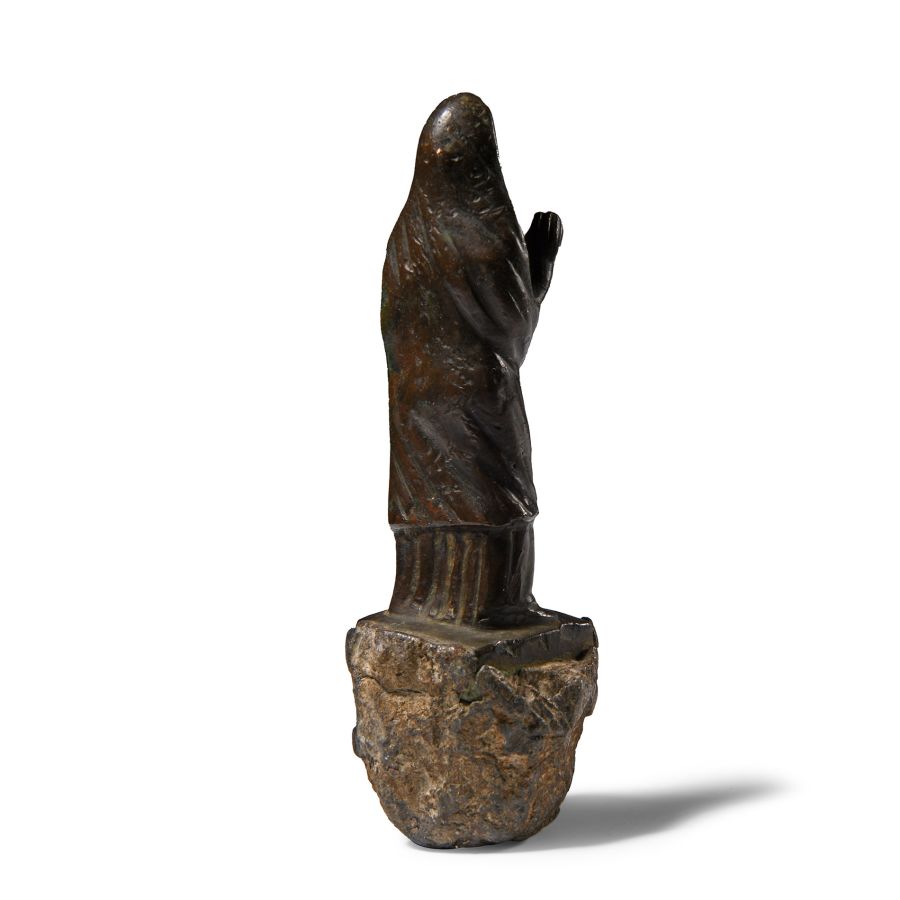
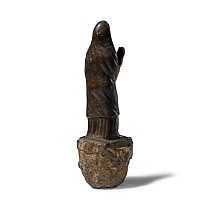
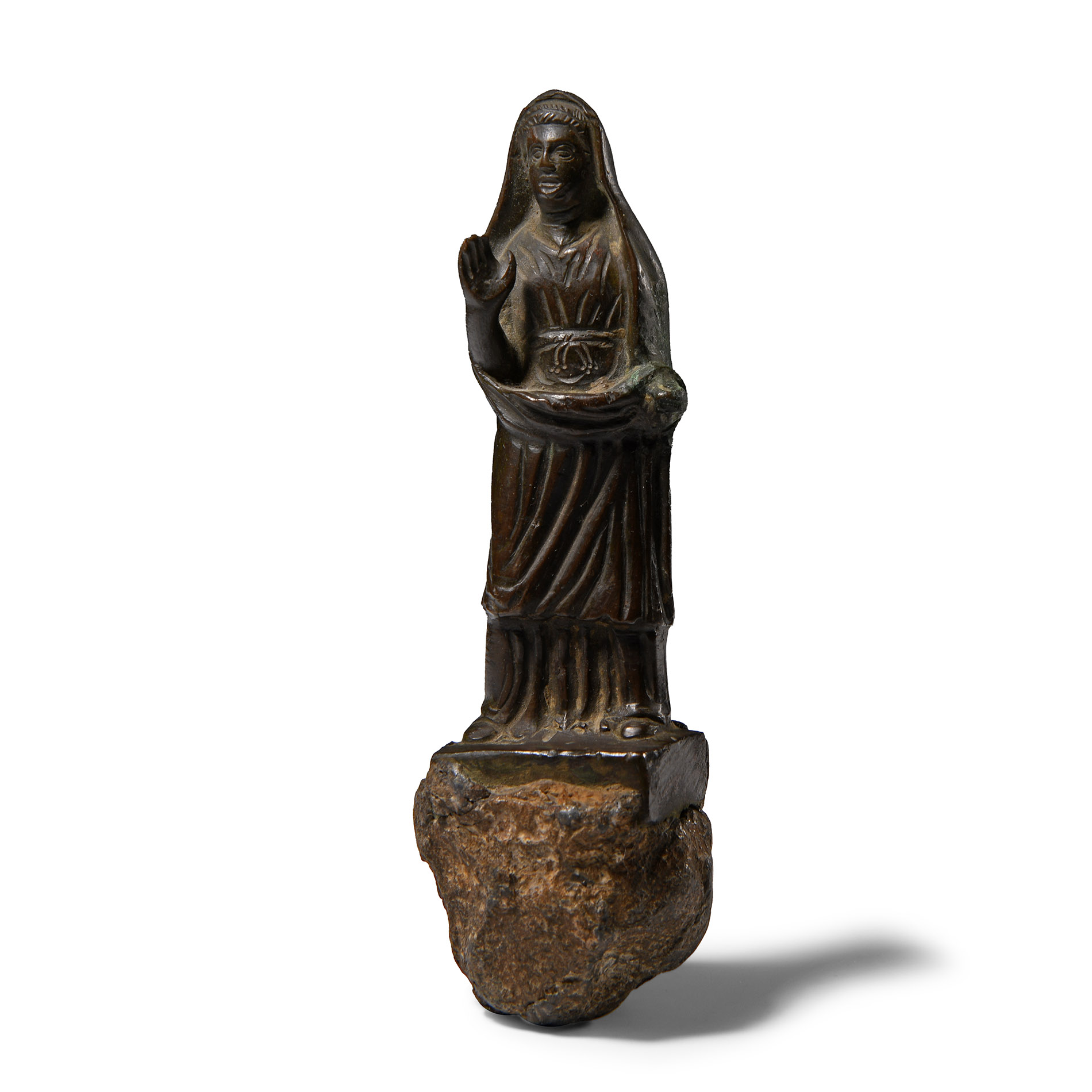
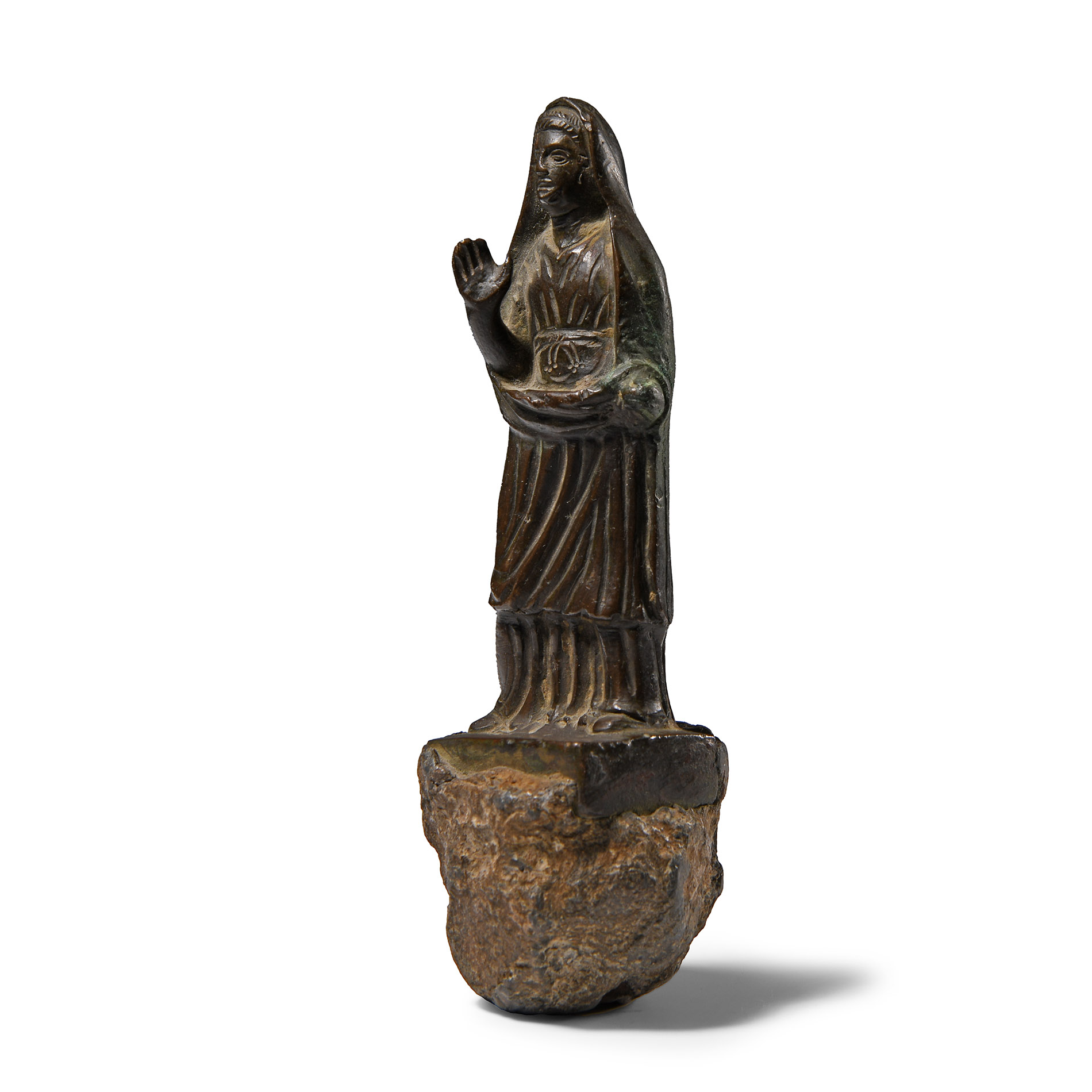
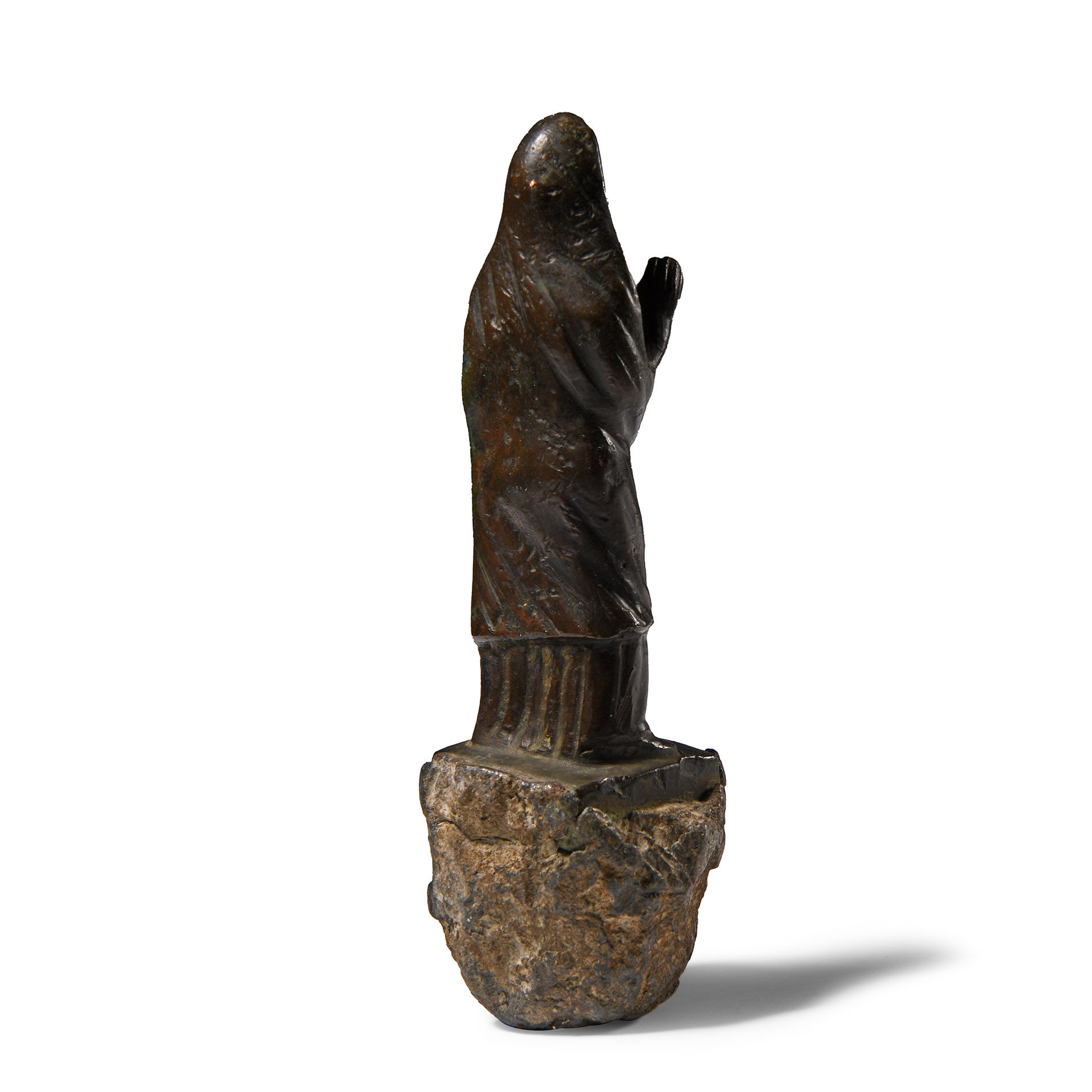
Graeco-Roman Bronze Statuette of a Draped Female
1ST CENTURY B.C.-2ND CENTURY A.D.
5 1/2 in. (699 grams, 14 cm).
Modelled in the round with the right hand raised palm-outward and left hand clasped, the pallium gathered round the body and draped over the head; on a base. [No Reserve]
ProvenanceAcquired in Egypt by Lieutenant James Alexander Goodman in the 1920s.
Thence by descent to his grandson.
Lieutenant Goodman served in the 4th Battalion Welsh Regiment during World War I and saw action in Palestine during the capture of Bethlehem, (for which he won an MC). After the war, he setup a business selling Fordson trucks and tractors in Alexandria, Egypt. A keen antiquarian, he collected ancient objects during his time in Alexandria and when he visited the pyramids at Giza. After his first marriage failed, he returned to the UK in the early 1930s. On his death in 1959, he passed his small collection of Egyptian objects on to his second wife, Ruby Goodman. On Ruby’s death in 1994, they were left to their second daughter, Rosemary Johnson, (née Goodman), and are currently in the possession of her son.
CONDITIONTimeLine Auctions follows a vetting process to ensure the authenticity and legality of all items, reinforcing our commitment to integrity and responsible trading. Each antiquity, antique, and coin lot undergoes thorough examination by a vetting committee of at least ten external specialists, professional trade association members, scientists, and archaeologists: Our Vetting Process
AUCTIONS:
TimeLine is a leading auction house specialising in antiquities, ancient art, collectables, natural history, coins, medals, and books. Our auctions offer museums, collectors, historians, and enthusiasts the opportunity to acquire unique and historically significant pieces.
-
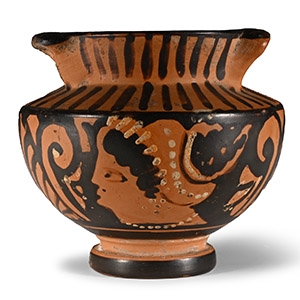
South Italian Red-Figure Krateriskos
4th century B.C.Sold for (Inc. bp): £650
With globular body and carinated flat shoulder, flared mouth and low foot with collar, lateral ledge handles; painted with radiating lines to the shoulder and profile 'ladies of fashion' busts with white detailing; old collector's label '19' to underside. 89 grams, 79 mm wide
Swiss private collection, 19th century. Acquired in the mid 1980s-late 1990s. From a European family collection, thence by descent. -
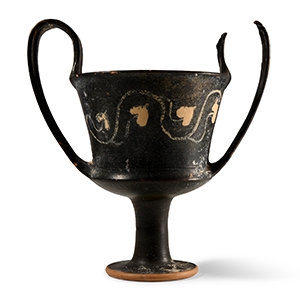
South Italian Blackware Kantharos with Ivy Branch
5th-4th century B.C.Estimate: £1,200 - 1,700 (‡+bp*)
Opening Bid: £667
The high-handled drinking cup with carinated lower body, discoid feet and vines painted to the equator. 525 grams, 22.2 cm
Acquired in the late-1980. Ex S.A. collection. -
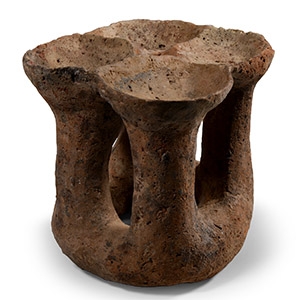
Cypriot Pottery Ring-Kernos
Early Bronze Age, 2300-2000 B.C.Sold for (Inc. bp): £221
Comprising a hollow basal ring and four vertical posts terminating in conical cups joined at the rim. 1.36 kg, 17 cm wide
From a collection acquired on the UK art market from various auction houses and collections mostly before 2000. From an important Cambridgeshire estate; thence by descent.
