
Loading, please wait...
LOT 0522
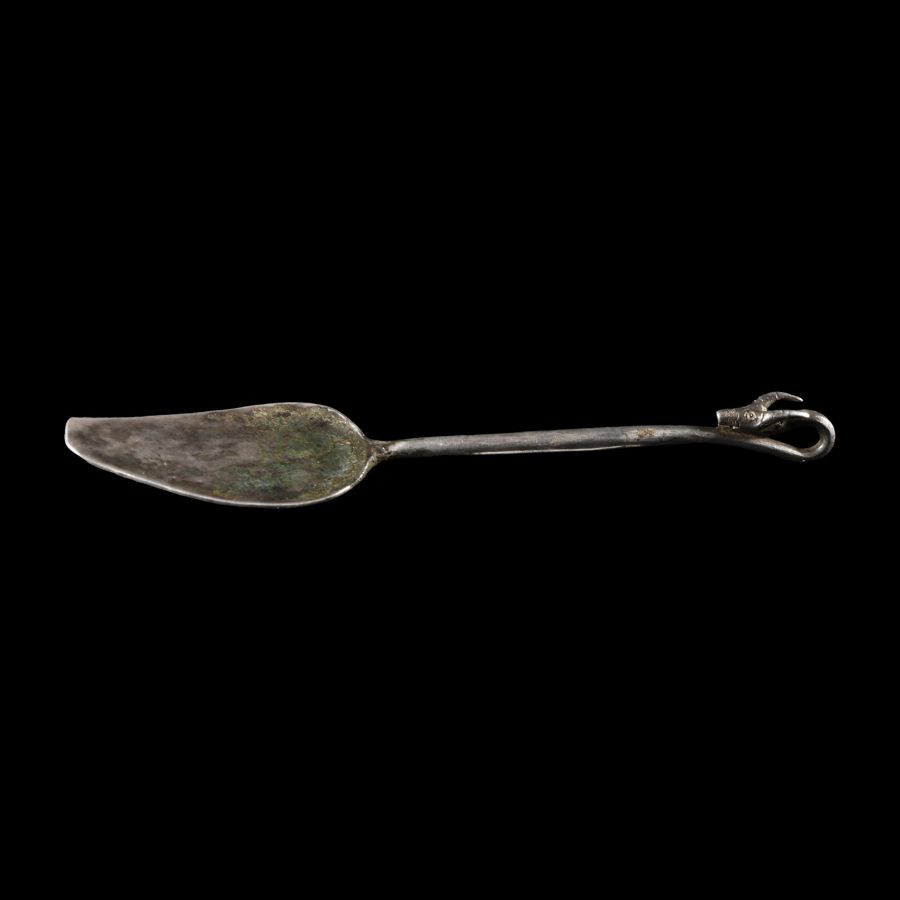
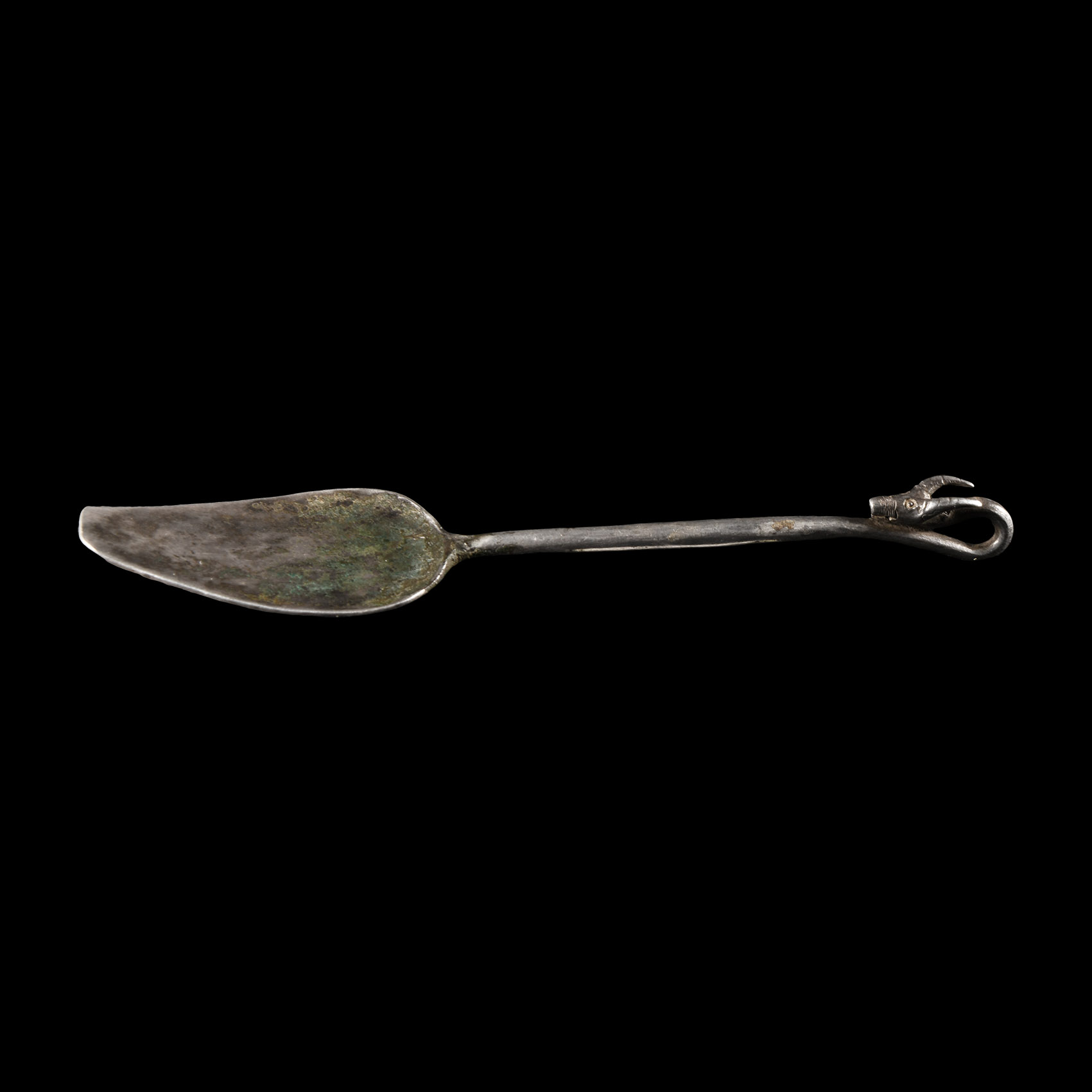
Graeco-Persian Silver Spoon
CIRCA 3RD CENTURY B.C.
6 in. (30.8 grams, 15 cm).
The shallow 'bowl' or plaque with a squared tip, round-section shank and horned animal had finial with stylised detailing.
ProvenanceUK collection, early 1990s and before.
Acquired on the UK art market since the early 2000s.
From a private collection, Lancashire, UK.
TimeLine Auctions follows a vetting process to ensure the authenticity and legality of all items, reinforcing our commitment to integrity and responsible trading. Each antiquity, antique, and coin lot undergoes thorough examination by a vetting committee of at least ten external specialists, professional trade association members, scientists, and archaeologists: Our Vetting Process
AUCTIONS:
TimeLine is a leading auction house specialising in antiquities, ancient art, collectables, natural history, coins, medals, and books. Our auctions offer museums, collectors, historians, and enthusiasts the opportunity to acquire unique and historically significant pieces.
-
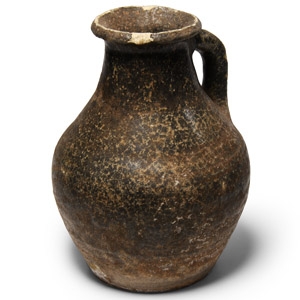
Parthian Glazed Ceramic Jug
1st century B.C.-1st century A.D.Estimate: £200 - 300 (+bp*)
Opening Bid: £100
Speckled glaze; deep shoulder with chamfered rim and strap handle. 776 grams, 16.5 cm high
Acquired by the vendors father on the UK art market, before 1990. -
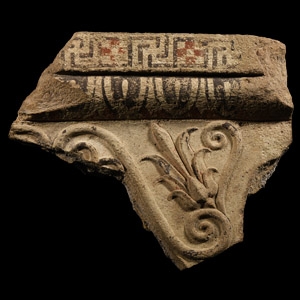
Etruscan Painted Terracotta Architectural Cornice
5th-4th century B.C.Sold for (Inc. bp): £3,900
A fragment of amorphous form, decorated in relief with scrolling tendrils and anthemion, painted egg-and-dart ornament above, surmounted by moulded bands and a frieze of meander and chequerboard panels; remains of red and black painted pigment. 5.1 kg, 34.5 cm wide
Private collection, Switzerland, 1960s. From the Sir Claude Hankes-Drielsma collection, prior to 2006. with Christie's, London, The Stanford Place Collection of Antiquities, 26 April 2006, lot 36. Accompanied by a copy of an Art Loss Register certificate number S00209802, dated 14 June 2021. Accompanied by a detailed collector's catalogue pages including description and photograph. This lot has been checked against the Interpol Database of stolen works of art and is accompanied by search certificate number no.203716. -
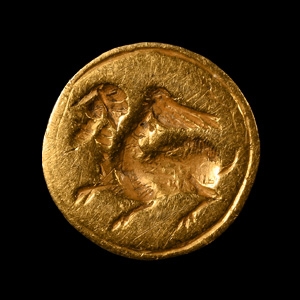
Archaic Greek Gold Intaglio with Mythical Creature
Circa 8th century B.C.Sold for (Inc. bp): £780
The gold roundel displaying an incuse winged creature with the head of a human and body of an animal. 0.50 grams, 7 mm
Acquired 1969-1999. From the private collection of the late Mr S.M., London, UK, thence by descent.
