
Loading, please wait...
LOT 0540
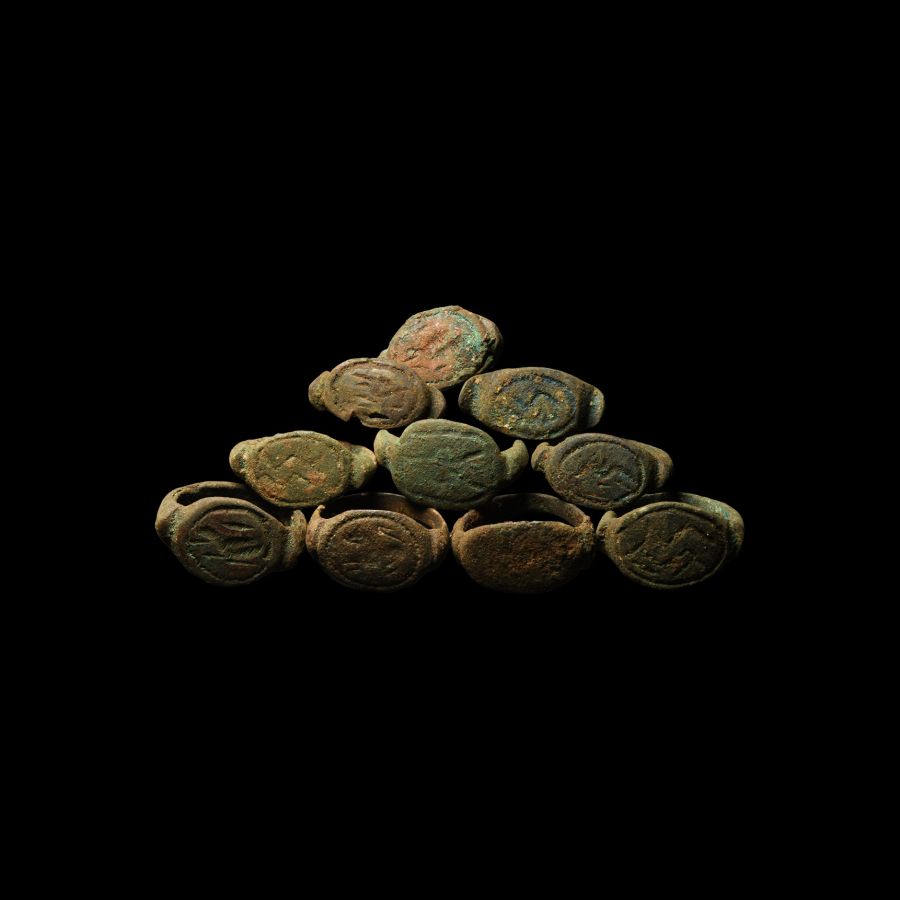
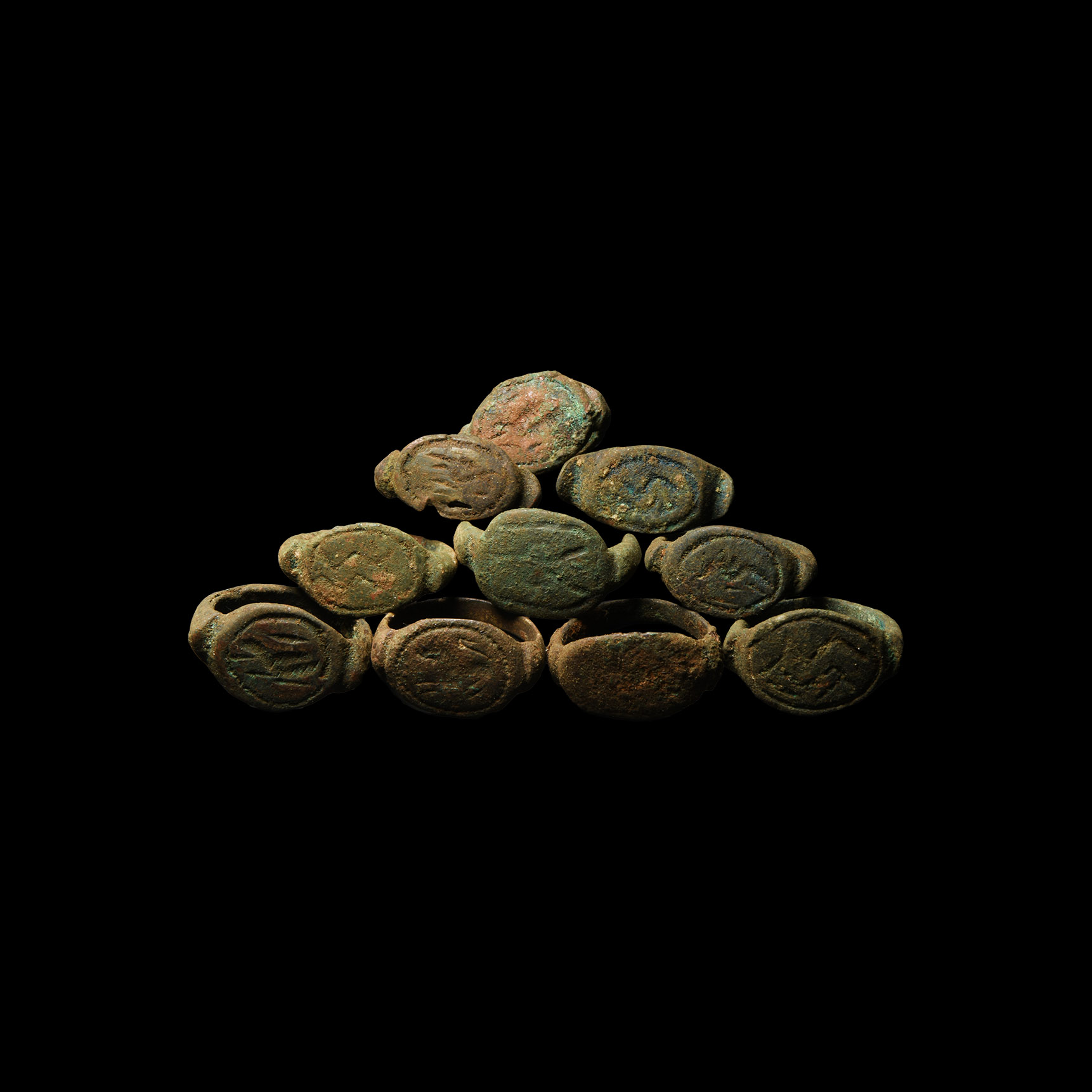
Graeco-Persian Bronze Ring Group
1ST MILLENNIUM B.C. AND LATER
7/8 -1 in. (51 grams total, 23-26 mm).
Composed mainly of types with a convex hoop, stepped shoulders and roughly oval-shaped bezel, most displaying an incuse human or animal figure. [10]
ProvenanceEx private collection, 1980s.
Acquired on the UK art market in the 1990s.
TimeLine Auctions follows a vetting process to ensure the authenticity and legality of all items, reinforcing our commitment to integrity and responsible trading. Each antiquity, antique, and coin lot undergoes thorough examination by a vetting committee of at least ten external specialists, professional trade association members, scientists, and archaeologists: Our Vetting Process
AUCTIONS:
TimeLine is a leading auction house specialising in antiquities, ancient art, collectables, natural history, coins, medals, and books. Our auctions offer museums, collectors, historians, and enthusiasts the opportunity to acquire unique and historically significant pieces.
-
.jpg)
Etruscan Red Carnelian Scaraboid with Archery Intaglio
Circa 6th-4th century B.C.Sold for (Inc. bp): £585
Polished and incised with semi-naturalistic anatomical detailing; intaglio to base displaying archer's bow and quiver; drilled for suspension. 2.54 grams, 15 mm
Acquired 1969-1999. From the private collection of the late Mr S.M., London, UK, thence by descent. -
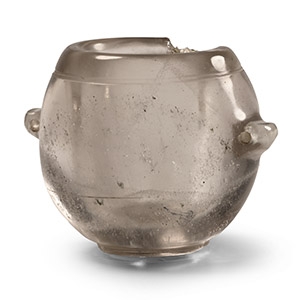
Hellenistic Rock Crystal Vessel
4th-1st century B.C.Sold for (Inc. bp): £715
Formed with a globular body, shallow foot and two tubular handles, each pierced for suspension; chipped. 59.4 grams, 46 mm
Ambassador Carlo Perrone-Capano, Grantham, South Kesteven, Lincolnshire, 1960s. -
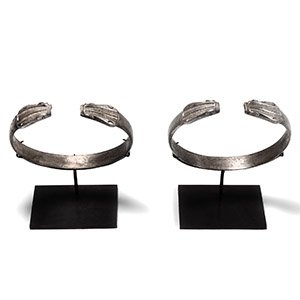
Thracian Silver Bracelet Pair
1st century B.C.-1st century A.D.Sold for (Inc. bp): £2,080
Each composed of a penannular body with stylised snake head terminals; each accompanied by a custom-made display stand. 52.4 grams total, 64 mm each (119 grams total, 82 mm high including stand)
UK art market, 2000s. This lot has been checked against the Interpol Database of stolen works of art and is accompanied by searcher certificate no. 201181.
The bracelets belong to the type with zoomorphic terminals, probably representing snake’s heads or dragons emerging from flat rectangular strips with incised decoration and continued as lobed bodies resembling stylised palm leaves or palmettes. This Thracian tradition is attested in the ancient kingdom of Dacia.
