
Loading, please wait...
LOT 1279
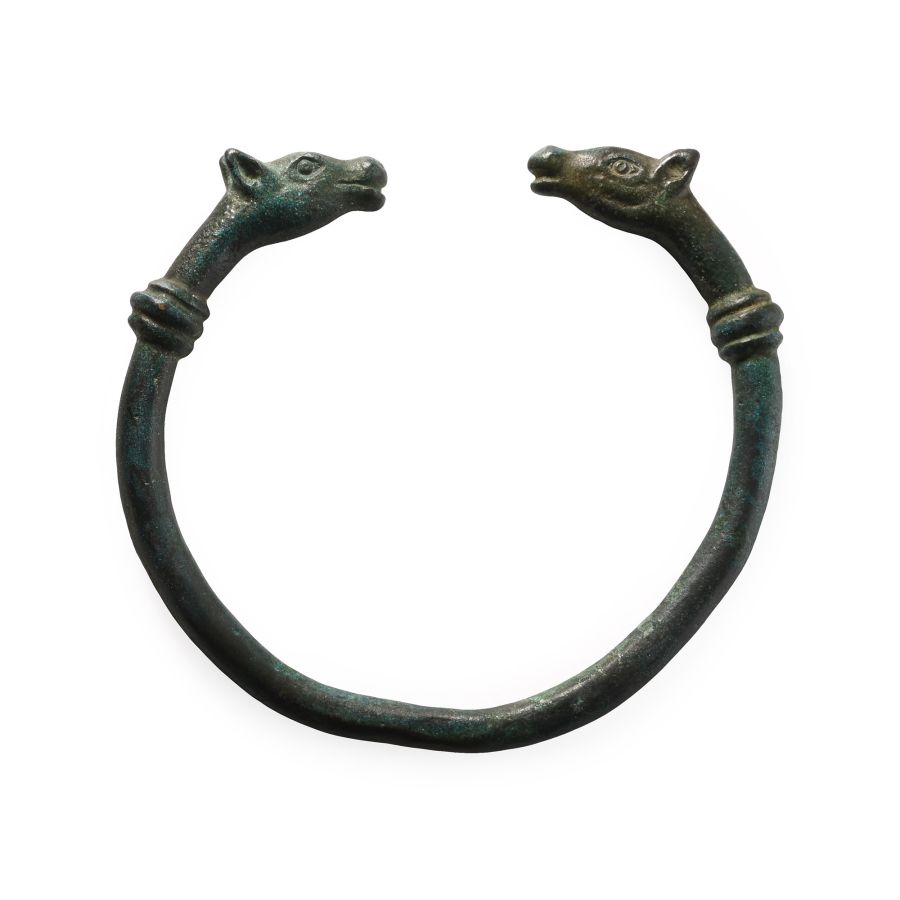
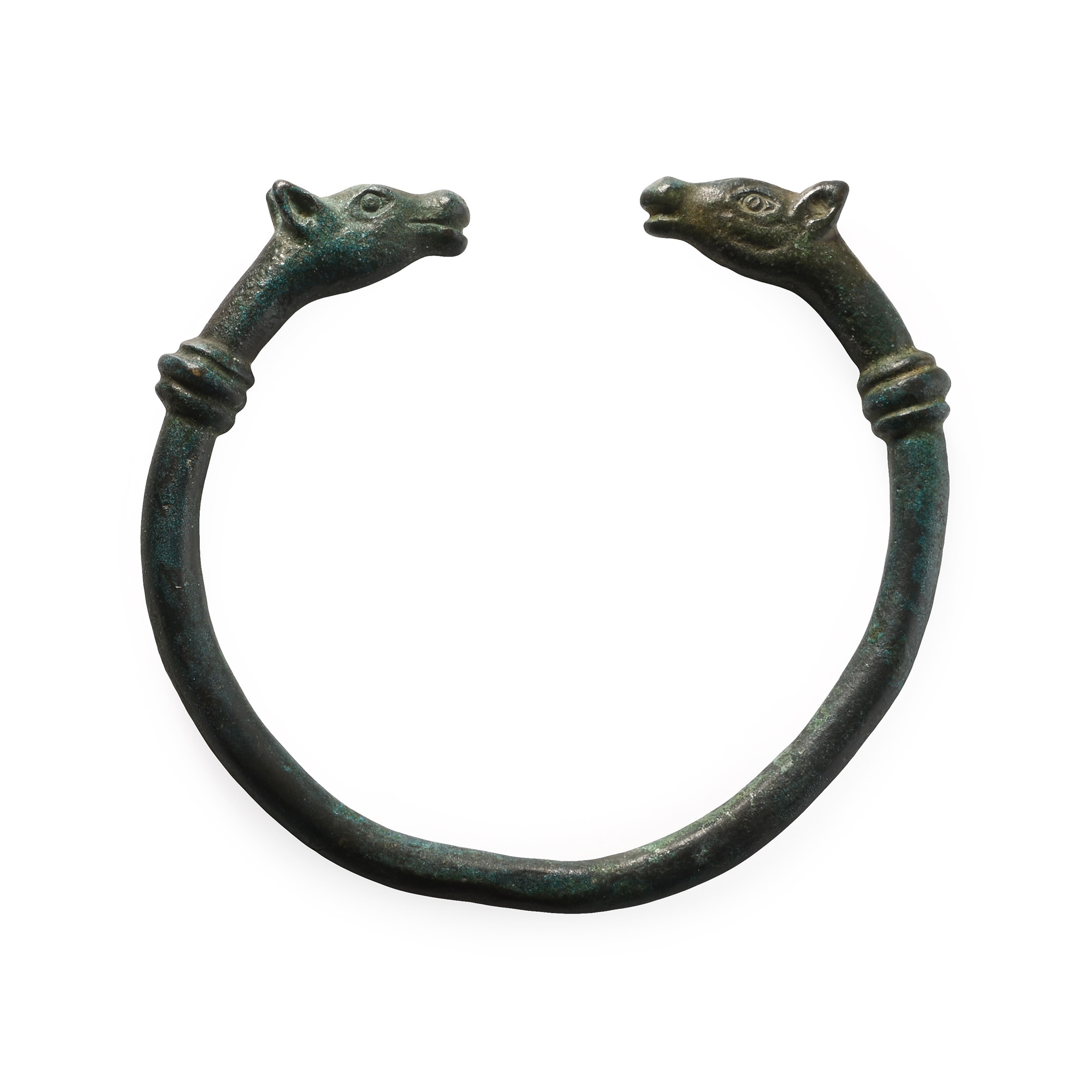
Graeco-Persian Bronze Bracelet
4TH-2ND CENTURY B.C.
2 3/4 in. (37.1 grams, 71 mm).
A torc-shaped bracelet with round-section body, ribbed collar to the terminals ending in opposed deer heads with open mouths. [No Reserve]
ProvenanceProperty of a Surrey collector; acquired in the early 1970s.
CONDITIONTimeLine Auctions follows a vetting process to ensure the authenticity and legality of all items, reinforcing our commitment to integrity and responsible trading. Each antiquity, antique, and coin lot undergoes thorough examination by a vetting committee of at least ten external specialists, professional trade association members, scientists, and archaeologists: Our Vetting Process
AUCTIONS:
TimeLine is a leading auction house specialising in antiquities, ancient art, collectables, natural history, coins, medals, and books. Our auctions offer museums, collectors, historians, and enthusiasts the opportunity to acquire unique and historically significant pieces.
-
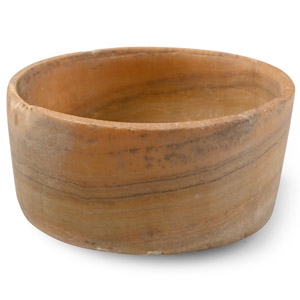
Mesopotamian Stone Vessel
1st millennium B.C.Sold for (Inc. bp): £117
Squat in profile with slightly rounded base, low sidewall, rounded rim. 192 grams, 85 mm
Ex Mayfair, London, UK, gallery, 2000s. -
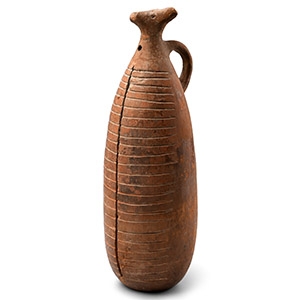
Mesopotamian Terracotta Jug with Animal Head
10th-8th century B.C.Sold for (Inc. bp): £351
Fusiform in profile with transverse ribbing to the front and vertical slot, beast-head finial, loop handle and five holes to the reverse. 512 grams, 27.2 cm
UK collection, 1990s. Acquired on the UK art market, before 2000. Private collection, Mr M.V., a London-based businessman. -
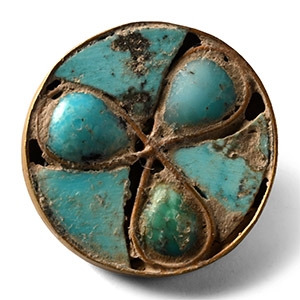
Western Asiatic Turquoise Inlaid Gold Stud
1st millennium B.C.Sold for (Inc. bp): £169
Discoid stud with low sidewall, two loops to underside, three cabochons to the upper face with interstitial cloisons. 1.38 grams, 12 mm
From the collection of a late Japanese gentleman, 1970s onwards.
