
Loading, please wait...
LOT 0251
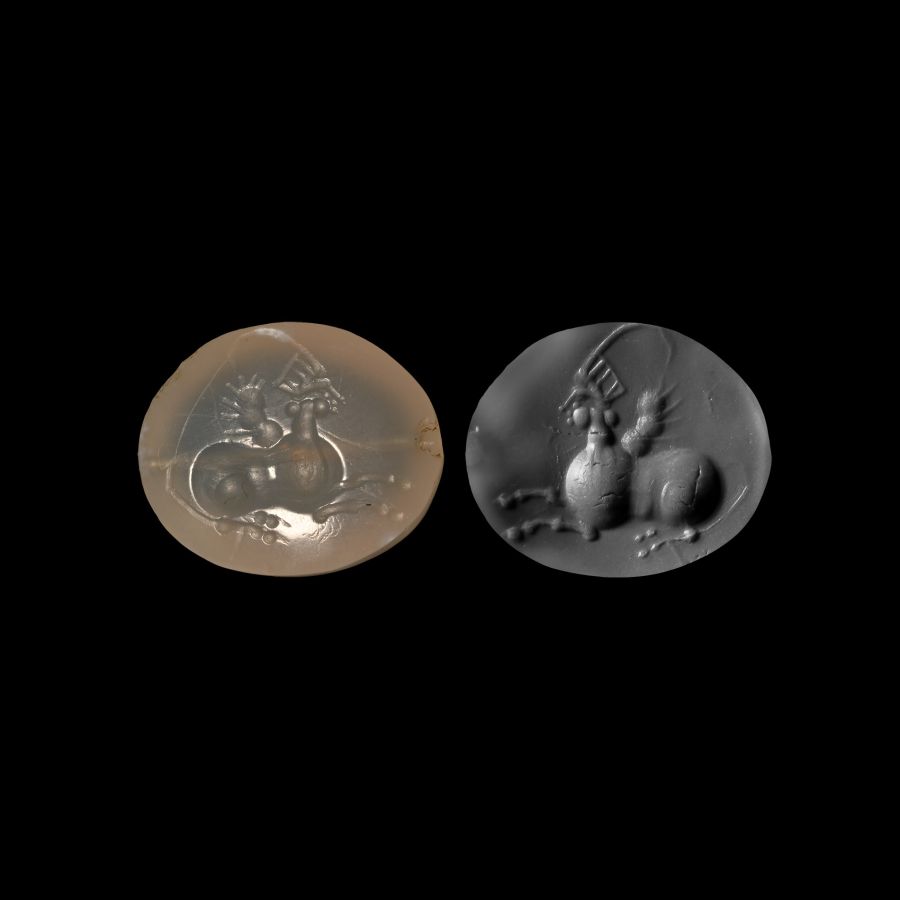
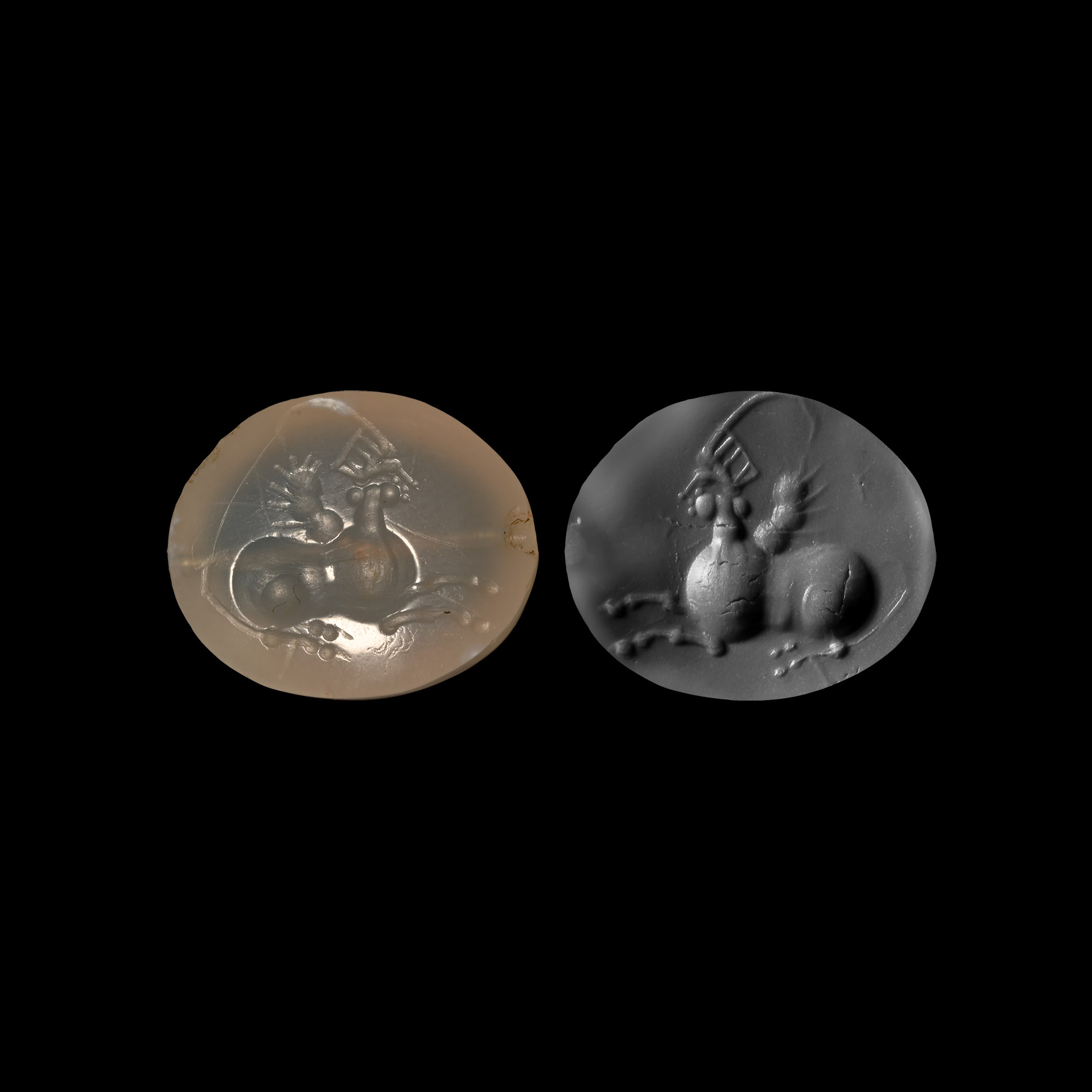
Graeco-Parthian Grey Chalcedony Stamp Seal with Winged Sphinx
CIRCA 2ND CENTURY B.C.
3/4 in. (4.13 grams, 20 mm).
Scaraboid stamp seal with winged sphinx design, pierced horizontally for suspension. [No Reserve]
ProvenanceAnonymous sale; with Christie's, New York, 13 June 2000, no.517 (part).
From the 'Empire' collection, an important UK private collection of seals.
TimeLine Auctions follows a vetting process to ensure the authenticity and legality of all items, reinforcing our commitment to integrity and responsible trading. Each antiquity, antique, and coin lot undergoes thorough examination by a vetting committee of at least ten external specialists, professional trade association members, scientists, and archaeologists: Our Vetting Process
AUCTIONS:
TimeLine is a leading auction house specialising in antiquities, ancient art, collectables, natural history, coins, medals, and books. Our auctions offer museums, collectors, historians, and enthusiasts the opportunity to acquire unique and historically significant pieces.
LOT 0251
Graeco-Parthian Grey Chalcedony Stamp Seal with Winged Sphinx
Sold for (Inc. bp): £468
-
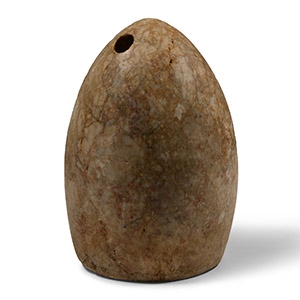
Bactrian Stone Tent Weight
1st millennium B.C.Sold for (Inc. bp): £1,300
Bullet-shaped idol or weight with perforation to the barrow end, flat base. 7.8 kg, 21 cm
Ex London, UK, gallery, 1971-early 2000s. -
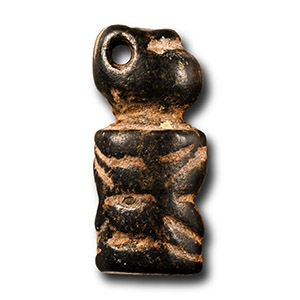
Mesopotamian Grey Stone Geometric Cylinder Pendant
3rd millennium B.C.Sold for (Inc. bp): £98
Linear design with knop finial pierced to form a suspension loop. 3.94 grams, 22 mm
Anonymous sale; Christie's, London, 25 April 2001, lot 504 (haematite) and 513 (part). with Petit Musée, Montreal, acquired at the above sale; thence by descent. Property of an East Sussex, UK, gentleman. -
.jpg)
Holy Land Pottery Dipper Cup
Bronze Age, 16th-14th century B.C.Sold for (Inc. bp): £33
Round-bottomed with strap handle and thumb-spur. 209 grams, 90 mm
From a collection acquired on the UK art market from various auction houses and collections mostly before 2000. From an important Cambridgeshire estate; thence by descent.
