
Loading, please wait...

LOT 1233
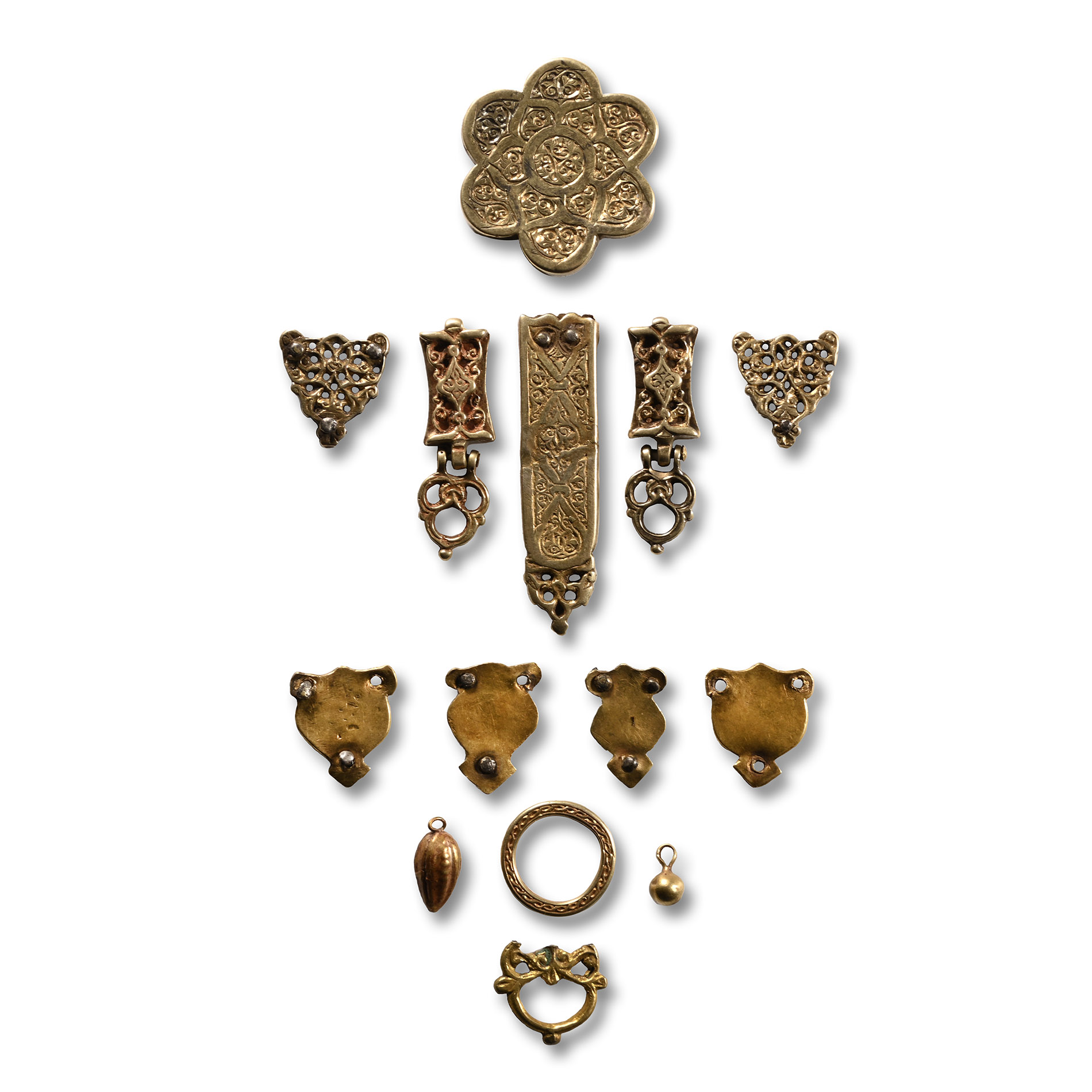
Golden Horde Belt Buckle and Fittings Group
13TH-14TH CENTURY A.D.
3/8 - 2 in. (45 grams total, 9-49 mm).
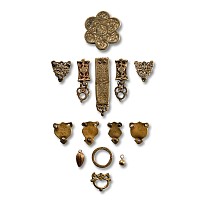
Comprising: hexafoil strap- or belt-fitting with panels of scrolled tendrils and reserved petals, reverse damaged; tongue-shaped hollow strap-end with openwork arabesque finial, bands of scrolled tendrils to obverse, incised arabesque to reverse; two rectangular belt mounts each with openwork obverse, hanged looped fitting to lower edge; four discoid mounts with three pierced lugs; two triangular plaques with openwork scrolled tendril design, pin to each angle; spherical dangle; ribbed scaphoid dangle; openwork hoop with scrolled tendrils; annular mount with ropework motif to obverse. [14]
ProvenanceMr M.B., Mainz, Germany, since the 1980s.
Private collection, London.
Accompanied by an academic report by Dr. Jack Ogden of Strptwist Ltd, reference 190623 with description of the items and the techniques used to produce them, and the metallic composition of the gold (56.36% to 64.25% on the items tested).
TimeLine Auctions follows a vetting process to ensure the authenticity and legality of all items, reinforcing our commitment to integrity and responsible trading. Each antiquity, antique, and coin lot undergoes thorough examination by a vetting committee of at least ten external specialists, professional trade association members, scientists, and archaeologists: Our Vetting Process
AUCTIONS:
TimeLine is a leading auction house specialising in antiquities, ancient art, collectables, natural history, coins, medals, and books. Our auctions offer museums, collectors, historians, and enthusiasts the opportunity to acquire unique and historically significant pieces.
LOT 1233
Golden Horde Belt Buckle and Fittings Group
Estimate £3,000 - 4,000€3,480 - 4,640 (for guidance only)$4,050 - 5,400 (for guidance only)
-
.jpg)
Pocket Qur'an Manuscript Page Group
18th-19th century A.D.Sold for (Inc. bp): £169
Miniature paper Qur'an, each page with dense Nasta'liq text in black ink with a red double-border and green outer border; decorative title page with floral ornament and liquid gold; several pages of handwritten notes at the end; probably from North Africa. 55 grams, 86 x 86 mm
Acquired 1970s-1996. Property of a North American collector. London collection, 2016. -
Luristan Bronze Pin with Petals
13th-7th century B.C.Sold for (Inc. bp): £78
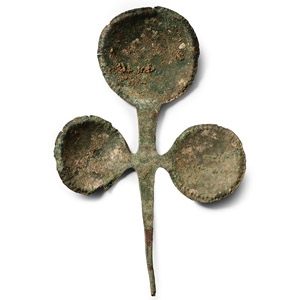
Trefoil head of a dress pin with large dished roundel at the top and two smaller ones to the sides. 27 grams, 13.3 cm
From a collection of a gentleman, acquired on the London art market in the 1990s. -
Western Asiatic Pottery Group
2nd-1st millennium B.C.Sold for (Inc. bp): £117
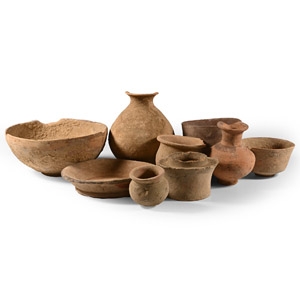
Comprising vessels and bowls of various shapes; some with painted detailing. 1.9 kg total, 5.5-16.5 cm
From a London, UK, collection, 1980-1990.
