
Loading, please wait...
LOT 0382
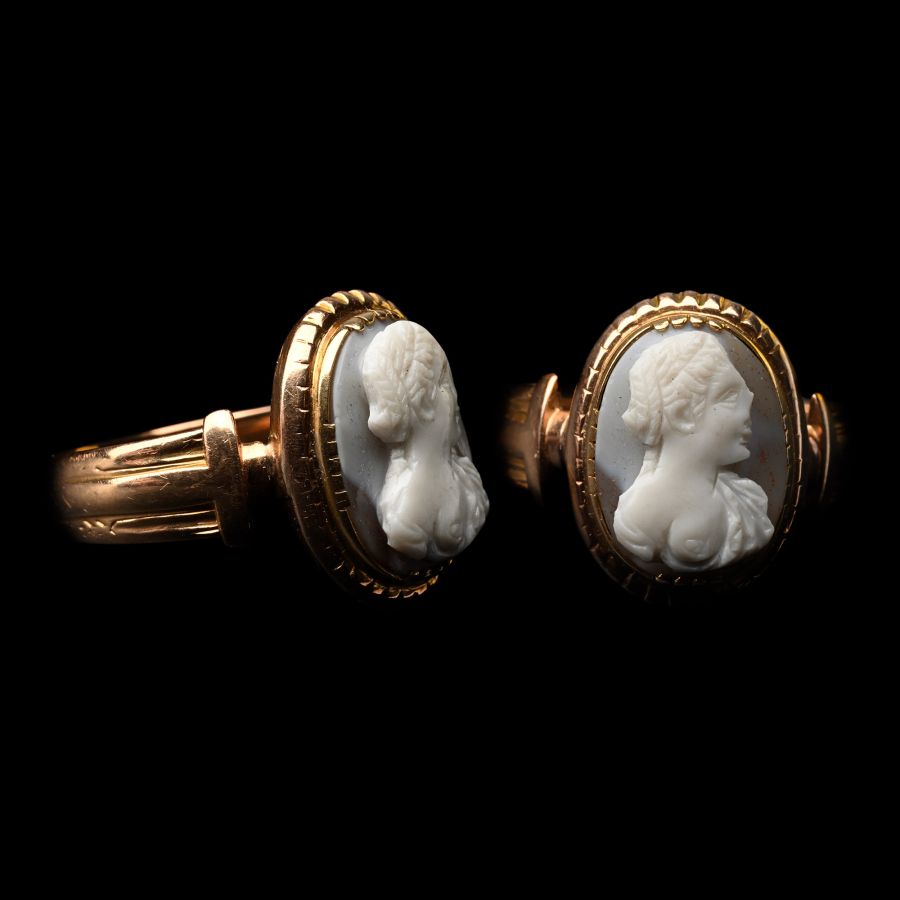
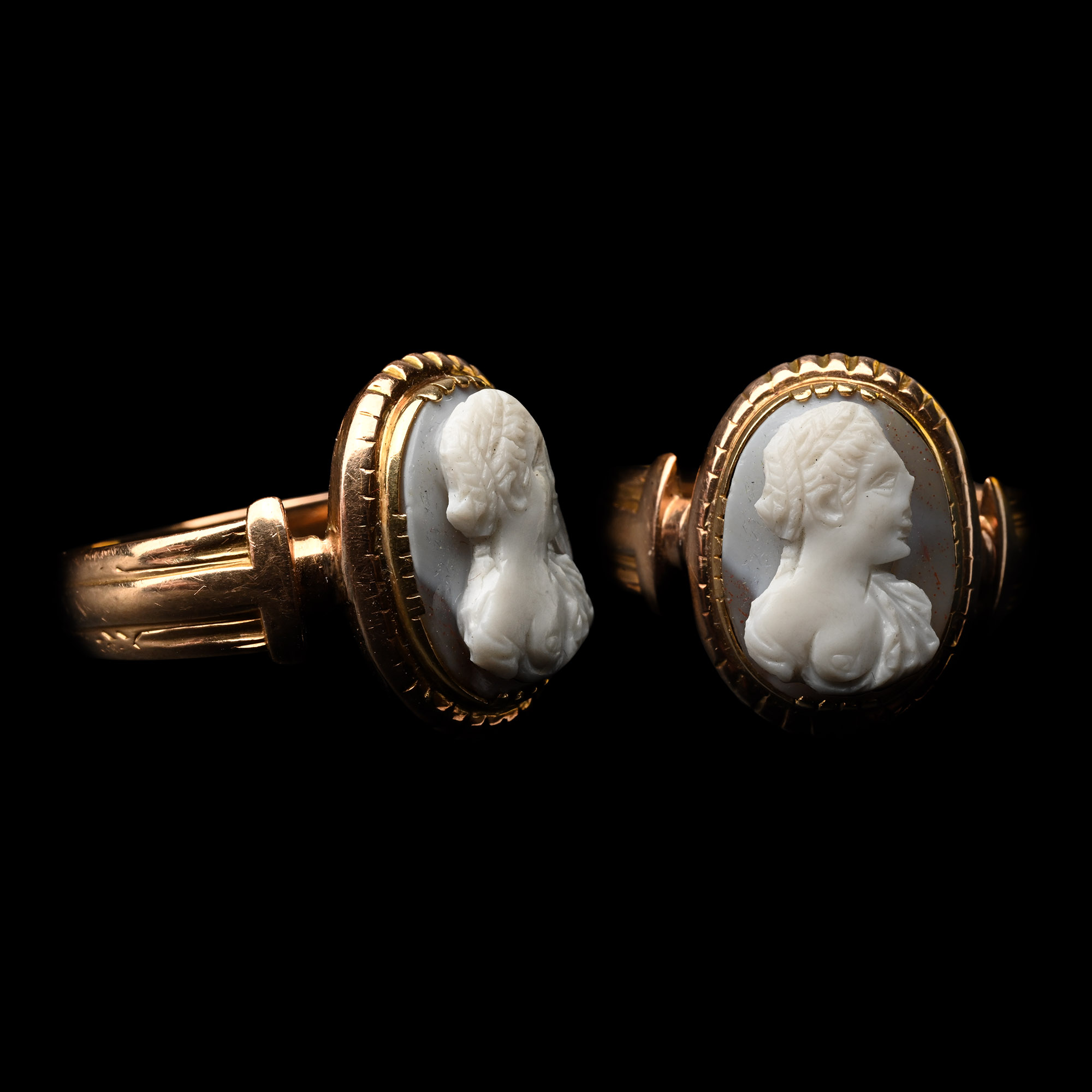
Gold Ring with Renaissance Sardonyx Cameo of a Muse
ITALY, 16TH CENTURY A.D.
1 in. (6.05 grams, 26.27 mm overall, 19.10 mm internal diameter (approximate size British S, USA 9, Europe 20, Japan 19)).
Comprising a wide hoop supporting a large oval bezel with piecrust edge, set with a two-tone sardonyx cameo depicting a profile bust of a female, her hair dressed in elaborate style, garment wrapper over her left shoulder leaving her right breast exposed.
ProvenancePrivate collection, UK.
CONDITIONTimeLine Auctions follows a vetting process to ensure the authenticity and legality of all items, reinforcing our commitment to integrity and responsible trading. Each antiquity, antique, and coin lot undergoes thorough examination by a vetting committee of at least ten external specialists, professional trade association members, scientists, and archaeologists: Our Vetting Process
AUCTIONS:
TimeLine is a leading auction house specialising in antiquities, ancient art, collectables, natural history, coins, medals, and books. Our auctions offer museums, collectors, historians, and enthusiasts the opportunity to acquire unique and historically significant pieces.
LOT 0382
Gold Ring with Renaissance Sardonyx Cameo of a Muse
Estimate £600 - 800€700 - 930 (for guidance only)$810 - 1,080 (for guidance only)
-
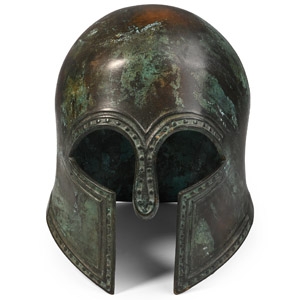
Reproduction Bronze Corinthian Helmet
20th century A.D.Sold for (Inc. bp): £2,600
With deep nasal and cheek-guards, pelletted bands to the rim; casting seam. 4.69 kg, 21.5 cm
From a private Tyneside collection, formed since the early 2000s. -
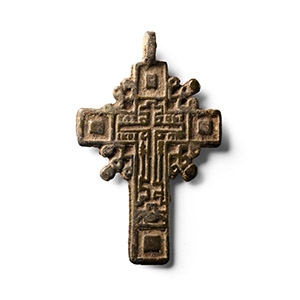
Russian Orthodox Bronze Cross Pendant
17th century A.D.Sold for (Inc. bp): £20
Cruciform with interstitial lobes; obverse with voided cross and Cyrillic legend, raised square panel to end of each arm; reverse with foliage detailing. 6.6 grams, 48 mm
Acquired from Chris Martin-Zakheim, Iconastas, 5 Piccadilly Arcade, London SW1. From the private collection of a West London, UK, gentleman, formed since the early 2000s. -
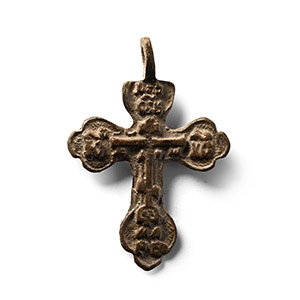
Eastern European Orthodox Bronze Cross Pendant
17th-18th century A.D.Sold for (Inc. bp): £20
Cross pommy pendant with integral pierced lug, low-relief crucifixion scene with monogram to each arm. 3.05 grams, 43 mm
Acquired from Chris Martin-Zakheim, Iconastas, 5 Piccadilly Arcade, London SW1. From the private collection of a West London, UK, gentleman, formed since the early 2000s.
