
Loading, please wait...
LOT 0429
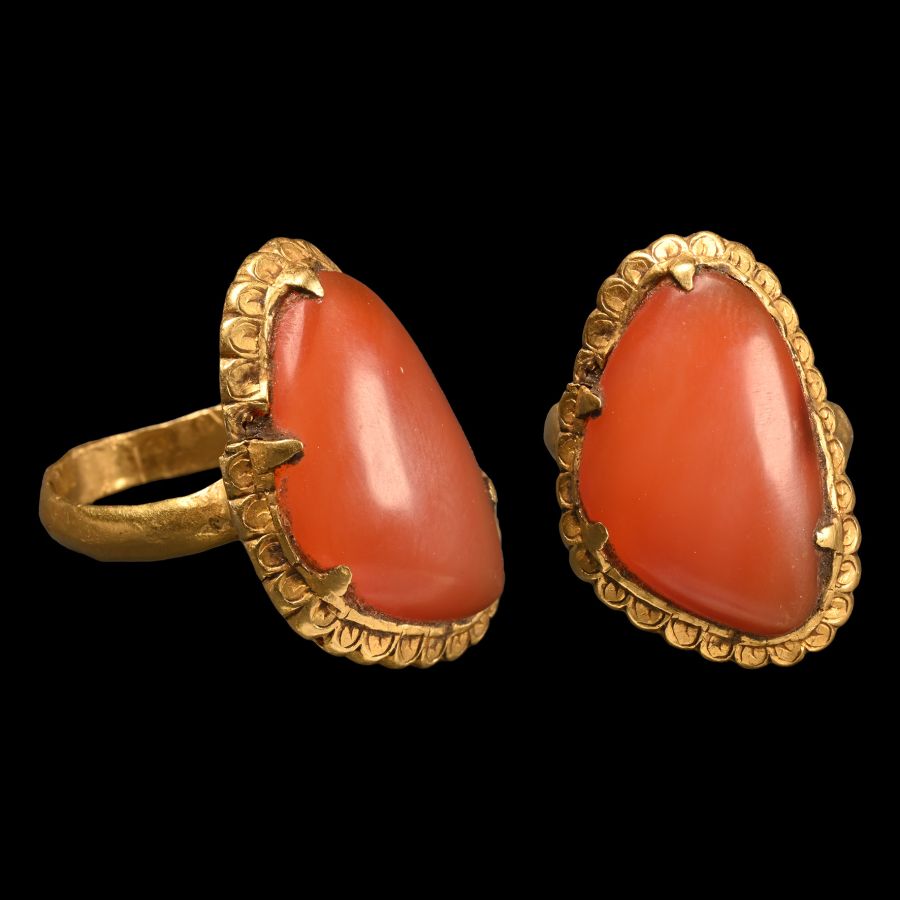
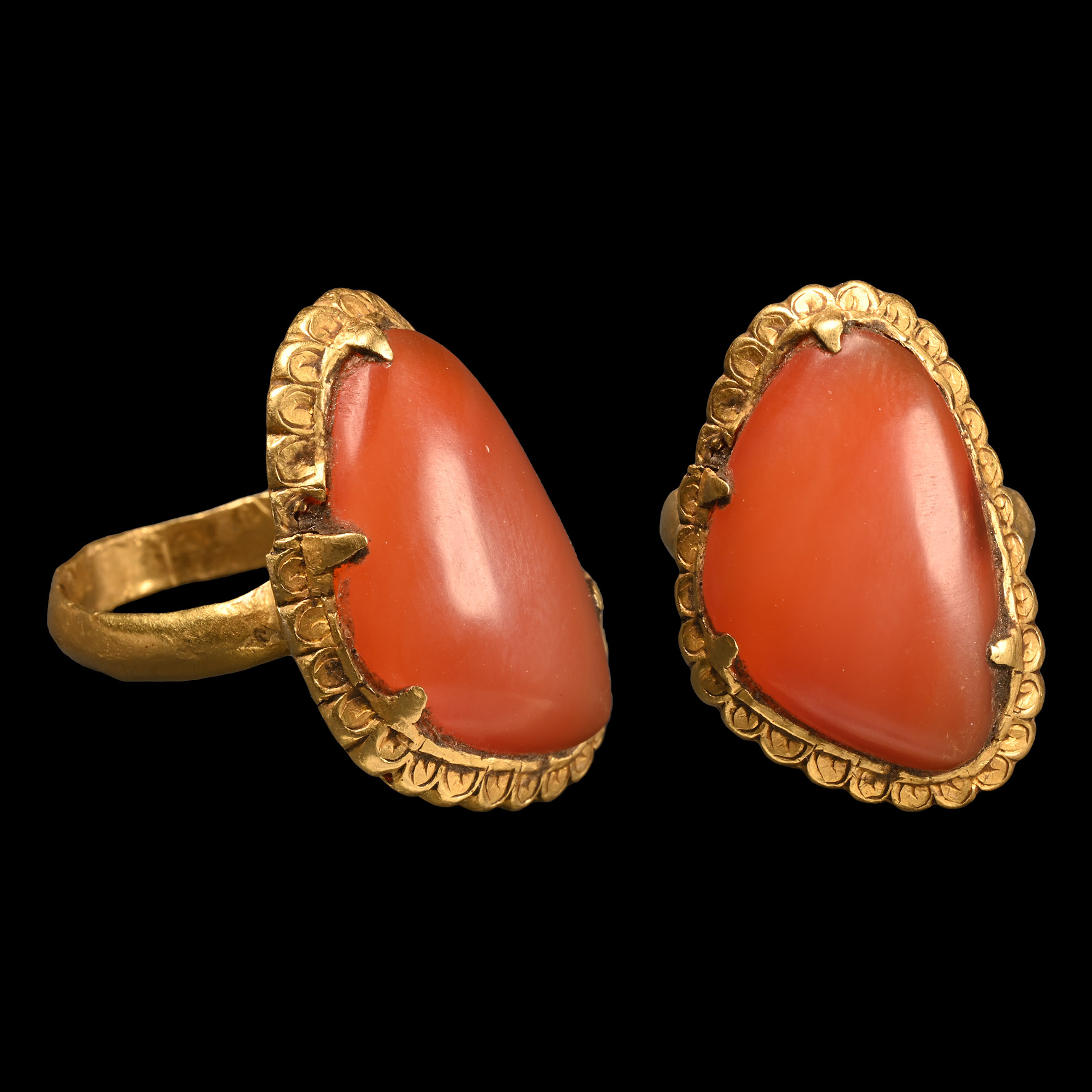
Gold Ring with Carnelian Cabochon
CIRCA 16TH-17TH CENTURY A.D.
1 in. (8.65 grams, 27.52 mm overall, 16.86 mm internal diameter (approximate size British L, USA 5 3/4, Europe 11.24, Japan 10)).
The hoop carinated, kidney-shaped cabochon held in a claw setting with engraved scalloped border.
ProvenanceAcquired 1990s-early 2000s.
East Anglian private collection.
TimeLine Auctions follows a vetting process to ensure the authenticity and legality of all items, reinforcing our commitment to integrity and responsible trading. Each antiquity, antique, and coin lot undergoes thorough examination by a vetting committee of at least ten external specialists, professional trade association members, scientists, and archaeologists: Our Vetting Process
AUCTIONS:
TimeLine is a leading auction house specialising in antiquities, ancient art, collectables, natural history, coins, medals, and books. Our auctions offer museums, collectors, historians, and enthusiasts the opportunity to acquire unique and historically significant pieces.
-
Blue Glass Bead Necklace String
20th century A.D. or earlierSold for (Inc. bp): £7
Restrung; composed of translucent blue glass beads formed of re-used bangle sections, interspersed with clear glass spacer beads. 5.7 grams, 62 cm long
UK gallery, early 2000s. -
.jpg)
Carnelian Necklace Bead Group
20th century A.D.Sold for (Inc. bp): £39
Comprising a small group of red carnelian beads of various form and size, including a two-hole bracelet panel; each pierced for stringing. 113 grams total, 10-31 mm
UK gallery, early 2000s. -
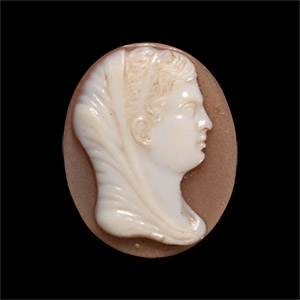
Neoclassical Cameo with Bust
18th-19th century A.D.Sold for (Inc. bp): £156
Ellipsoid with reserved profile female bust, hair dressed in a chignon and head covered by a draped palla. 1.24 grams, 15 mm
Private collection, England.
