
Loading, please wait...
LOT 0566
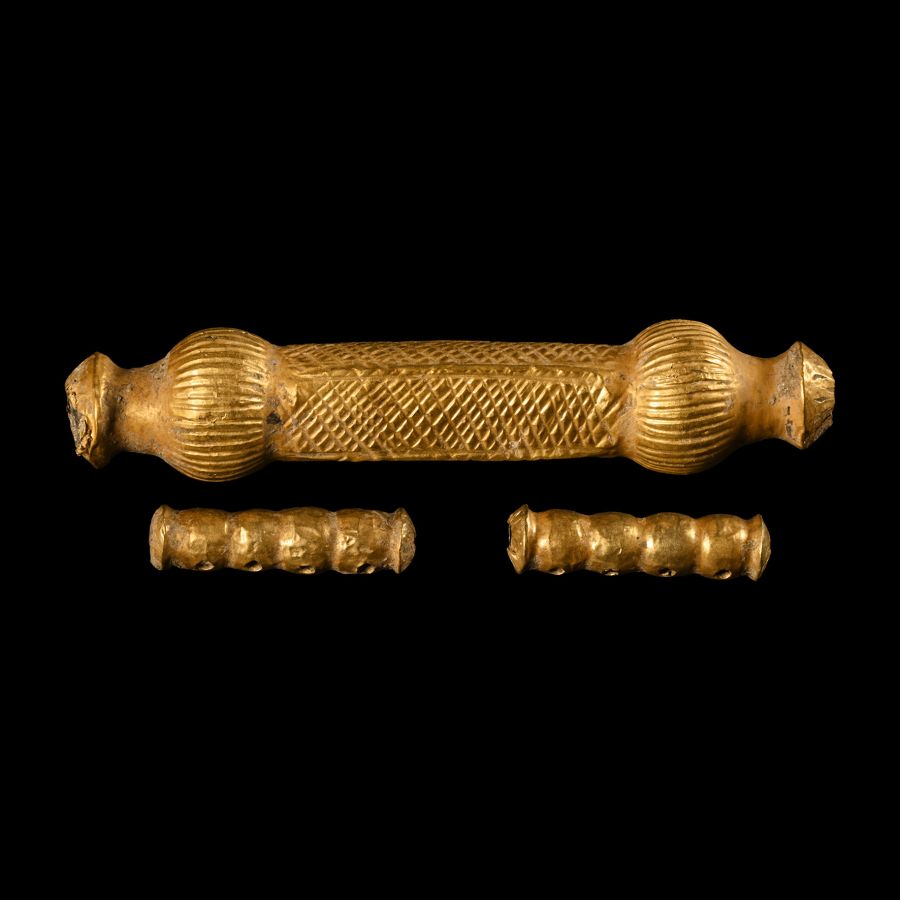
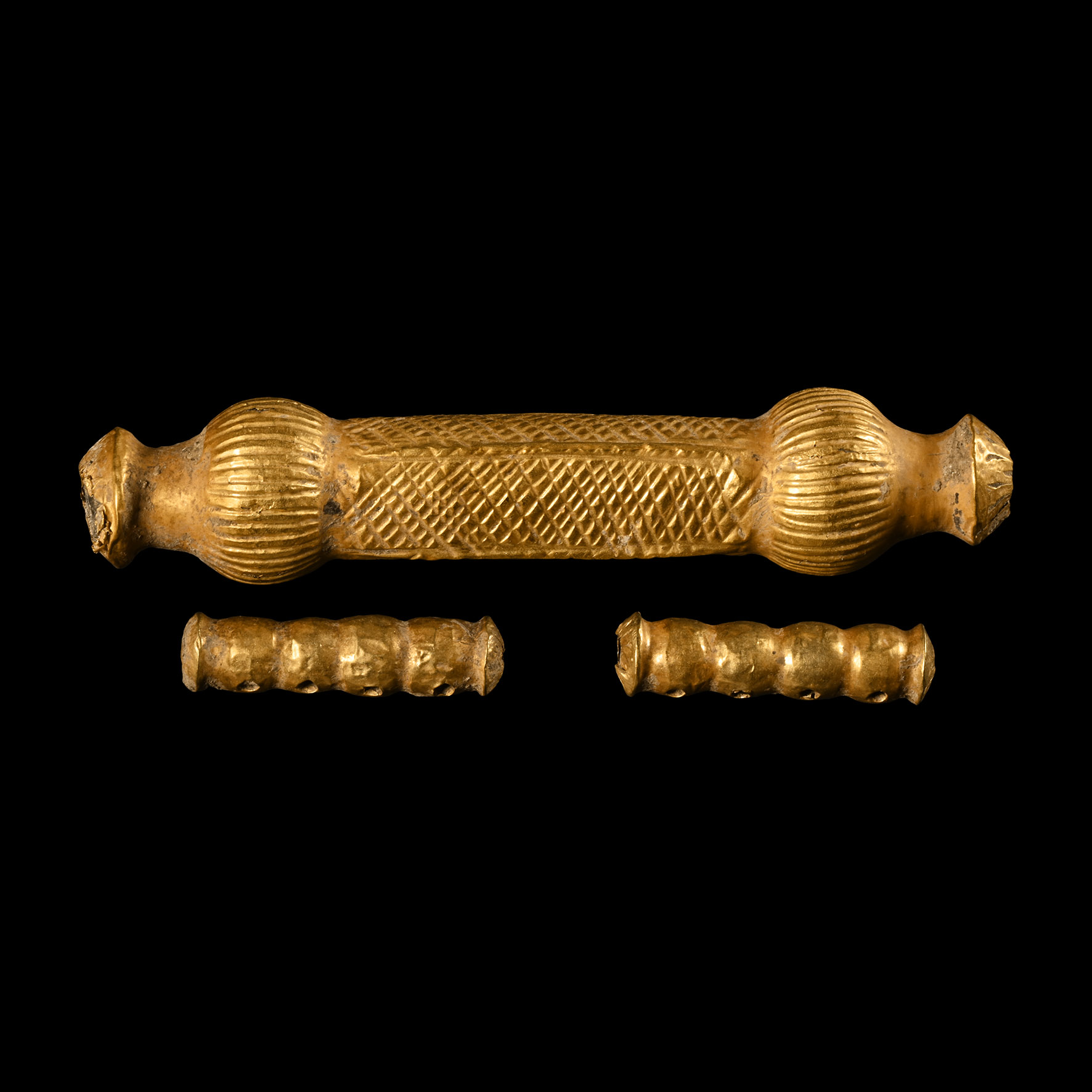
Gold Pendant Bead Group
1ST MILLENNIUM B.C.
5/8 - 2 in. (5.74 grams total, 17-52 mm).
Comprising two Hellenistic or Mesopotamian ribbed tubular beads and a larger bead with hatched sides, ribbed bulb to each end. [3]
ProvenanceFrom a late Japanese specialist collector, 1970-2000s.
CONDITIONTimeLine Auctions follows a vetting process to ensure the authenticity and legality of all items, reinforcing our commitment to integrity and responsible trading. Each antiquity, antique, and coin lot undergoes thorough examination by a vetting committee of at least ten external specialists, professional trade association members, scientists, and archaeologists: Our Vetting Process
AUCTIONS:
TimeLine is a leading auction house specialising in antiquities, ancient art, collectables, natural history, coins, medals, and books. Our auctions offer museums, collectors, historians, and enthusiasts the opportunity to acquire unique and historically significant pieces.
-
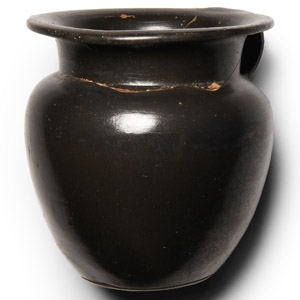
Greek Apulian Black-Glazed Mug
Circa 4th-3rd century B.C.Estimate: £250 - 350 (+bp*)
Opening Bid: £125
With a high-gloss black slip, ovoid body and a short wide neck with a flaring rim, a wide strap handle and a flat base. 144 grams, 95 mm wide
Ex P. A., Hertfordshire, UK, specialist collection of Greek art, 1980-1990s.
The black glaze technique uses the same glaze used by the Greeks on the red-figure and black-figure ceramics, but covering the entire piece, without figurative decoration. It was a transparent raw glaze, which took on its characteristic intense, glossy black tone after firing. -
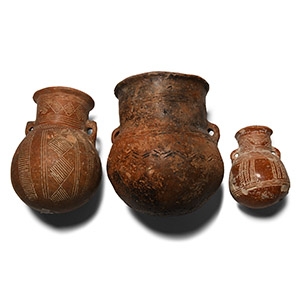
Cypriot Red Polished Ware Jar Group
Middle Bronze Age, circa 2000-1600 B.C.Sold for (Inc. bp): £1,040
Comprising: two with globular body, broad neck and flared rim, pierced lugs to the shoulders, bands of incised hatching; one with rounded underside, broad neck and everted rim, pierced lugs to the shoulder, horizontal broken lines and zigzags. 1.27 kg total, 9.7-15 cm
From a collection acquired on the UK art market from various auction houses and collections mostly before 2000. From an important Cambridgeshire estate; thence by descent.
In the Early Bronze Age, the most common form of Cypriot jars was the round-based, two-handled variety, with the handles attached on the vertical plane. -
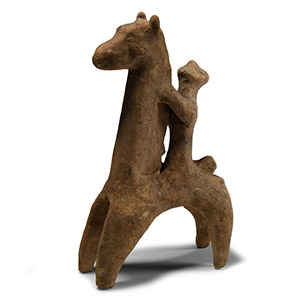
Cypriot Ceramic Horse and Rider Statuette
8th-7th century B.C.Sold for (Inc. bp): £442
Representing a warrior with conical helmet riding his mount, horse with long neck, short legs and traces of polychromy all along body, neck and ears. 251 grams, 17 cm high
From a collection acquired on the UK art market from various auction houses and collections mostly before 2000. From an important Cambridgeshire estate; thence by descent.
The most popular animals in Cypriot coroplasts of the 8th and 7th centuries B.C. were horses, with or without riders, with long necks and decorated along the whole body like contemporary ceramics. It is worth remembering that the horse in this period represented a status symbol for the military aristocracy and that bodies of sacrificed horses have been found in royal tombs.
