
Loading, please wait...
_900x900.jpg "Gold Engraved Touchpiece")
_200x200.jpg "Gold Engraved Touchpiece")
.jpg "Gold Engraved Touchpiece")
LOT 1801
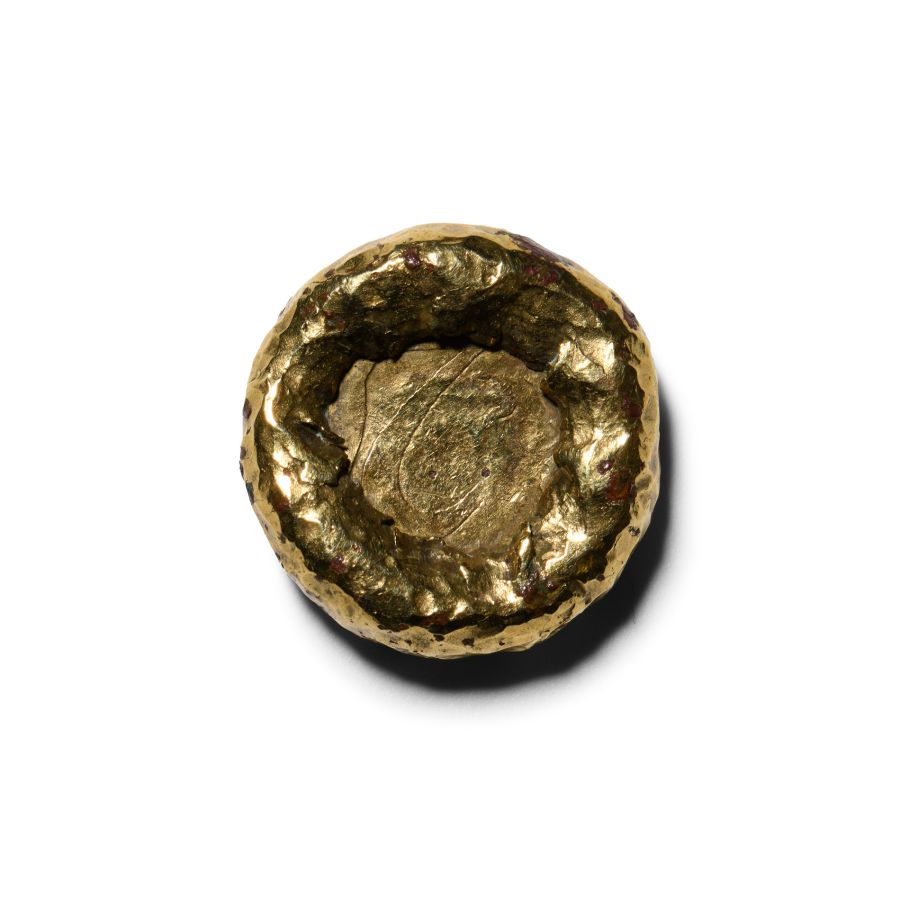
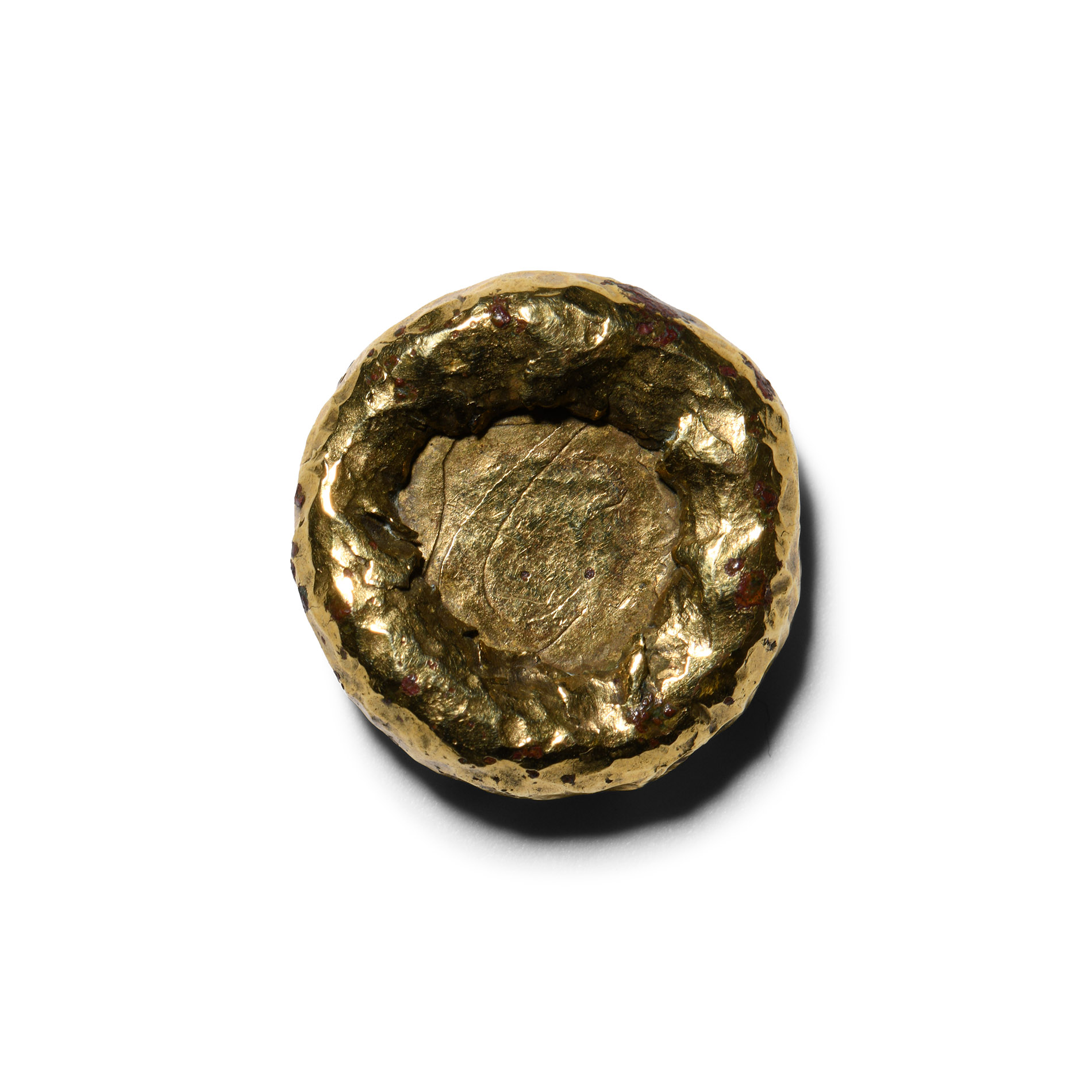
Gold Engraved Touchpiece
17TH CENTURY A.D. OR EARLIER
3/4 in. (5.53 grams, 17 mm).
Barrel-shaped with two impressed flat faces, one with a later engraving of a guilloche border and looped tendrils framing reserved initials 'PO P[R]' above and lower 'NU [.]M'; possibly a touchpiece or love token. [No Reserve]
ProvenanceAcquired since the 1970s.
From the private collection of a Surrey, UK, gentleman.
Accompanied by a copy of the article 'A Roman or Anglo-Saxon Fertility Amulet?' published in Treasure Hunting Magazine.
Harfellet, Geoffrey, A Roman or Anglo-Saxon Fertility Amulet?, Treasure Hunting Magazine, April 2018, p.15.
FootnotesThe design is reserved and very faint; the outer guilloche is quite convincing but the details of the design are hard to determine, and may always have been quite indistinct. The impression is of a 17th century love token with the initials of the couple. The finder's article implies an Anglo-Saxon date, probably on the strength of the guilloche which was often use on early Saxon metalwork - but it is a long-lived motif and not specific to that one period.
CONDITIONTimeLine Auctions follows a vetting process to ensure the authenticity and legality of all items, reinforcing our commitment to integrity and responsible trading. Each antiquity, antique, and coin lot undergoes thorough examination by a vetting committee of at least ten external specialists, professional trade association members, scientists, and archaeologists: Our Vetting Process
AUCTIONS:
TimeLine is a leading auction house specialising in antiquities, ancient art, collectables, natural history, coins, medals, and books. Our auctions offer museums, collectors, historians, and enthusiasts the opportunity to acquire unique and historically significant pieces.
-
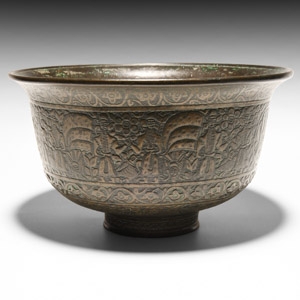
Bowl with Figures and Calligraphy
Late 19th century A.D.Estimate: £150 - 200 (+bp*)
Opening Bid: £80
Carinated and decorated with figures and panels of calligraphy between geometric bands. 1 kg, 20.2 cm wide
Fine condition.
Acquired on the UK art market, 2000s. Property of a Suffolk gentleman. -
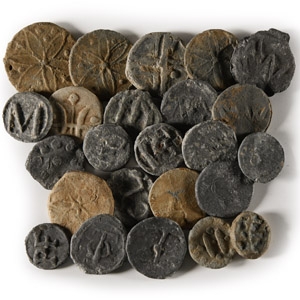
Post Medieval Lead Token Collection
Circa 16th-19th century A.D.Sold for (Inc. bp): £26
Mixed group of discoid tokens with various designs. 152 grams total, 16-29 mm
Acquired since the 1970s. From the private collection of a Surrey, UK, gentleman. -
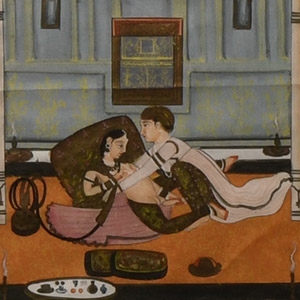
Framed Erotic Watercolour Painting
India, 20th century A.D.Estimate: £120 - 170 (+bp*)
Opening Bid: £60
Bearing four columns of script, divided by an erotic watercolour scene composed of a couple engaging in intercourse, set in opulent surrounds; mounted in a reveal and a glazed wooden frame. 1.7 kg, 58 x 40 cm
Fine condition.
Acquired on the UK art market, 1980s-1990s. The Woodbridge collection of Indo-Persian art.
