
Loading, please wait...
LOT 2191
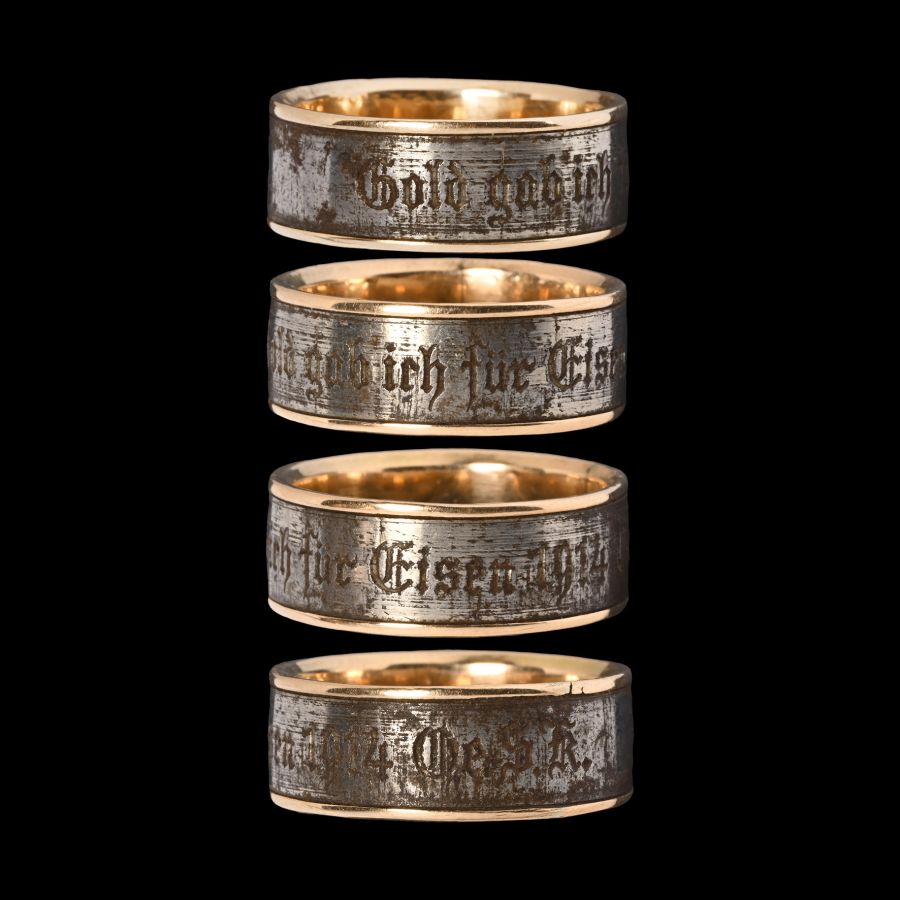
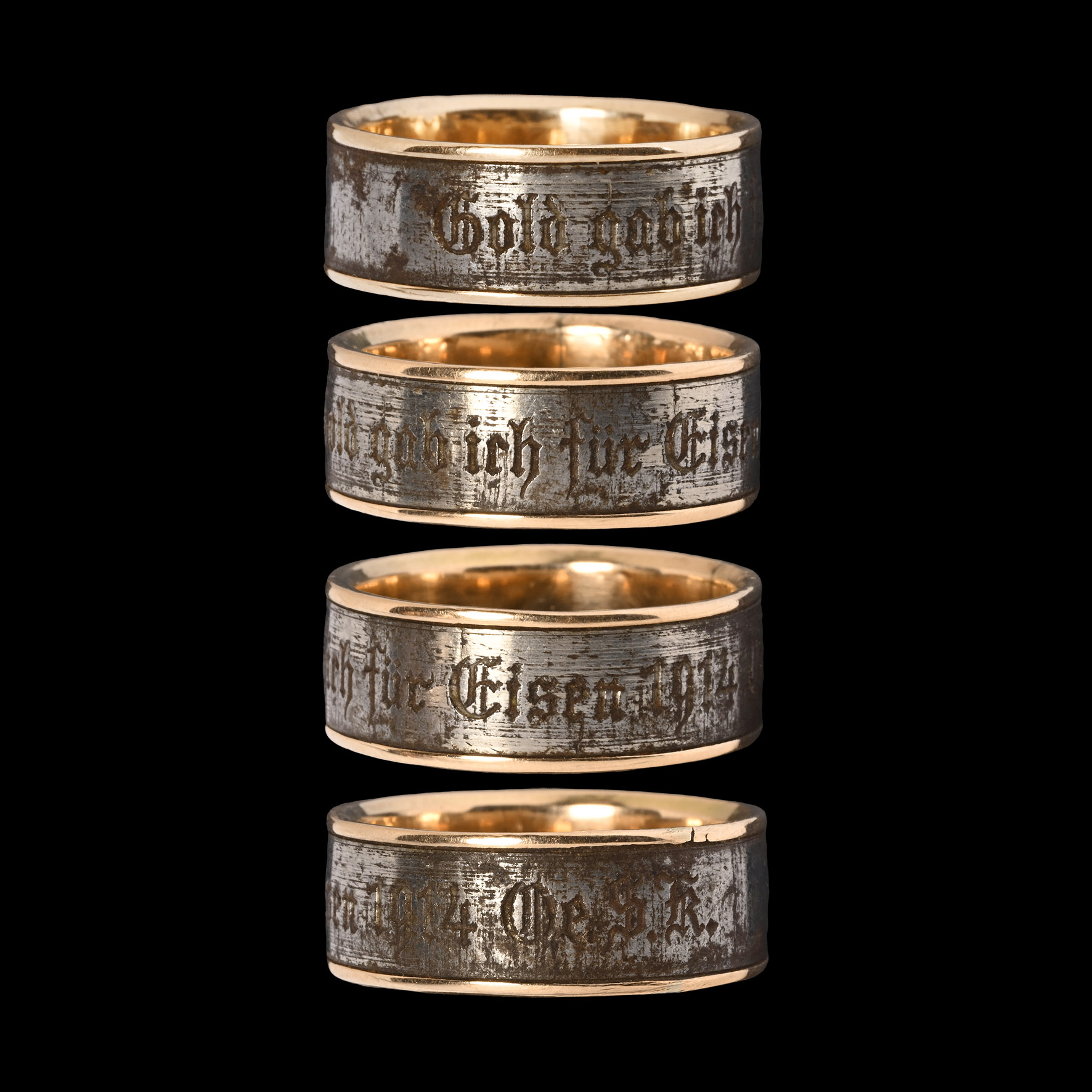
Gold and Iron 'I Gave Gold for Iron' World War I Ring
GERMANY, 1914 A.D.
3/4 in. (4.67 grams, 20.20 mm overall, 17.12 mm internal diameter (approximate size British N, USA 6 1/2, Europe 13.72, Japan 13)).
Finger ring with gold core and median iron band inscribed 'Gold gab ich für Eisen 1914. Oe.S.K.'. [No Reserve]
ProvenanceAcquired on the UK art market.
Property of an Essex, UK, gentleman.
TimeLine Auctions follows a vetting process to ensure the authenticity and legality of all items, reinforcing our commitment to integrity and responsible trading. Each antiquity, antique, and coin lot undergoes thorough examination by a vetting committee of at least ten external specialists, professional trade association members, scientists, and archaeologists: Our Vetting Process
AUCTIONS:
TimeLine is a leading auction house specialising in antiquities, ancient art, collectables, natural history, coins, medals, and books. Our auctions offer museums, collectors, historians, and enthusiasts the opportunity to acquire unique and historically significant pieces.
-
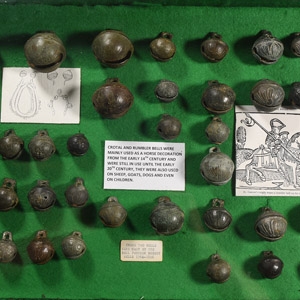
Cased Medieval and Later 'Published' Crotal and Rumbler Bell Collection
14th-19th century A.D.Sold for (Inc. bp): £416
Collection of crotal bells labelled and mounted in a felt-lined glazed wooden display case with explanatory text and illustration; many of these objects are published in the Detector Finds book series. 4.6 kg total, 51 x 35.5 x 8.5 cm
From the collection of the famous author, writer and speaker, Gordon Bailey, Essex, UK; formed since 1968. -
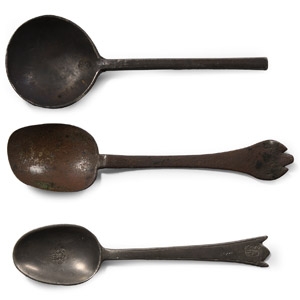
Jacobean and Later 'Published' Bronze and Pewter Spoon Collection
17th-early 18th century A.D.Sold for (Inc. bp): £111
Comprising: one with rectangular bowl flat handle with tulip finial; one with oval bowl and stamped motif to bowl and upper handle; one with shallow disc bowl, hexagonal-section handle, maker's mark inside the bowl. 173 grams total, 17-18.6 cm
From the collection of the famous author, writer and speaker, Gordon Bailey, Essex, UK; formed since 1968. -
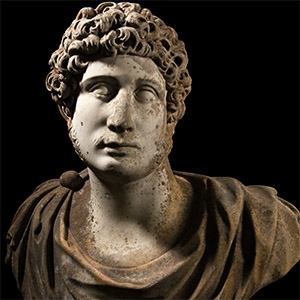
Marble Bust of Young Hadrian
19th century A.D.Sold for (Inc. bp): £3,120
Tastefully carved bust of a youthful male with abundant curly hair, broad brow and high cheekbones, mutton-chop whiskers, long sturdy neck; dressed in classical style with a loose mantle covering the broad shoulders and secured at the right shoulder by a knopped fastener. 40.9 kg, 54 cm
Acquired on the North American art market. Private collection, England.
