
Loading, please wait...
LOT 1890
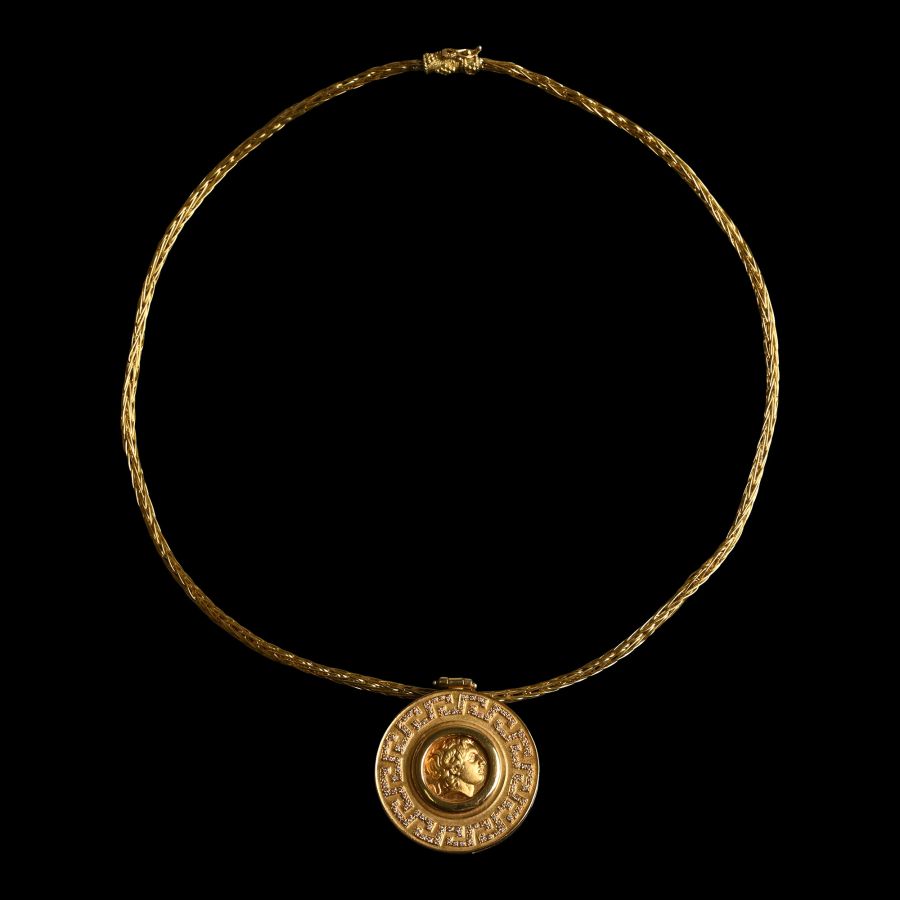
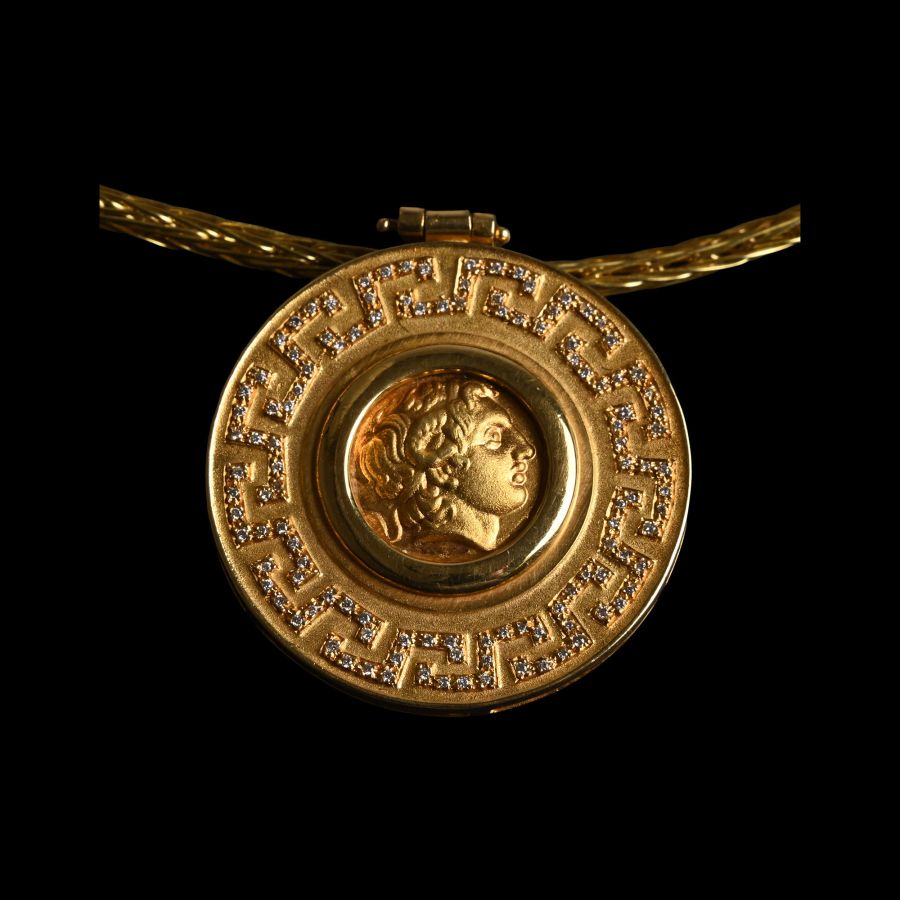
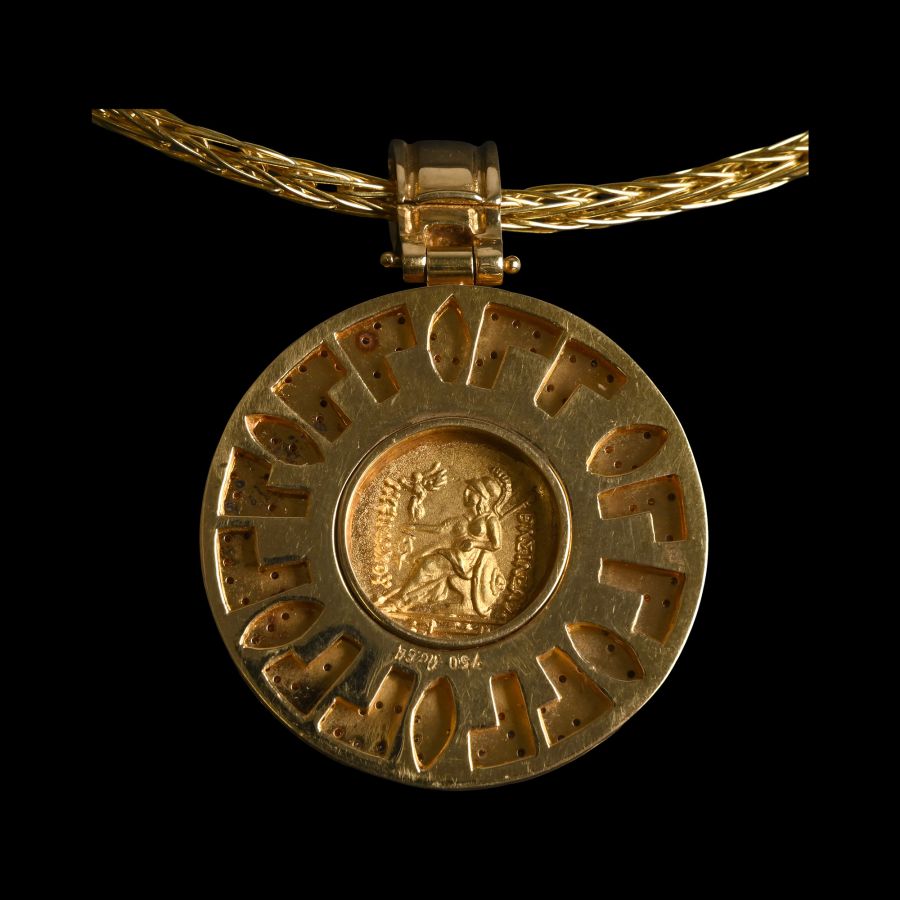
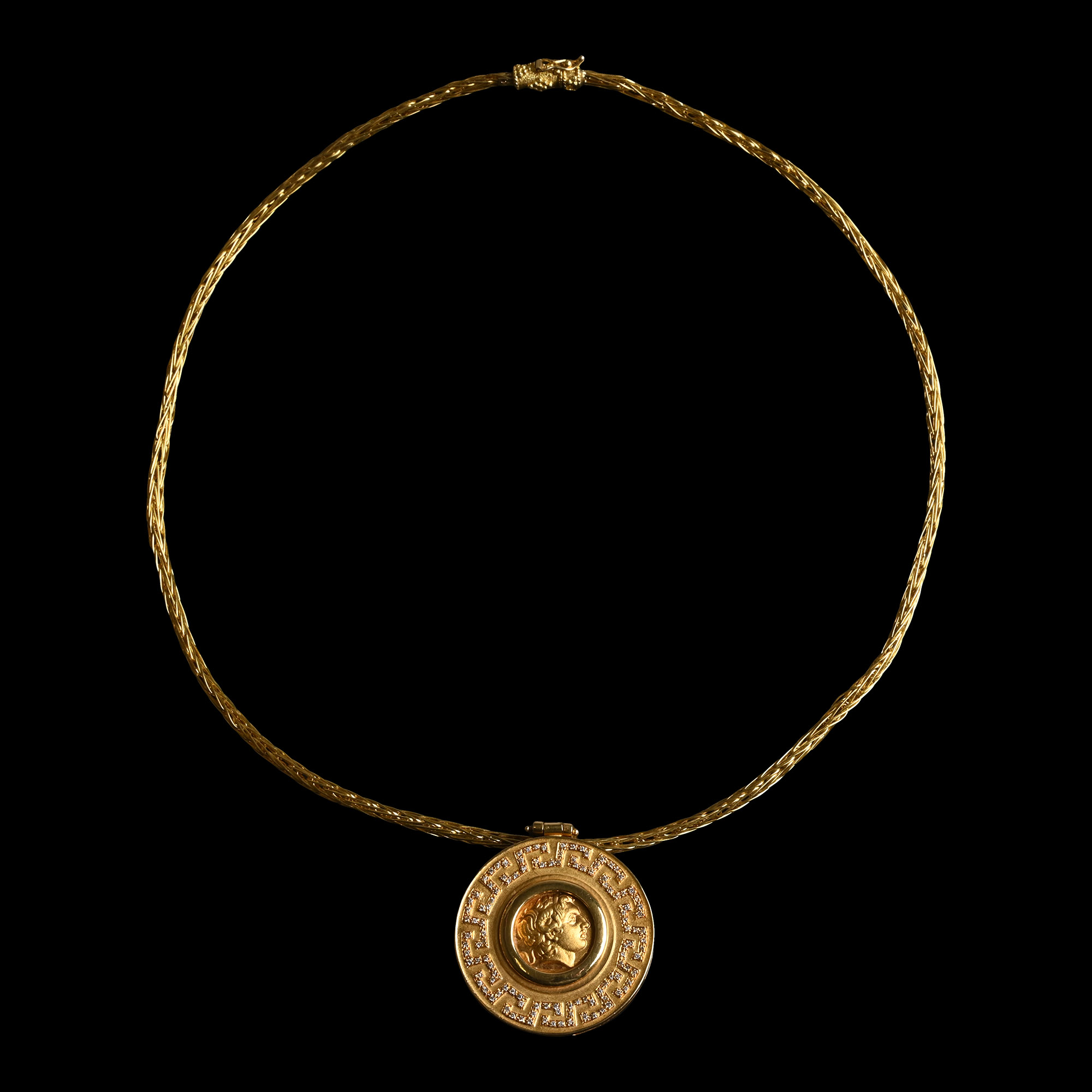
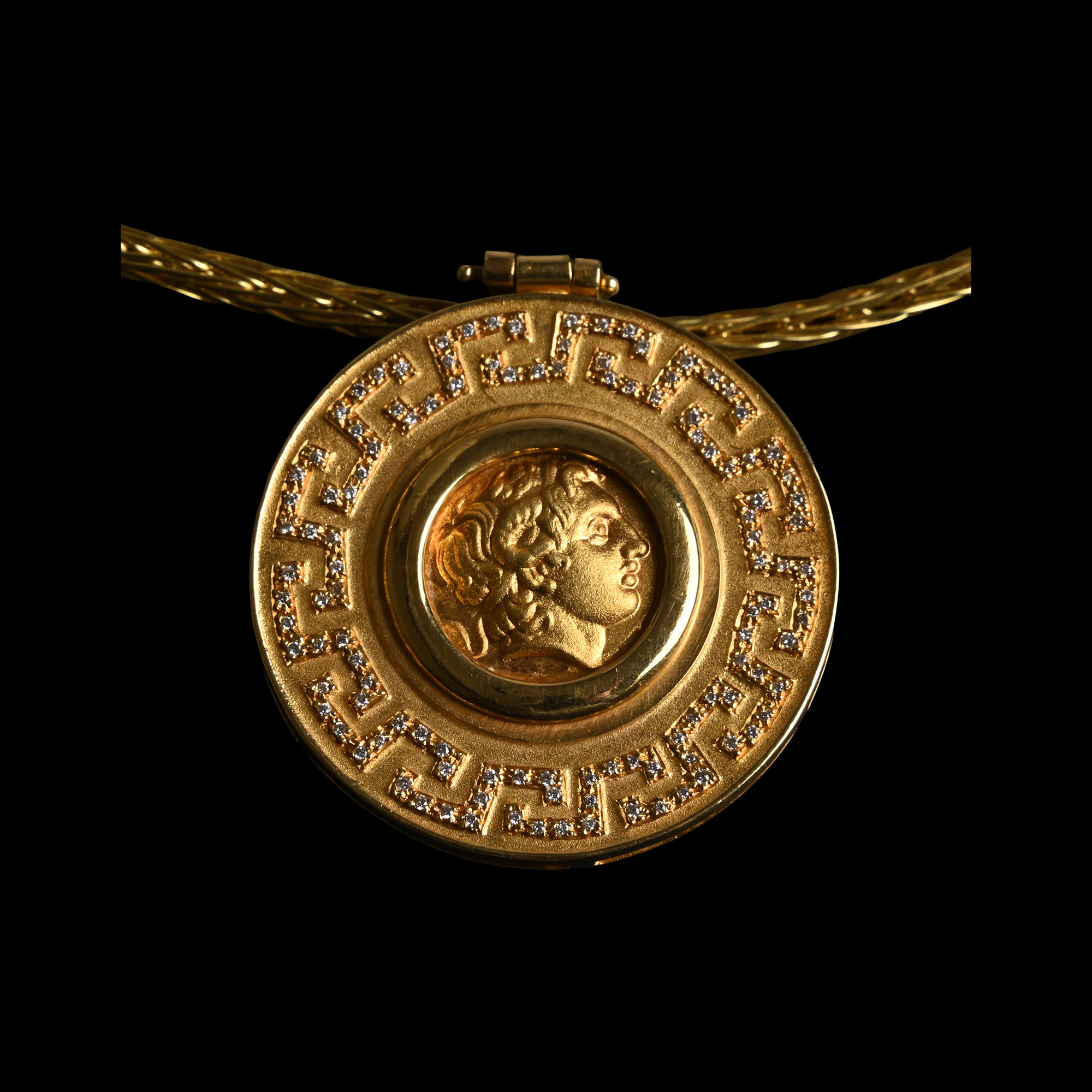
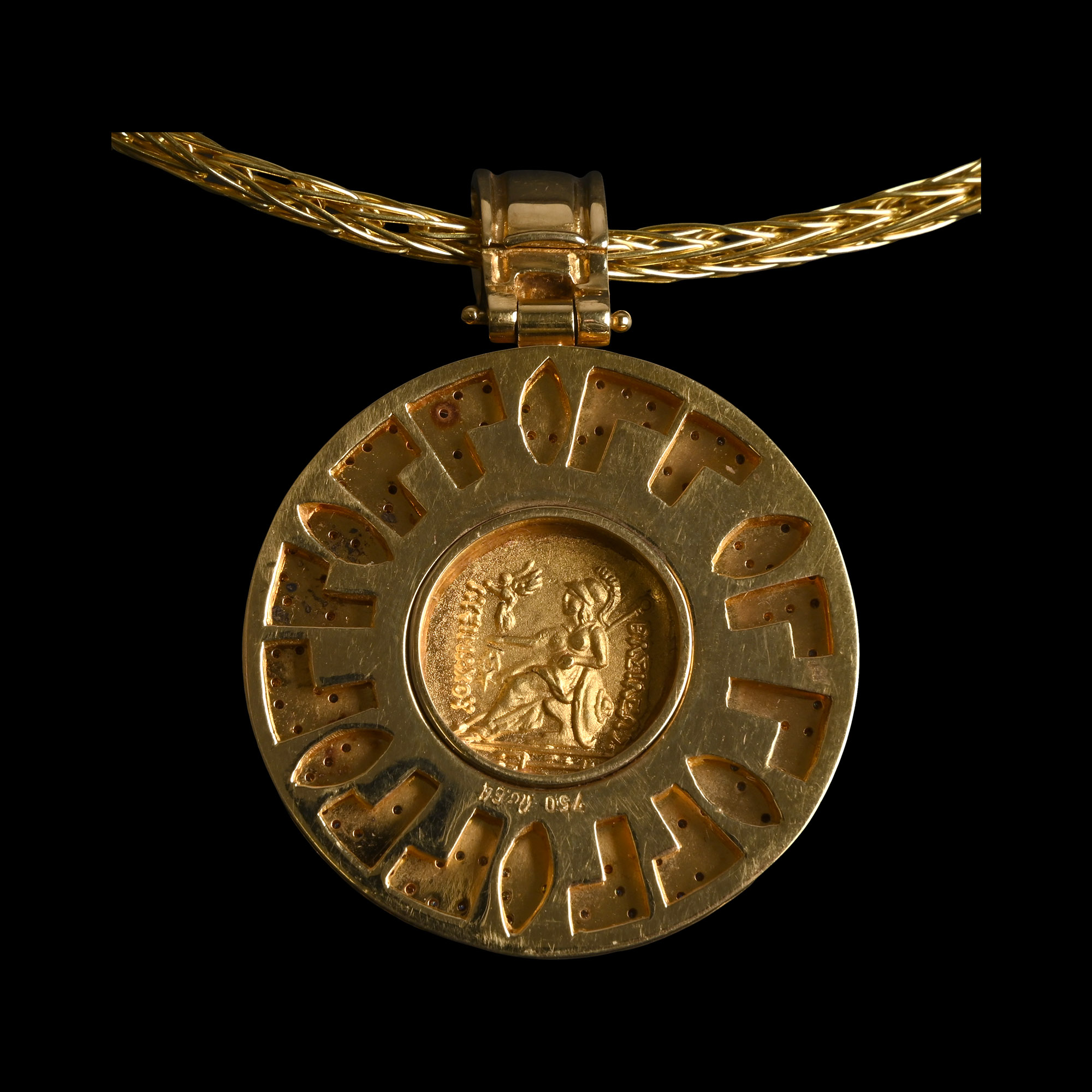
Gold and Diamond Pendant Necklace with Pseudo-Coin
21ST CENTURY A.D.
19 3/4 in. (50.53 grams, 50 cm).
Necklace of braided gold wire; discoid pendant with encrusted guilloche motif, central pseudo-coin with profile bust; pendant hallmarked '750 Ru.64'.
ProvenanceFrom the private collection of a West London, UK, gentleman, formed since the early 2000s.
This lot has been checked against the Interpol Database of stolen works of art and is accompanied by search certificate number no.12923-244255.
Cf. for a coin of Alexander with a similar portrait Touratsoglou, I., Macedonia, History, Monuments, Museums, Athens, 1996, p.30, fig.31.
FootnotesThe profile bust here represented is a portrait of Alexander the Great, fashioned after coins of the Macedonian leader.
CONDITIONTimeLine Auctions follows a vetting process to ensure the authenticity and legality of all items, reinforcing our commitment to integrity and responsible trading. Each antiquity, antique, and coin lot undergoes thorough examination by a vetting committee of at least ten external specialists, professional trade association members, scientists, and archaeologists: Our Vetting Process
AUCTIONS:
TimeLine is a leading auction house specialising in antiquities, ancient art, collectables, natural history, coins, medals, and books. Our auctions offer museums, collectors, historians, and enthusiasts the opportunity to acquire unique and historically significant pieces.
-
.jpg)
Roman to Post Medieval Artefact Group
Circa 2nd-19th century A.D.Sold for (Inc. bp): £39
Including a Trajan Denarius (98-117 AD), medieval buckle loop and other items. 24 grams total, 18-88 mm
Found Yorkshire, UK, before 1991.
The Trajan (AD 98-117) silver Denarius should be from the mint of Rome (A.D. 100). It shows on the obverse the inscription IMP CAES NERVA TRAIAN AVG GERM, and laureate bust of Trajan facing right. -
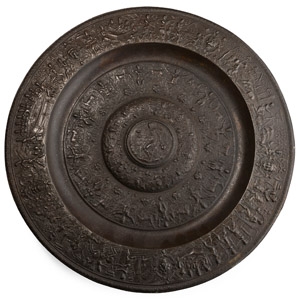
Bronze Replica of 'Venus Rosewater Dish' Platter
20th century A.D.Sold for (Inc. bp): £26
Copying the original 'Temperantia' made by Francois Briot in the 16th century, showing scenes of classical mythology and having a large central medallion with Sophrosyne; three mounting lugs on the reverse. 2.17 kg, 38.6 cm
From a private Tyneside collection, formed since the early 2000s. -
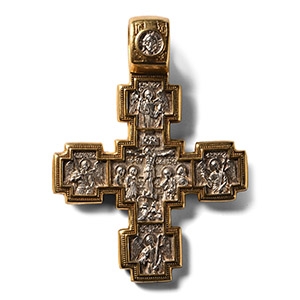
Russian Silver-Gilt Cross Pendant
21st century A.D.Sold for (Inc. bp): £46
Bifacial pendant cross with applied silver panels; obverse with central crucifixion scene surrounded by winged angels with spears and nimbate bust on the bale; reverse with central combat scene surrounded by saints; stamped '925' on reverse of bale. 13.72 grams, 45 mm
From the private collection of a West London, UK, gentleman, formed since the early 2000s.
