
Loading, please wait...
LOT 0056
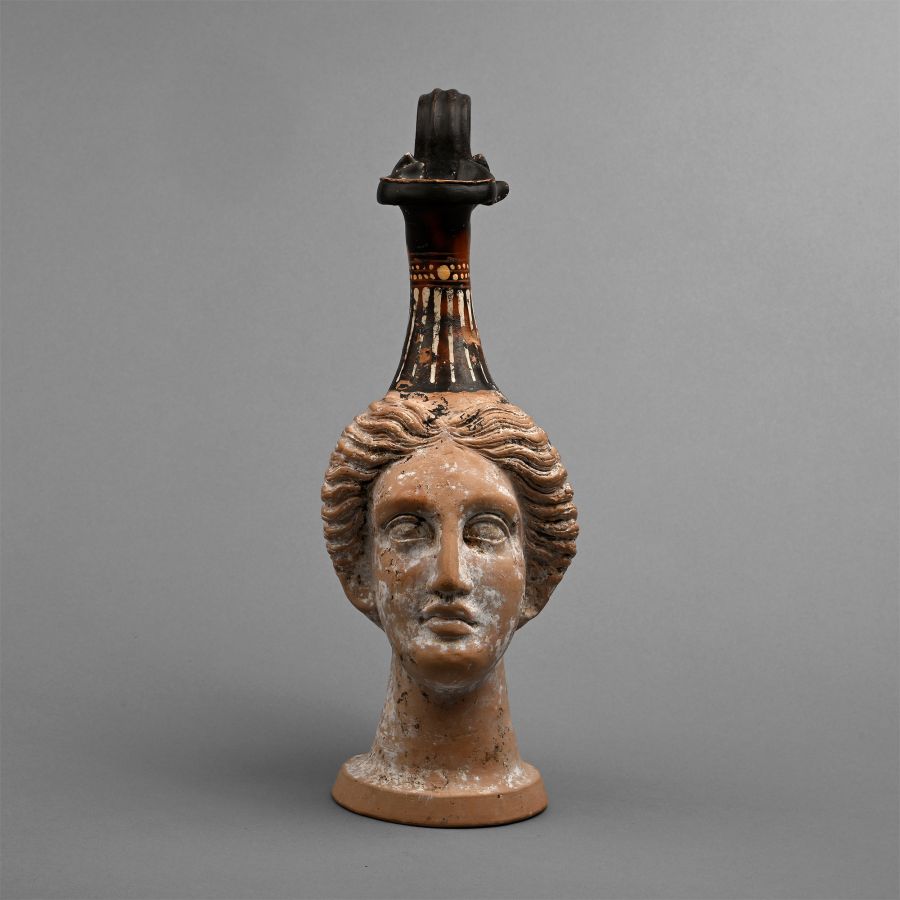
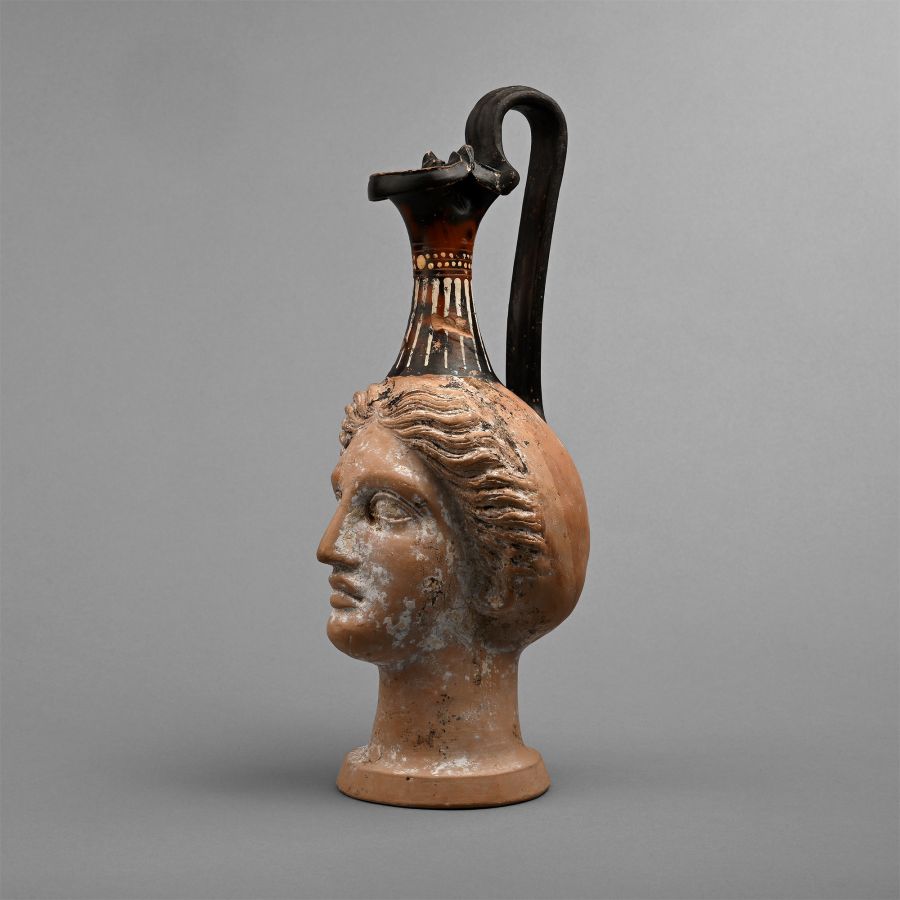
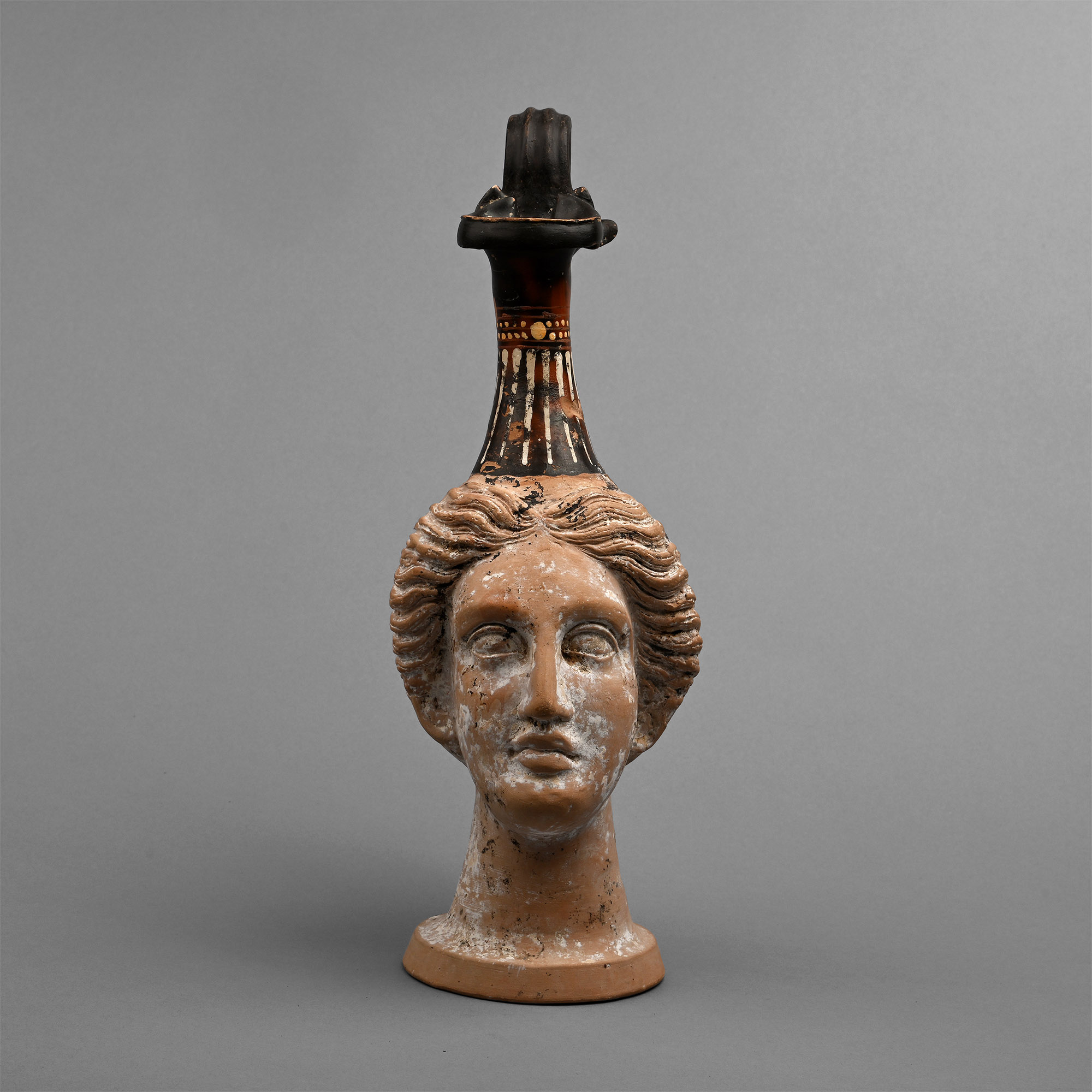
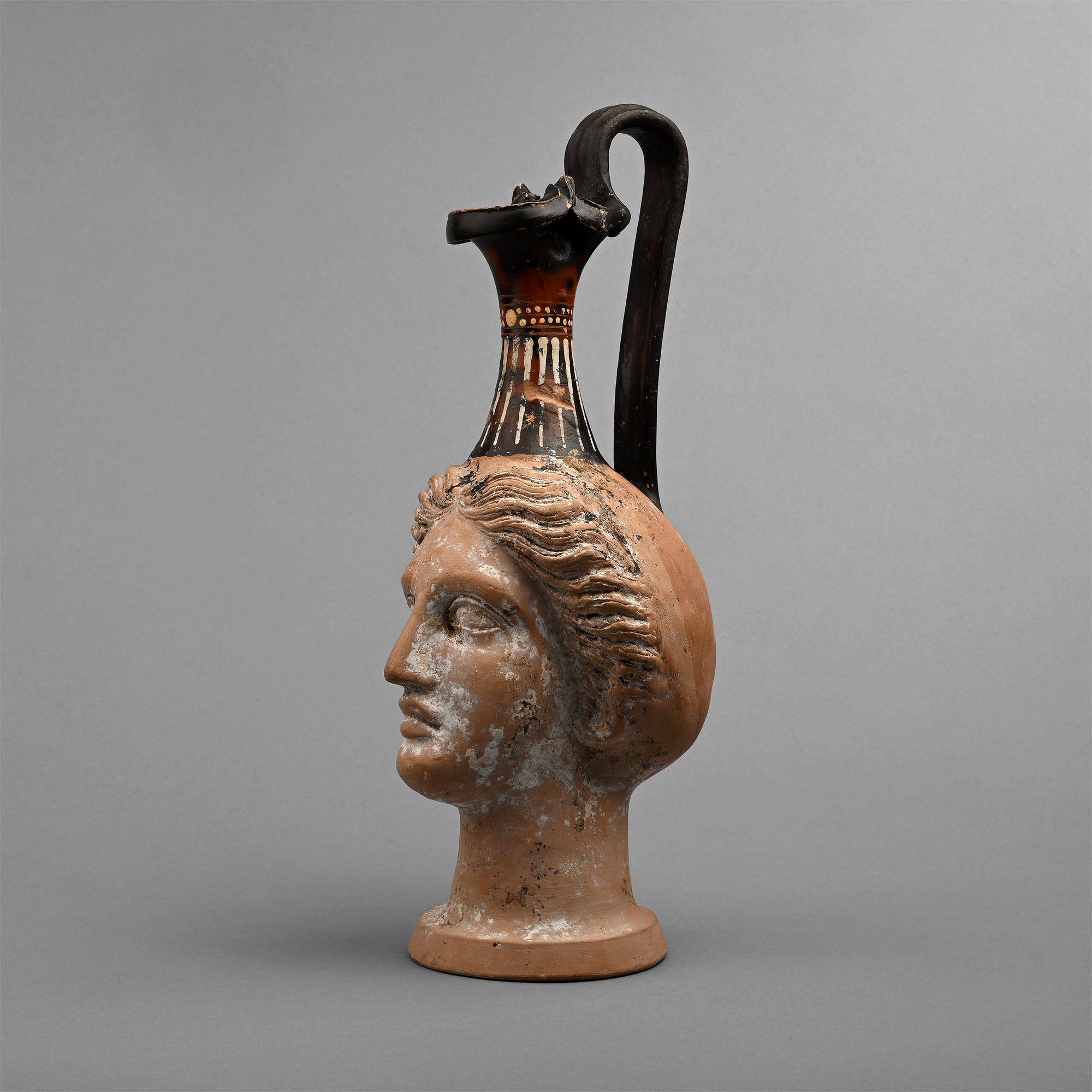
Gnathian Plastic Vase in the Shape of a Woman
4TH-3RD CENTURY B.C.
12 1/4 in. (1.34 kg total, 31 cm high excluding stand).
Hollow-formed with broad chamfered base, body modelled as the head of a woman supporting the neck in the form of a trefoil oinochoe with a high, curving handle to the rear; moulded head with detailed swept hair wrapped in a cloth (sakkos), and stern facial features; circumferential painted band beneath the rim and vertical strokes; supplied with a custom-made stand.
ProvenanceAcquired from Galerie Simone de Monbrison, Rue Bonaparte, Paris, France, 1980.
Accompanied by a thermoluminescence analysis report no.N125e36 from Oxford Authentication.
Accompanied by a copy of French passport no.150924, dated 19 December 2013.
This lot has been checked against the Interpol Database of stolen works of art and is accompanied by a search certificate number no.12666-234641.
Cf. Beazley, J.D., Charinos: Attic Vases in the Form of Human Heads in Journal of Hellenic Studies 49, 1929, pp.38-78.
CONDITIONTimeLine Auctions follows a vetting process to ensure the authenticity and legality of all items, reinforcing our commitment to integrity and responsible trading. Each antiquity, antique, and coin lot undergoes thorough examination by a vetting committee of at least ten external specialists, professional trade association members, scientists, and archaeologists: Our Vetting Process
AUCTIONS:
TimeLine is a leading auction house specialising in antiquities, ancient art, collectables, natural history, coins, medals, and books. Our auctions offer museums, collectors, historians, and enthusiasts the opportunity to acquire unique and historically significant pieces.
-
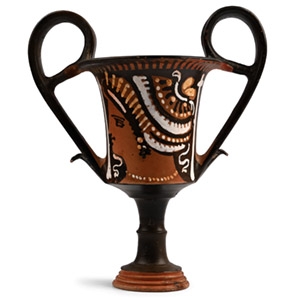
Greek Apulian Black-Glazed Kantharos with Ladies of Fashion
South Italic, circa 325-300 B.C.Sold for (Inc. bp): £1,170
High-handled with carinated lower body, socle base; profile 'ladies of fashion' busts with white and cream detailing to the hair, diadem and earrings. 436 grams, 21 cm high
From the private collection of a Canadian gentleman living in Essex, UK, formed since the 1920s-circa 1990. Property of an Essex lady until the the late 1990s; thence by descent. From the private collection of an Essex gentleman since the late 1990s. Accompanied by an original thermoluminescence analysis report no.N125k90 by Oxford Authentication. -
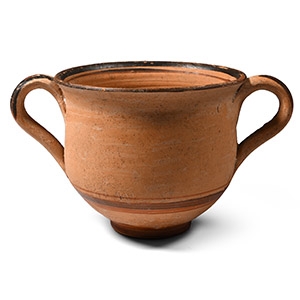
Daunian Terracotta Twin-Handled Cup
5th-4th century B.C.Estimate: £400 - 600 (‡+bp*)
Opening Bid: £222
Comprising a bell-shaped thin-walled body with two strap handles and an everted rim, dark lip with a thin circumferential band below; each handle with a lentoid motif; narrow foot with two circumferential bands above. 206 grams, 16 cm wide
From the estate of a Swiss gentleman, Ticino, before 1970. with Galerie Rhéa, Zurich, Switzerland.
Daunian pottery is characterised by unique shapes and decorative motifs, which include geometric patterns, plant and animal motifs, and human figures. The pottery is typically made from a coarse clay, and it is decorated with black or dark brown slip, a type of liquid clay that is applied to the surface of the pottery before firing. -
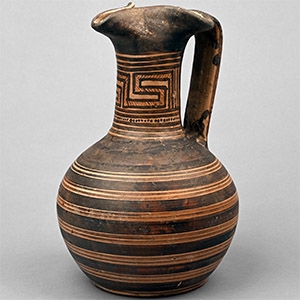
Attic Terracotta Geometric Jug with Handle
8th century B.C.Sold for (Inc. bp): £2,106
With a bulbous body and low basal ring, tubular neck with pinched trefoil spout and a wide strap handle to the rear; the body decorated with densely arranged circumferential bands, a panel of Greek key motifs on the neck, the handle with horizontal stripes and a central X-motif. 735 grams, 23.7 cm
Swiss private collection, 1980-1990s. Private collection, Bern, Switzerland. This lot has been checked against the Interpol Database of stolen works of art and is accompanied by a search certificate number no.12654-236373.
These kinds of geometric oinochoai almost always had spherical bodies, cylindrical necks with trefoil mouths and strap handles from rim to shoulder. They are typical of Attic workshops of the Middle Geometric period (800-750 B.C.).
