
Loading, please wait...
LOT 1948
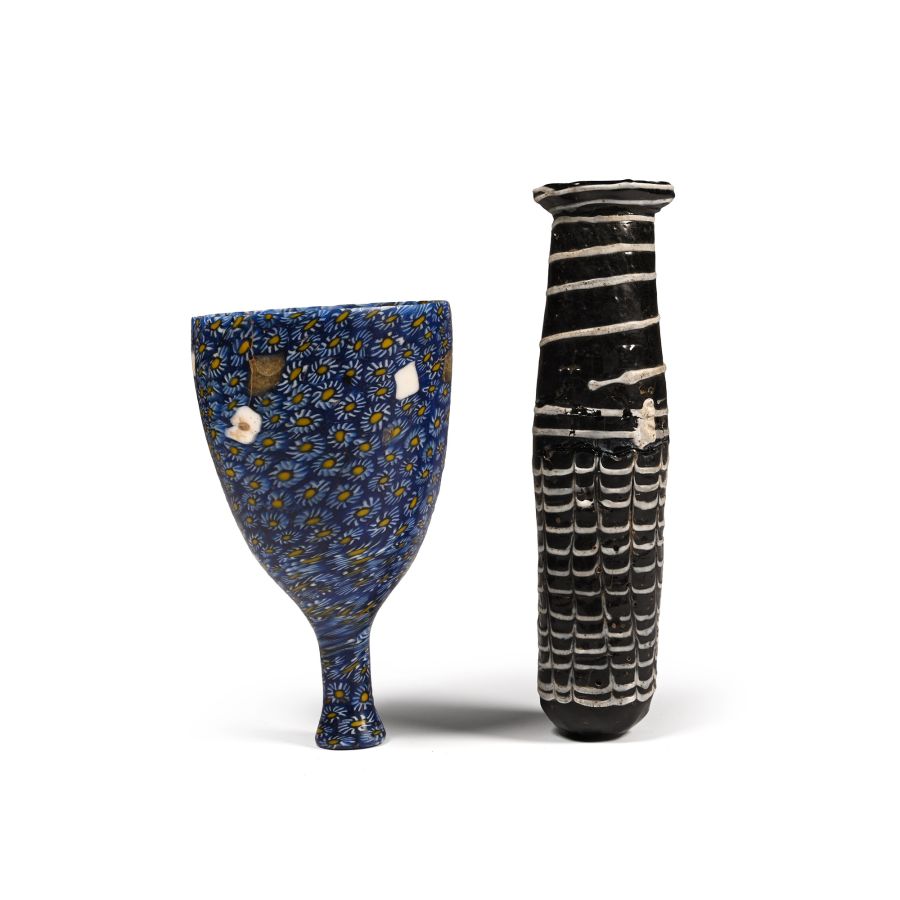
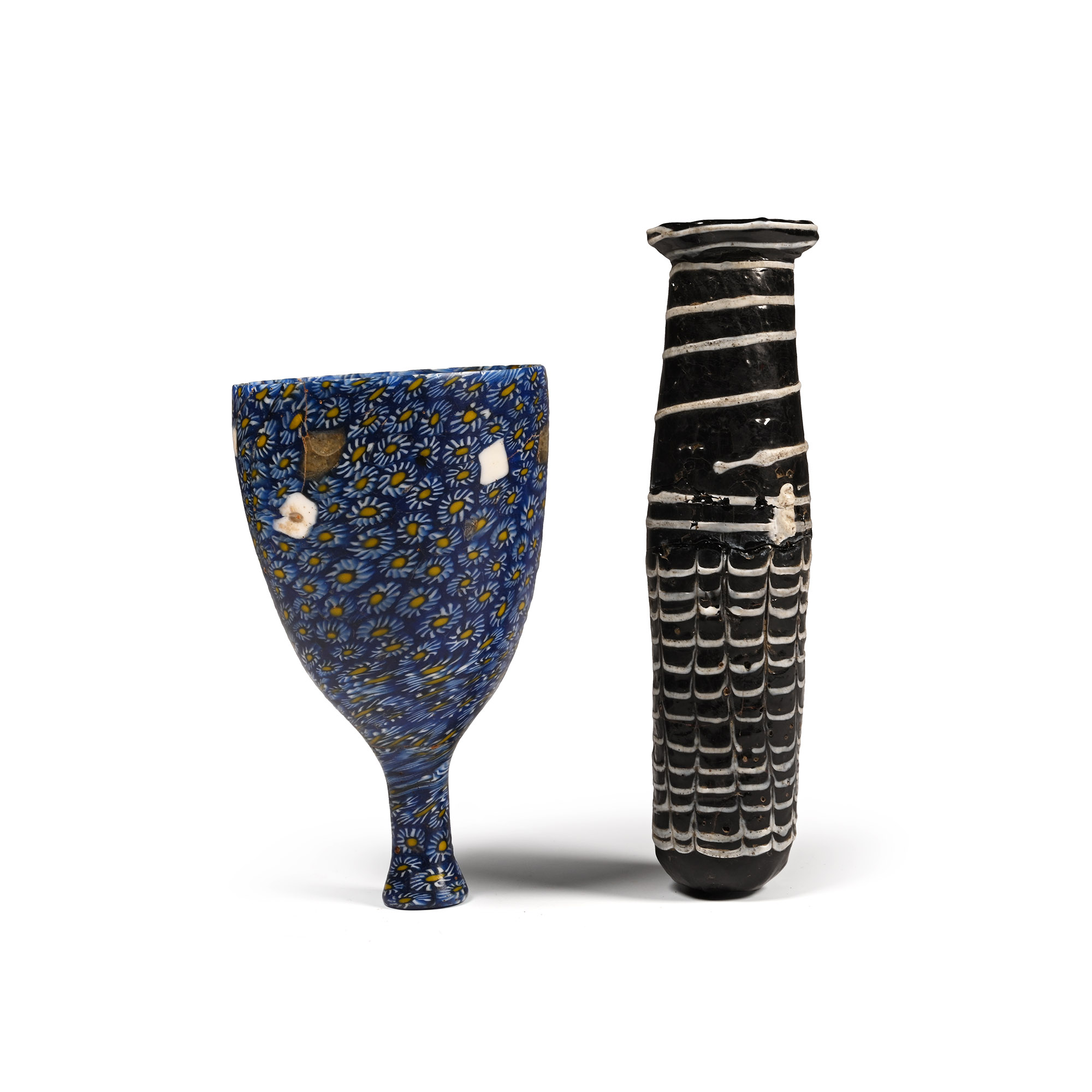
Glass Vessel Group
20TH CENTURY A.D.
4 1/2 - 5 3/4 in. (260 grams total, 11.4-14.7 cm).
Comprising: a millefiori bell-shaped vessel with slender stem; a piriform black glass vessel with white trail decoration. [2, No Reserve]
ProvenanceFrom the family collection of a Hampstead gentleman; formerly acquired in the 1980s.
This lot is accompanied by an illustrated lot declaration signed by the Head of the Antiquities Department, Dr Raffaele D'Amato.
TimeLine Auctions follows a vetting process to ensure the authenticity and legality of all items, reinforcing our commitment to integrity and responsible trading. Each antiquity, antique, and coin lot undergoes thorough examination by a vetting committee of at least ten external specialists, professional trade association members, scientists, and archaeologists: Our Vetting Process
AUCTIONS:
TimeLine is a leading auction house specialising in antiquities, ancient art, collectables, natural history, coins, medals, and books. Our auctions offer museums, collectors, historians, and enthusiasts the opportunity to acquire unique and historically significant pieces.
-

Agamemnon 'First Atlantic Cable' Commemorative Buckle
1858 A.D.Sold for (Inc. bp): £111
Sheet bronze buckle plate with lateral integral hook; stamped design including a circular band enclosing a maritime scene with two sailing ships; band with legend 'Laying the Atlantic Cable'; collector's handwritten ticket. 7.15 grams, 56 mm
Acquired on the UK art market. Property of a Berkshire, UK, gentleman collector. This lot is accompanied by an illustrated lot declaration signed by the Head of the Antiquities Department, Dr Raffaele D'Amato.
Laying a telegraphic cable beneath the Atlantic Ocean was among the 19th century's most remarkable technological achievements since it allowed messages to pass between North America and Europe in a matter of minutes, rather than the two weeks by steamship. A first attempt in 1858 was unsuccessful but two working cables were finally laid in July and September 1866 by a team of engineers, technicians and sailors, with two groups of financial backers involved and relying on help from the British and United States navies. HMS Agamemnon was deployed on this mission alongside USS Niagara. The occasion caused a great stir at the time and was commemorated in numerous works of art. -
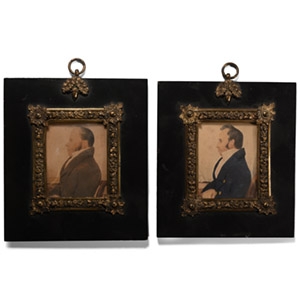
English Miniature Portrait Pair
19th century A.D.Sold for (Inc. bp): £169
Comprising two male profile portraits on card, set within wooden frame with metal embellishments, both men in period costumes and seated on high-backed chairs. 280 grams total, 16 -16.5 cm
From a Cambridgeshire, UK, collection. This lot is accompanied by an illustrated lot declaration signed by the Head of the Antiquities Department, Dr Raffaele D'Amato. -
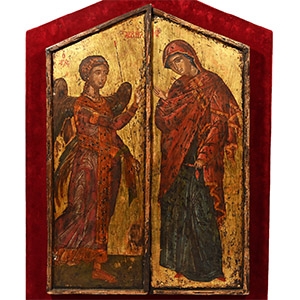
Doors with Annunciation of the Virgin Scene
Cretan School, 16th century A.D.Estimate: £7,000 - 9,000 (+bp*)
Opening Bid: £3,500
Painted onto a pair of gessoed wooden doors for the iconostasis, pentagonal in form with applied beading to the edges; Left: gilt field with advancing winged figure in ankle-length robes holding a slender wand and with thick curly hair, legend 'Ο ΑΡΧΗ' and 'ΓΑΒΡΗΛ'; Right: similar with Mary in floor-length blue robe and crimson mantle, holding a drop-spindle and winder, with legend 'Ω/MP'; representing the Annunciation of the Virgin by the Archangel Gabriel; mounted on a velvet-covered wooden frame. 9.15 kg total, 93.5 x 68.5 cm including frame
Acquired on the UK art market. Private collection, London, UK. Accompanied by an academic report by Dr Raffaele D'Amato. This lot has been checked against the Interpol Database of stolen works of art and is accompanied by a search certificate number no.12552-231939. This lot has been cleared against the Art Loss Register database, and is accompanied by an illustrated lot declaration signed by the Head of the Antiquities Department, Dr Raffaele D’Amato. This lot has been cleared against the Art Loss Register database, and is accompanied by an illustrated lot declaration signed by the Head of the Antiquities Department, Dr Raffaele D'Amato.
