
Loading, please wait...
LOT 1791
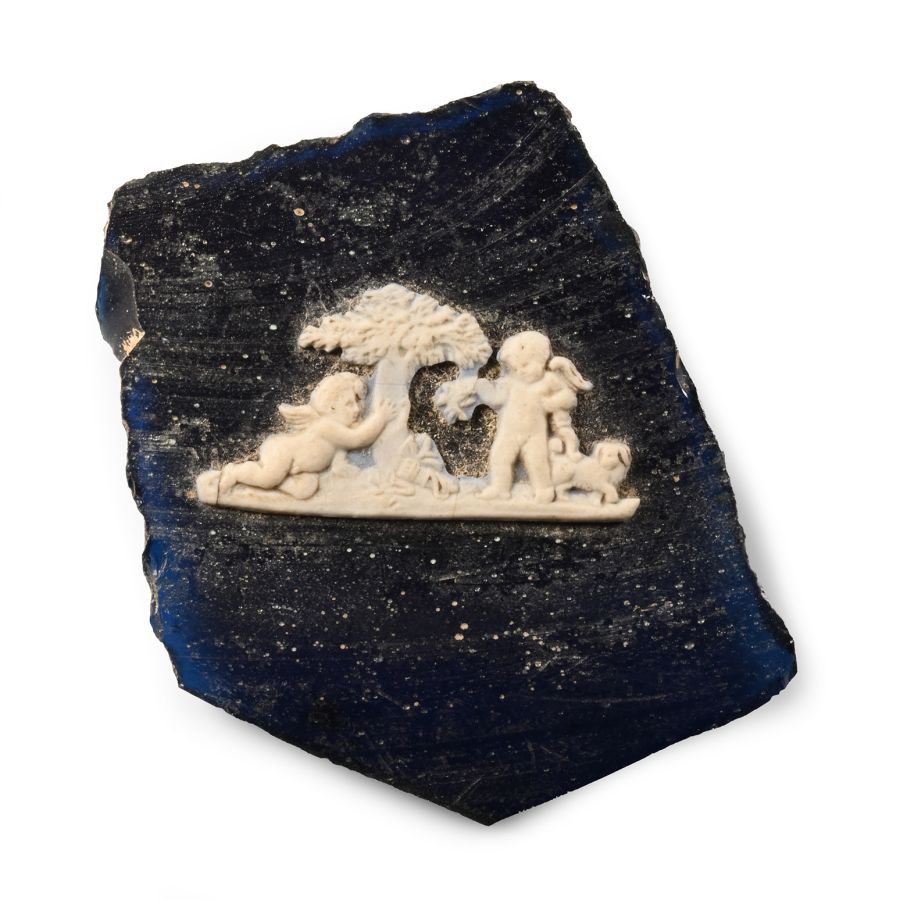
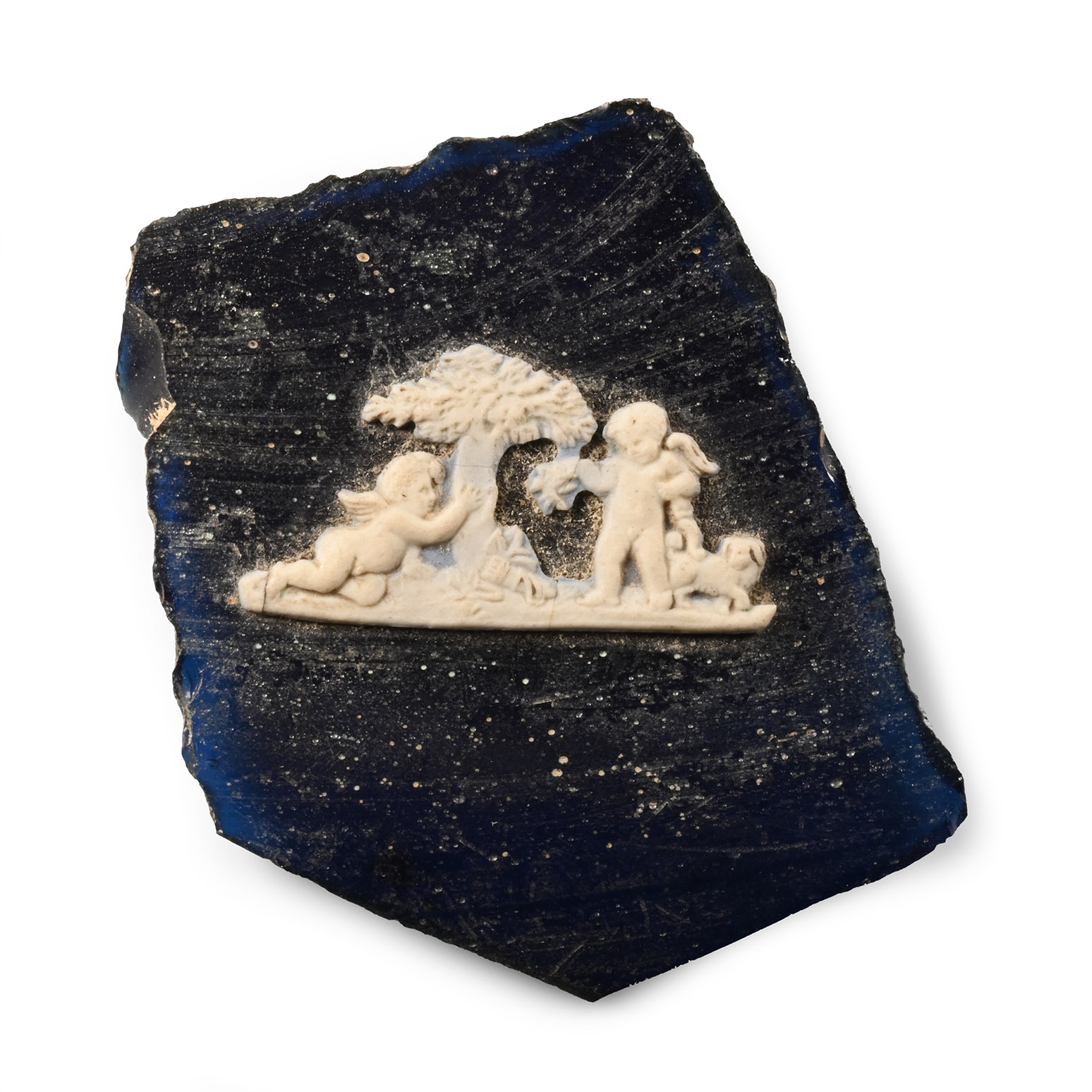
Glass Fragment with Applied Decoration
20TH CENTURY A.D.
1 3/4 in. (12.5 grams, 46 mm).
Composed of dark blue glass, applied white glass decorative scene with two putti beneath a tree, a small dog behind the right hand figure; after the antique. [No Reserve]
ProvenanceEx French gallery, 1970-1990.
Paris collection, France.
TimeLine Auctions follows a vetting process to ensure the authenticity and legality of all items, reinforcing our commitment to integrity and responsible trading. Each antiquity, antique, and coin lot undergoes thorough examination by a vetting committee of at least ten external specialists, professional trade association members, scientists, and archaeologists: Our Vetting Process
AUCTIONS:
TimeLine is a leading auction house specialising in antiquities, ancient art, collectables, natural history, coins, medals, and books. Our auctions offer museums, collectors, historians, and enthusiasts the opportunity to acquire unique and historically significant pieces.
-
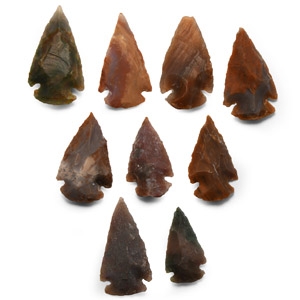
Reproduction North American Stone Arrowhead Group
20th century A.D.Sold for (Inc. bp): £7
Each barbed and with broad tang. 30.9 grams total, 27-36 mm
From a Cambridgeshire, UK, collection, 1990s. -
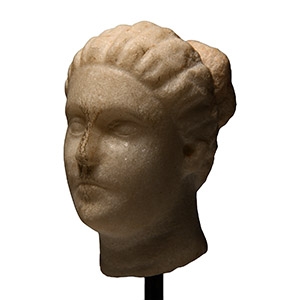
Greek Style Marble Head of a Female
20th century A.D. or earlierSold for (Inc. bp): £130
Carved with the hair drawn back from the face and tied in a chignon, the face soft and youthful with lentoid eyes, with some later re-carving; mounted on a custom-made stand. 492 grams total, 16.5 cm high including stand
London art market, acquired 1988. -
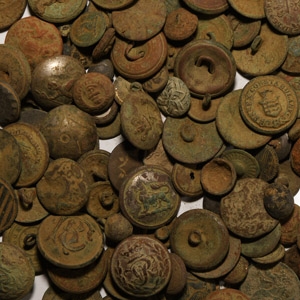
Post Medieval Bronze Military and Other Button Group
19th-20th century A.D.Sold for (Inc. bp): £65
including heraldic and regimental designs, constabulary and other types. 355 grams total, 9-26 mm
Found Cambridgeshire, UK.
