
Loading, please wait...
LOT 1911
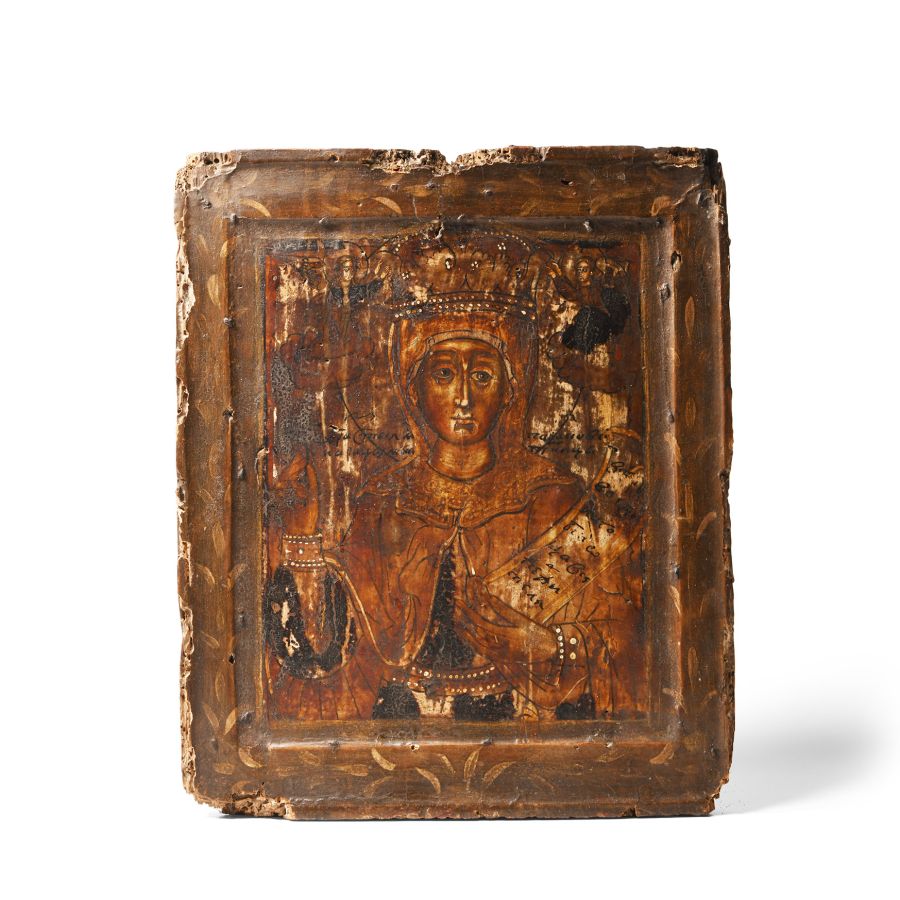
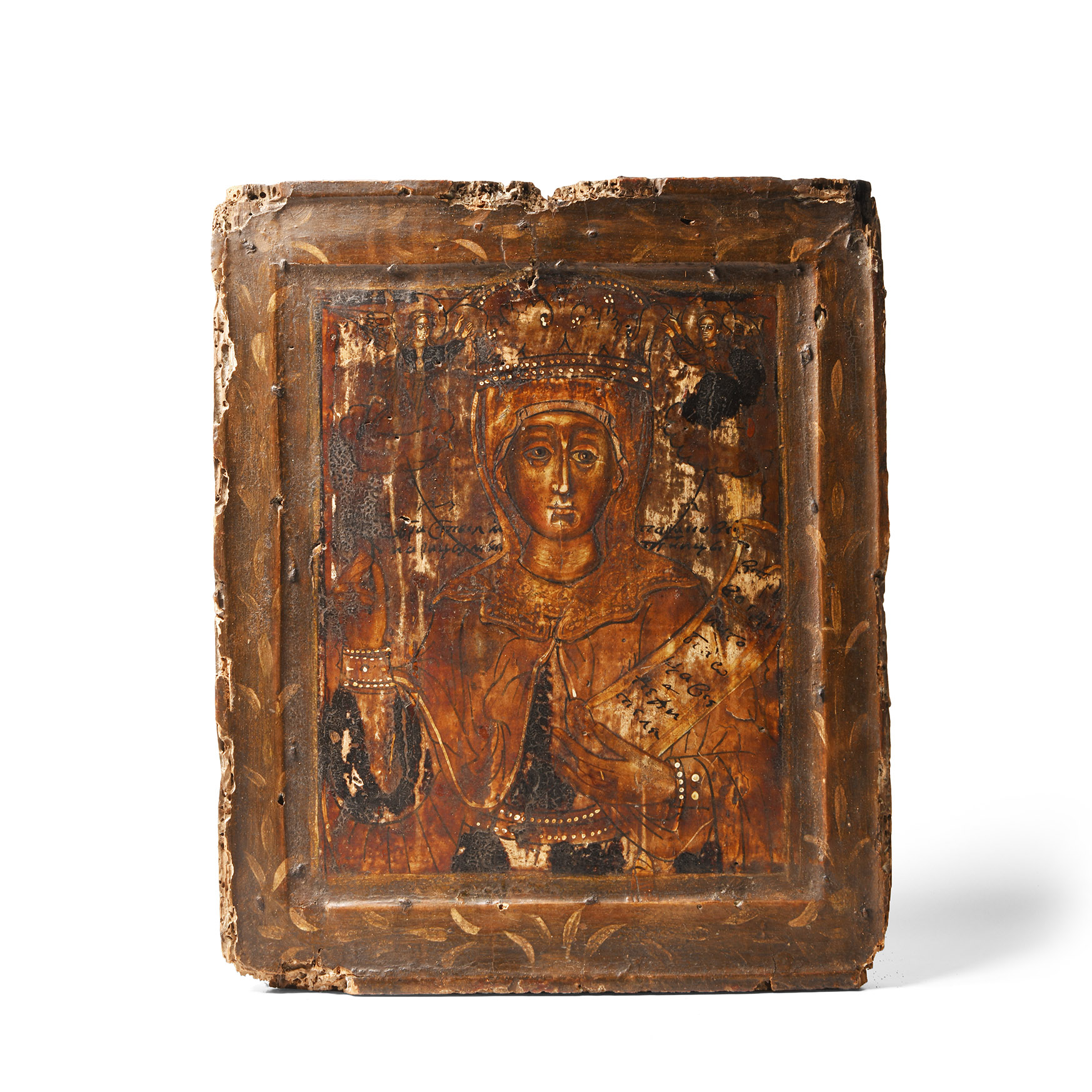
Gilt Painted Wooden Icon of Saint Paraskevi
CIRCA 19TH CENTURY A.D.
12 1/4 in. (854 grams, 31 cm).
Depicting a richly dressed facing figure, crowned and nimbate, winged angels on clouds flanking the head; holding a cross in her right hand and a scroll in her proper left arm bearing handwritten Slavic script of the Nicene Creed; additional Slavic script with her name across the right and left fields.
ProvenanceEx French gallery, Paris.
LiteratureCf. similar icon of Saint Paraskevi in Kostroma State Historical, Architectural and Art Museum-Reserve, inv. no. KP 04550.
FootnotesSaint Paraskevi is usually depicted holding an Eastern Cross and a scroll with the words from the Nicene Creed (here, in old Slavonic: Верую во единаго Бога Отца, Вседержителя, Творца небу и земли,видимым же всем и невидимым = We believe in one God, the Father, the almighty, maker of heaven and earth, of all that is, seen and unseen), professing her faith in another while being crowned with the crown of the martyrdom by two angels.
CONDITIONTimeLine Auctions follows a vetting process to ensure the authenticity and legality of all items, reinforcing our commitment to integrity and responsible trading. Each antiquity, antique, and coin lot undergoes thorough examination by a vetting committee of at least ten external specialists, professional trade association members, scientists, and archaeologists: Our Vetting Process
AUCTIONS:
TimeLine is a leading auction house specialising in antiquities, ancient art, collectables, natural history, coins, medals, and books. Our auctions offer museums, collectors, historians, and enthusiasts the opportunity to acquire unique and historically significant pieces.
-
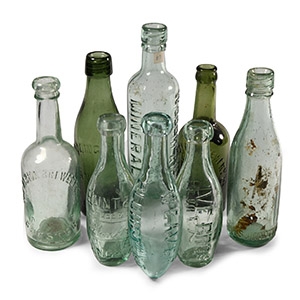
Post Medieval Mixed Glass Drinks Bottles Group
19th-early 20th century A.D.Sold for (Inc. bp): £13
In green, clear and aqua glass including 'Weaver Plumstead', 'Ive Bros Henley', 'Woodhead's Canonbury Minerals' and other types. 3.5 kg total, 17-24 cm high
Acquired UK market. Ian Roper collection. -
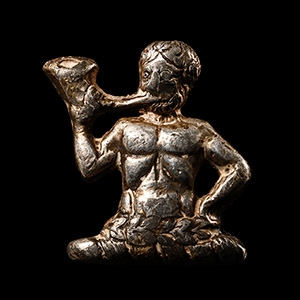
Post Medieval Silver Retainer's Badge
Circa 18th century A.D.Sold for (Inc. bp): £20
Heraldic crest comprising a torque and vine-leaf circlet, nude upper body of a man blowing a horn. 8.47 grams, 25 mm
Acquired 1960s-1990s. From the late Alison Barker collection, a retired London barrister. -
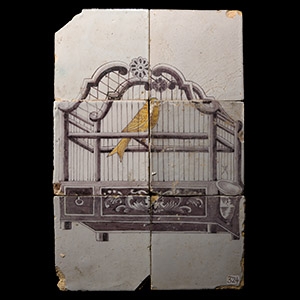
Post Medieval Glazed Ceramic Caged Canary Tile Set
Circa 18th century A.D.Sold for (Inc. bp): £338
Formed using mauve-coloured glaze for the cage and yellow for the bird; chipped. 1.4 kg total, 13 x 13 cm each
Acquired 1990s-early 2000s. East Anglian private collection.
