
Loading, please wait...
LOT 1164
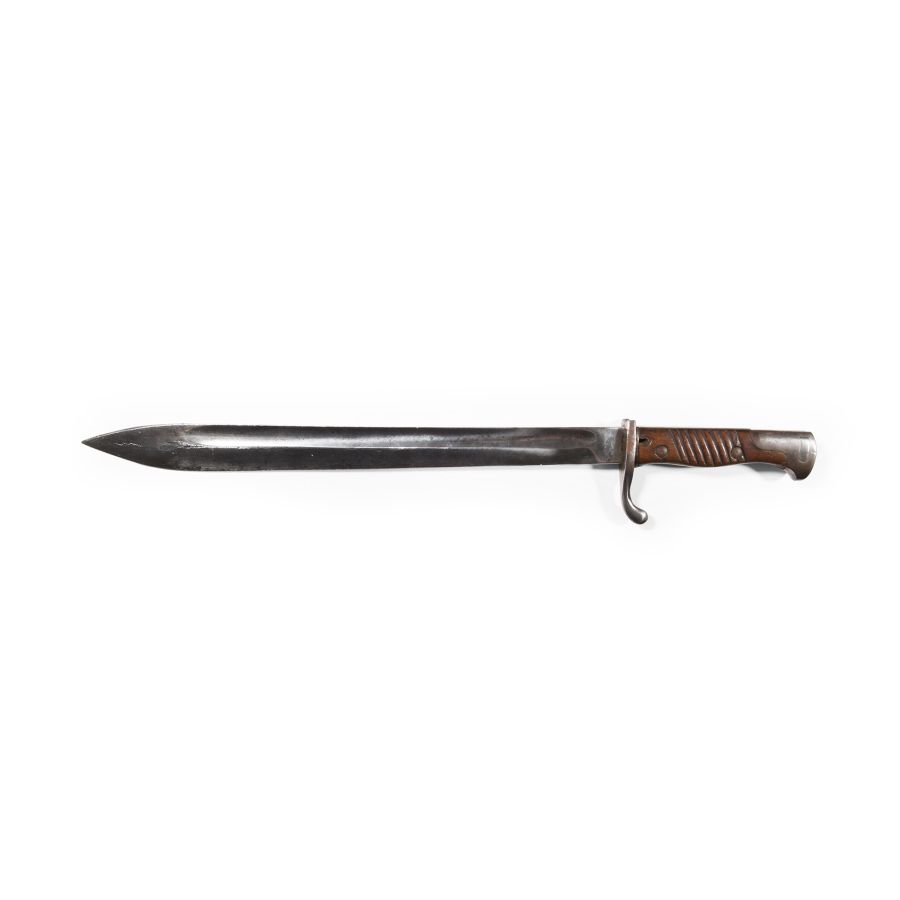
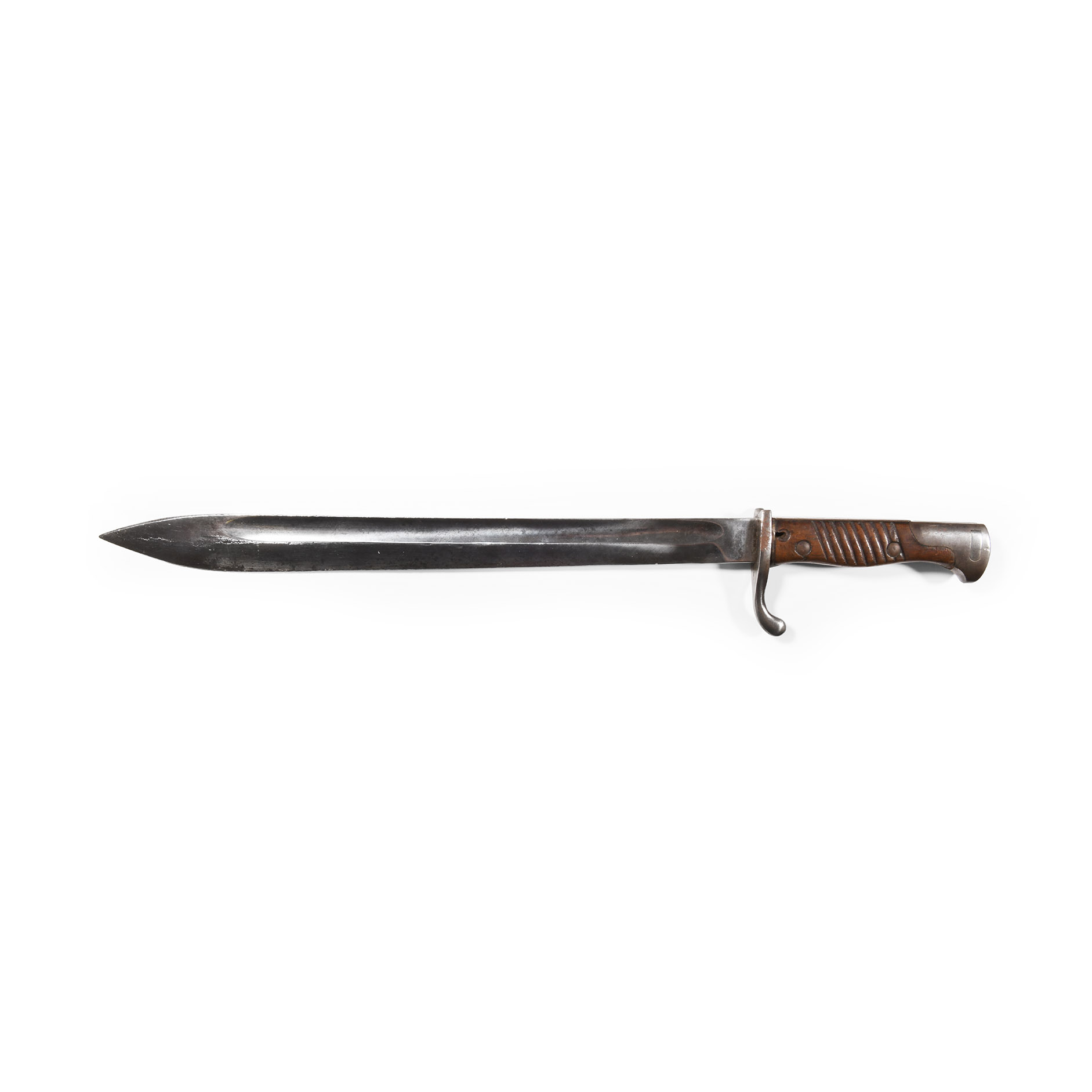
German WWI Erfurt 'Butcher' Bayonet
20TH CENTURY A.D.
19 3/4 in. (557 grams, 50.2 cm).
Featuring a fullered blade with wood-scale hilt and press-release stud; stamped with a maker's mark and issue date.
ProvenanceAcquired from The Lanes Armoury, Brighton, UK.
The Kusmirek Collection, UK.
Accompanied by a Lanes Armoury certificate of authenticity.
TimeLine Auctions follows a vetting process to ensure the authenticity and legality of all items, reinforcing our commitment to integrity and responsible trading. Each antiquity, antique, and coin lot undergoes thorough examination by a vetting committee of at least ten external specialists, professional trade association members, scientists, and archaeologists: Our Vetting Process
AUCTIONS:
TimeLine is a leading auction house specialising in antiquities, ancient art, collectables, natural history, coins, medals, and books. Our auctions offer museums, collectors, historians, and enthusiasts the opportunity to acquire unique and historically significant pieces.
-
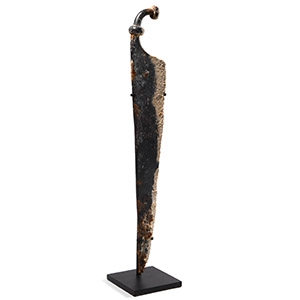
Iron Age Celtic La Tene Dagger
1st century B.C.-1st century A.D.Estimate: £1,200 - 1,700 (+bp*)
Opening Bid: £500
Featuring a gently curved single-edged iron blade and one-sided fuller, curved handle with knot pommel; mounted on a custom-made display stand. 525 grams total, 35 cm high including stand
Dutch art market. Private collection of K.S., Cologne, Germany, acquired 1996.
One of the military insignia of a Celtic warrior was the war-knife, usually between 33 and 35 cm long. For example, in the collection of Celtic military equipment from Galish-Lovachka, the archaeologists have found a short sword with an X-shaped handle (l = 41 cm), two middle La Tène swords (72.5 and 75 cm long), 12 large curved knives, 27 spearheads, two javelin heads, 14 arrowheads, and nine iron chain belts for hanging a sword. The war-knife was also used for hunting, as a spare weapon, or to cut the throat of an enemy in a surprise attack. -
.jpg)
British 1796 Pattern Light Cavalry Officer's Sword
19th century A.D.Sold for (Inc. bp): £1,040
Composed of a curved blade with broad fuller, facetted steel stirrup hilt and grip retaining its original wire-bound leather; accompanied by the sword's steel scabbard. 1.7 kg, 1.01 m
Acquired from Military Swords Ltd, UK, 2015. The Kusmirek Collection, UK. Accompanied by a copy of the purchase invoice and item details. -
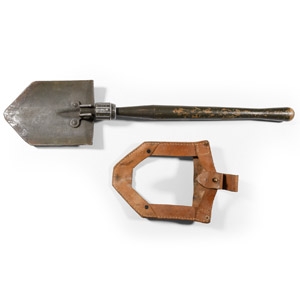
WWII Entrenching Spade
1939-1945 A.D.Sold for (Inc. bp): £33
Of folding type, composed of a wooden shaft, steel head; with leather sheath with loop. 1.23 kg, 58 cm
The Kusmirek Collection, UK.
