
Loading, please wait...
LOT 0268
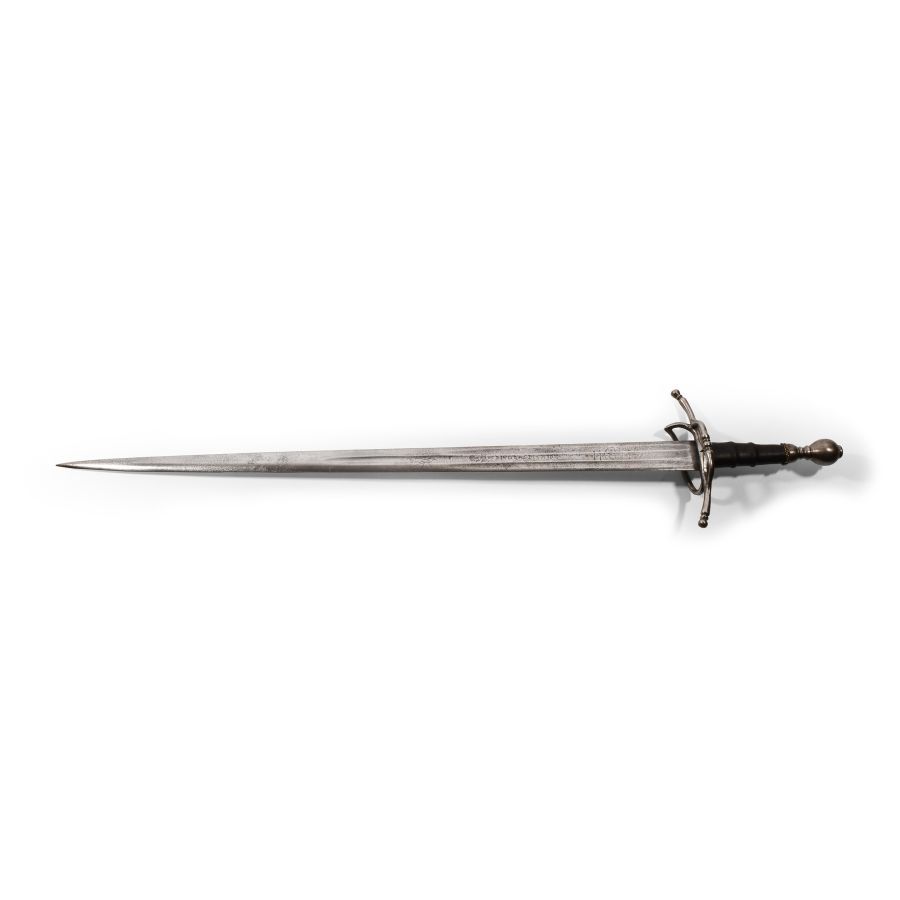
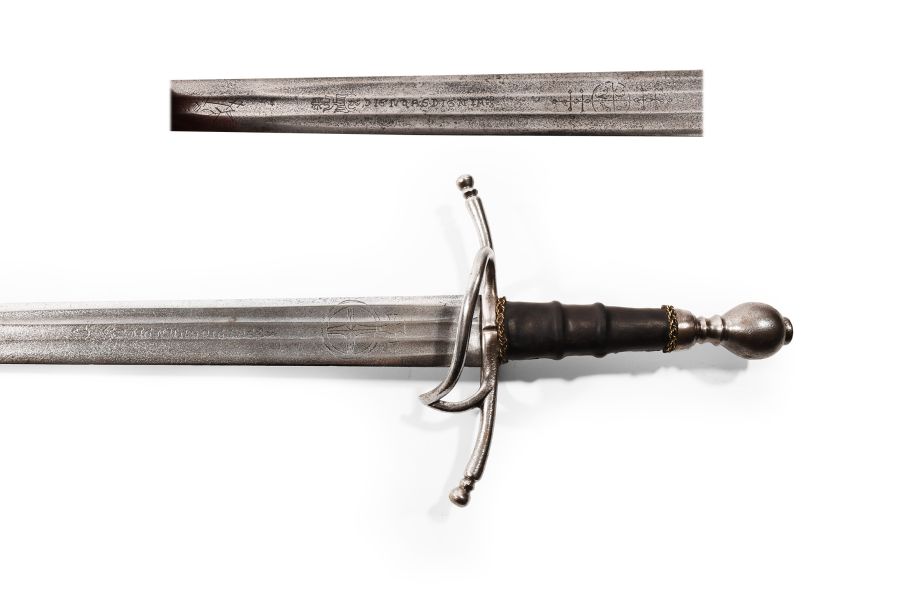
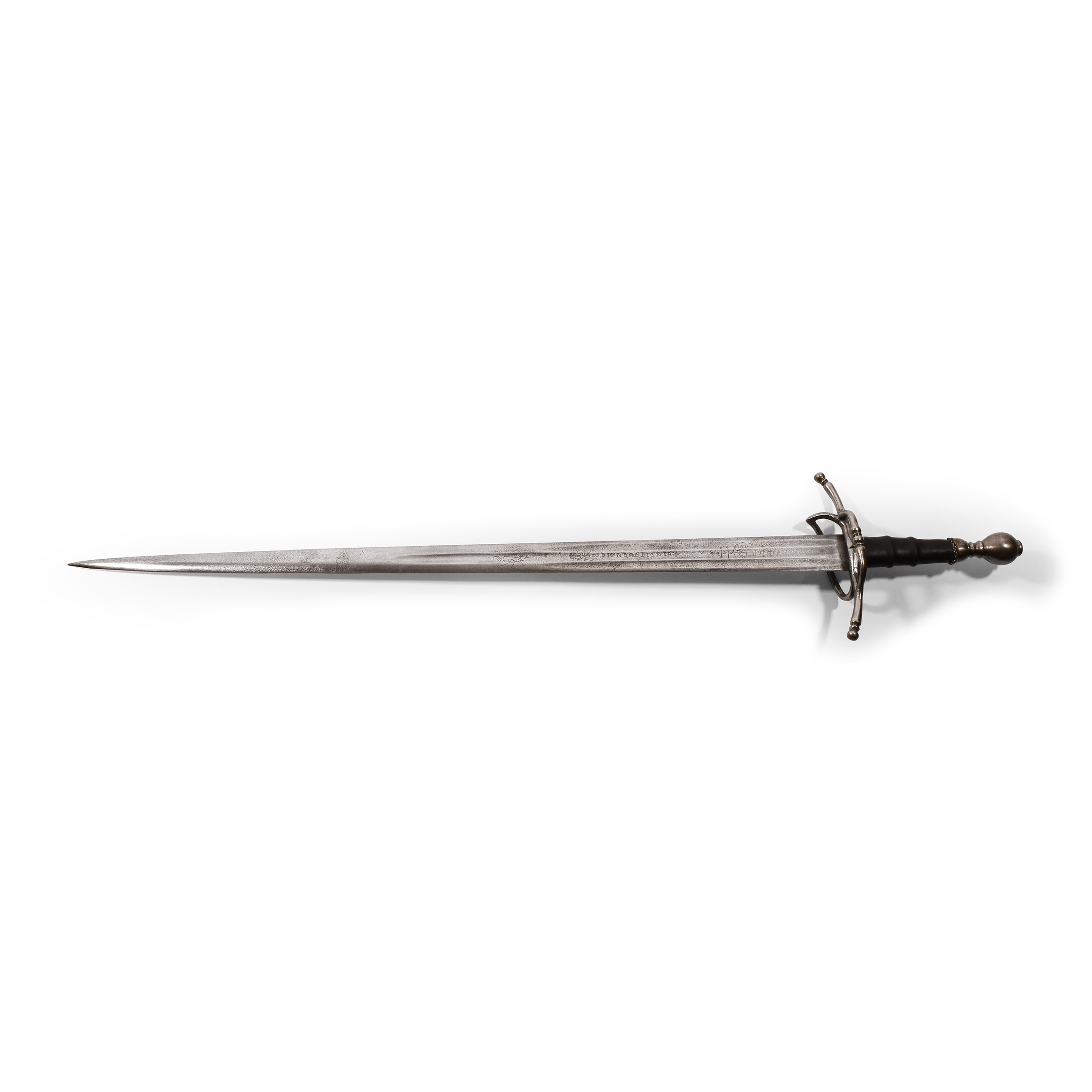
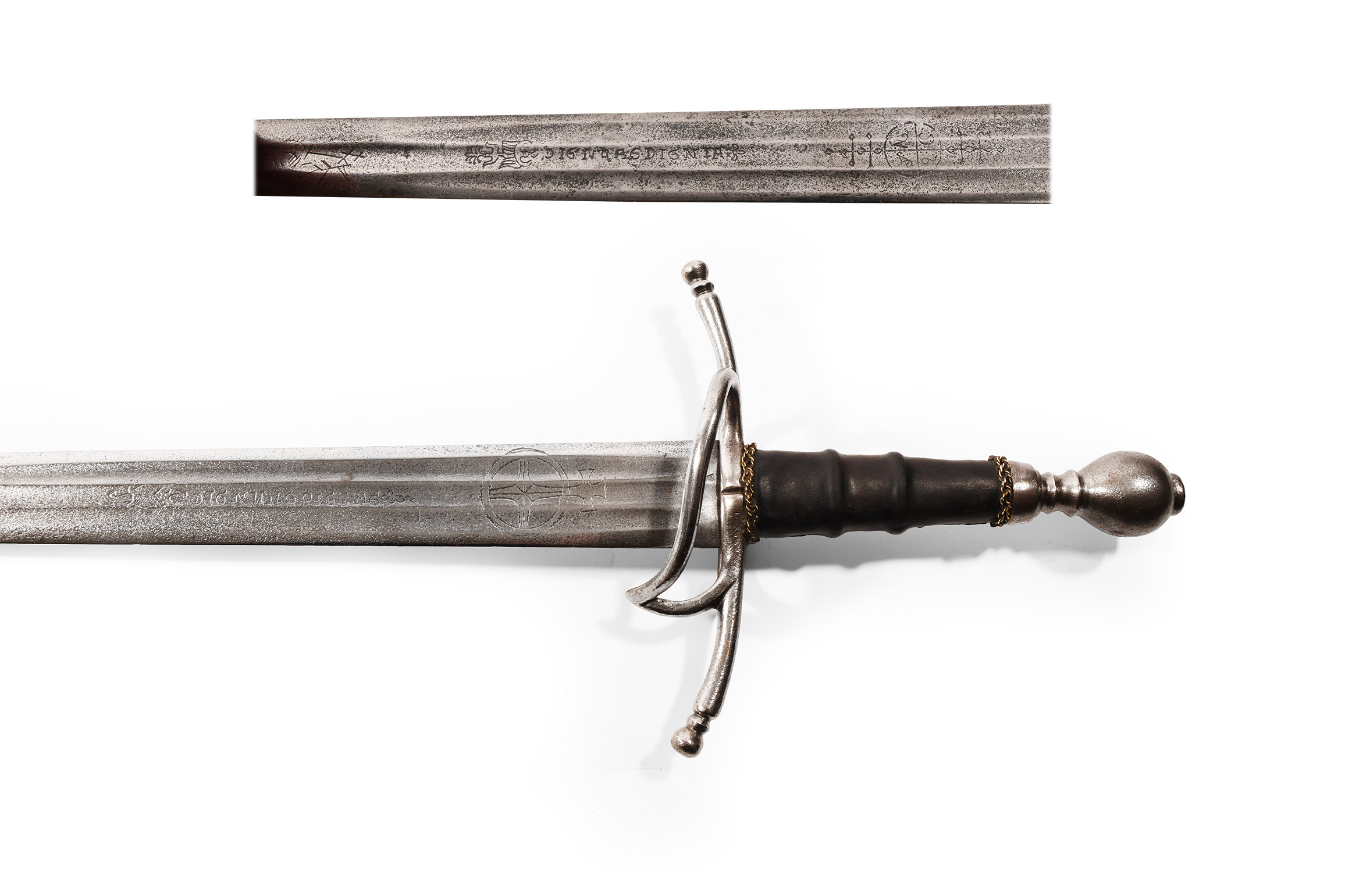
German Hand-And-A-Half Bastard Sword
15TH CENTURY A.D.
41 1/4 in. (1.46 kg, 1.05 m).
Comprising a straight, flat triple fuller, double edged and tapering blade engraved with imperial orb sign, Passau wolf mark dated 15th century and 'DIGN LAGDIGNLA', with steel hilt comprising of down-turned quillons with ball finials and single ring outer defence, the bars of round section; matching inner defence bar with matching decoration to the quillons, spherical pommel rebound leather grip with original 'Turk's heads' to top and bottom but worn.
ProvenanceAcquired from Military Swords Ltd, UK, 2017.
The Kusmirek Collection, UK.
Accompanied by a copy of an invoice.
This lot has been checked against the Interpol Database of stolen works of art and is accompanied by search certificate no.203964.
TimeLine Auctions follows a vetting process to ensure the authenticity and legality of all items, reinforcing our commitment to integrity and responsible trading. Each antiquity, antique, and coin lot undergoes thorough examination by a vetting committee of at least ten external specialists, professional trade association members, scientists, and archaeologists: Our Vetting Process
AUCTIONS:
TimeLine is a leading auction house specialising in antiquities, ancient art, collectables, natural history, coins, medals, and books. Our auctions offer museums, collectors, historians, and enthusiasts the opportunity to acquire unique and historically significant pieces.
-
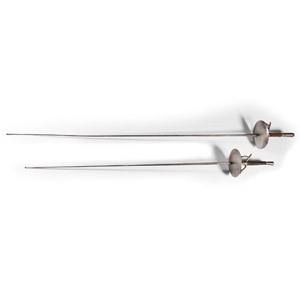
Post Medieval Fencing Foil Pair
Circa 1900 A.D.Sold for (Inc. bp): £33
Each with a long and narrow blade, the longer of square section, the shorter rectangular, each fitted with traditional slender, straight hilt, guard and finger-ring. 657 grams total, 85-106 cm
Acquired from Czerny's Auctions, Italy, 2016, lot 280. The Kusmirek Collection, UK. Accompanied by a copy of Czerny's invoice and listing. -
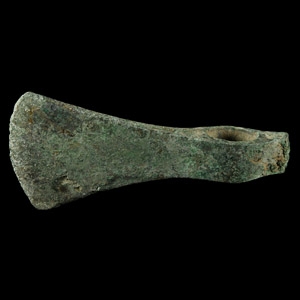
Large Western Asiatic Bronze Socketted Axehead
2nd-1st millennium B.C.Sold for (Inc. bp): £130
Featuring wedge-shaped cheeks, oval socket and narrow butt. 922 grams, 21 cm
Acquired 1980-2015. Ex Abelita family collection. -
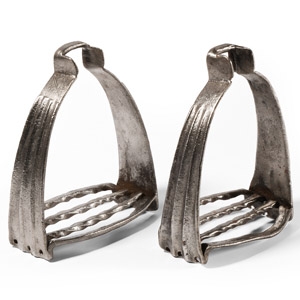
German Iron Stirrup Pair
16th century A.D.Estimate: £400 - 600 (+bp*)
Opening Bid: £111
Featuring twisted bar open treads, arched side pieces grooved and connected by a strap bar. 780 grams total, 16.5 cm each
Acquired from Czerny's Auctions, Italy, 2016, lot 313. The Kusmirek Collection, UK. Accompanied by a copy of Czerny's invoice and lot details.
