
Loading, please wait...
LOT 1763
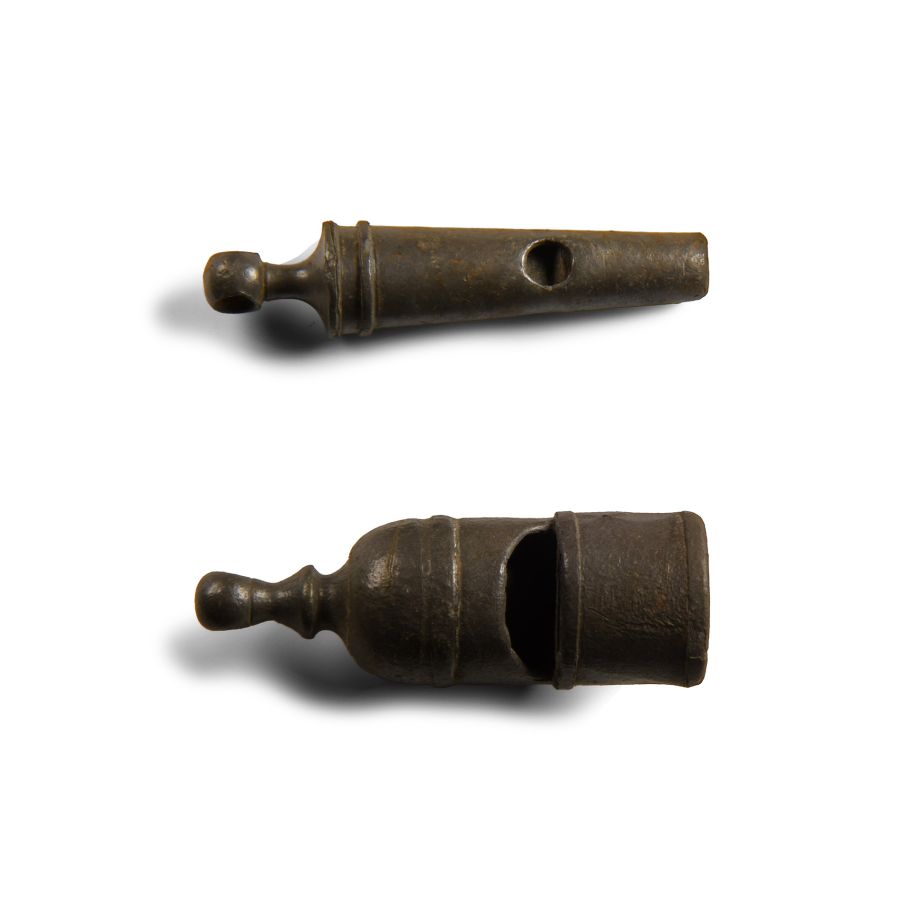
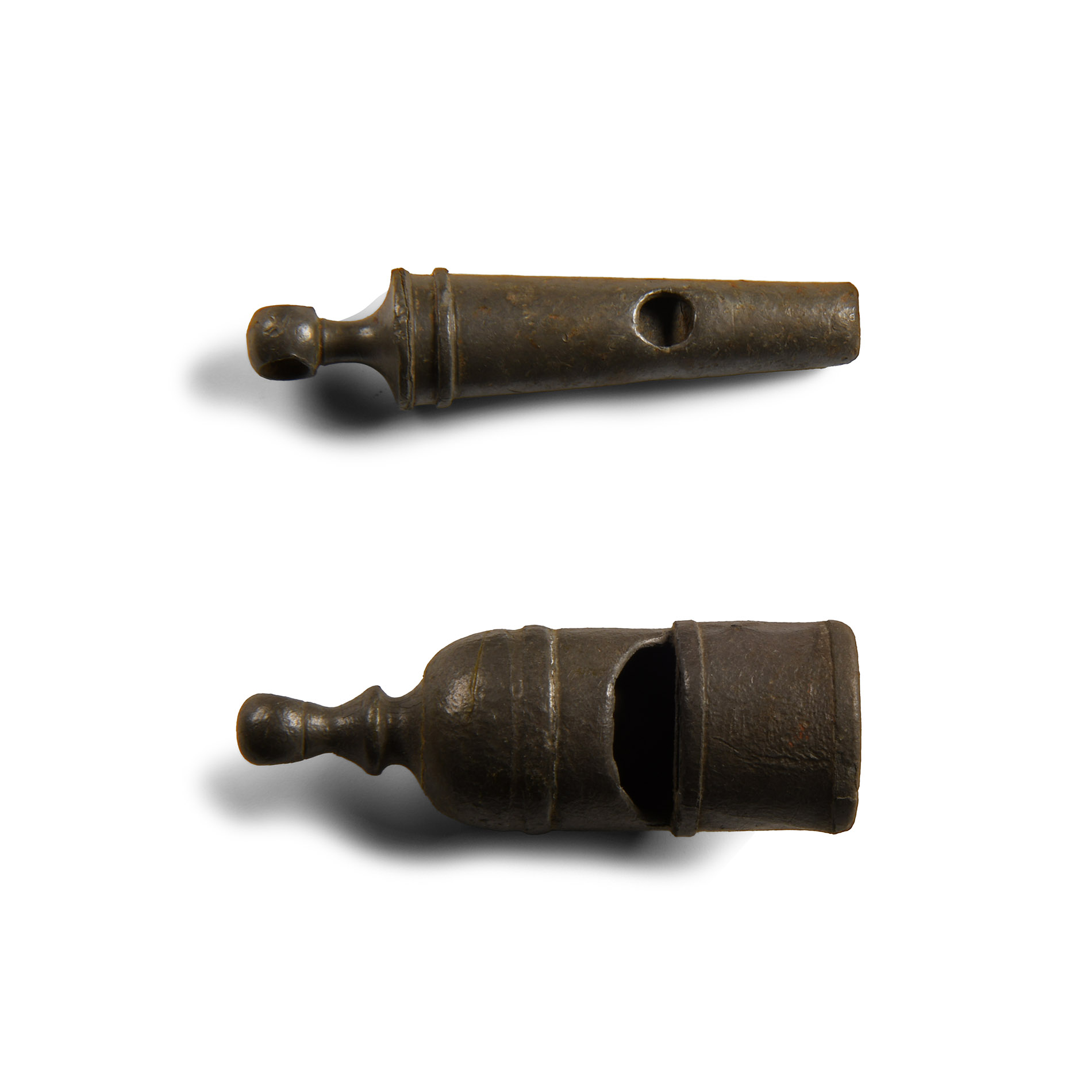
Georgian Pewter Whistle Group
18TH CENTURY A.D.
2 1/4 in. (41 grams total, 58-60 mm).
Comprising one slender, tapering with vent to both faces; one squat with domed upper, knop finial [2, No Reserve]
ProvenanceFound Billingsgate spoil from the Thames foreshore, London, UK, circa 1984.
Property of an Essex collector.
TimeLine Auctions follows a vetting process to ensure the authenticity and legality of all items, reinforcing our commitment to integrity and responsible trading. Each antiquity, antique, and coin lot undergoes thorough examination by a vetting committee of at least ten external specialists, professional trade association members, scientists, and archaeologists: Our Vetting Process
AUCTIONS:
TimeLine is a leading auction house specialising in antiquities, ancient art, collectables, natural history, coins, medals, and books. Our auctions offer museums, collectors, historians, and enthusiasts the opportunity to acquire unique and historically significant pieces.
-
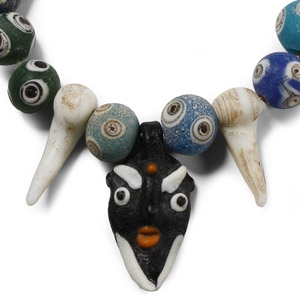
Phoenician Style Glass Bead and Pendant Necklace
20th century A.D.Sold for (Inc. bp): £33
Mixed group including tubular and spherical beads, claw-shaped pendants and a mask with applied detailing. 80.5 grams, 22 cm long
From an old English deceased estate. Acquired on the London art market in the early 1990s. Property of a London, UK, collector. -
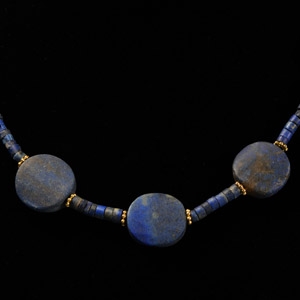
Bactrian Style Lapis Lazuli Bead Necklace
20th century A.D.Sold for (Inc. bp): £33
Comprising small annular beads, yellow-metal beaded collars and coin-shaped beads. 46 grams, 48 cm
From the H.N. collection, Milton Keynes, Berkshire, UK, 1990s. -
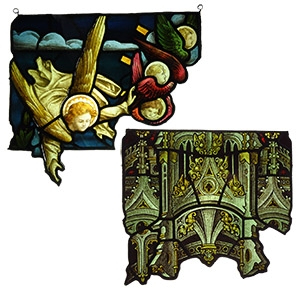
Gothic Stained Glass Panel Pair
19th century A.D.Sold for (Inc. bp): £572
Irregular panels of painted glass mounted in lead cames; one depicting Gothic architectural features including a conical turret roof with a gilt crown above, quatrefoil panel in a window spandrel, curled and scrolled embellishments; the other, a group of winged angels in flight, descending with sky in the background. 5.2 kg total, 46-52 cm
Acquired from Hight Road Auctions, Chiswick, UK, in 2013. Property of a Kent collector.
