
Loading, please wait...


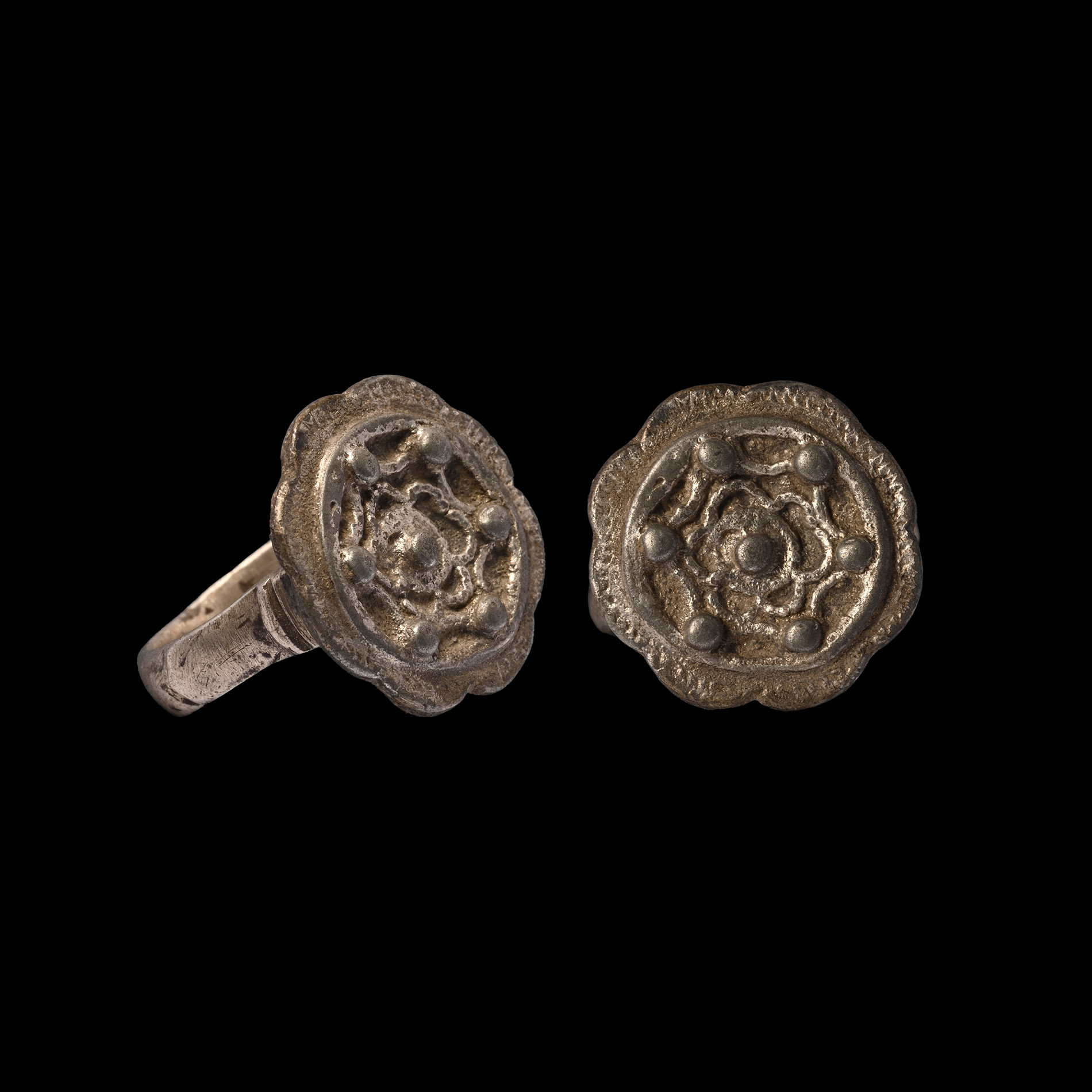
LOT 1952
Georgian Period Silver Ring with Floral Design
CIRCA 18TH CENTURY A.D.
1 in. (11.08 grams, 25.60 mm overall, 19.72 mm internal diameter (approximate size British Q, USA 8, Europe 17.49, Japan 16)).
With lateral spurs and stepped shoulders, the bezel an octofoil with raised hexafoil motif and pellets.
ProvenanceAcquired on the London art market in the late 1980s-1990s.
From the family collection of an East London, UK, gentleman.
This lot is accompanied by an illustrated lot declaration signed by the Head of the Antiquities Department, Dr Raffaele D'Amato.
TimeLine Auctions follows a vetting process to ensure the authenticity and legality of all items, reinforcing our commitment to integrity and responsible trading. Each antiquity, antique, and coin lot undergoes thorough examination by a vetting committee of at least ten external specialists, professional trade association members, scientists, and archaeologists: Our Vetting Process
AUCTIONS:
TimeLine is a leading auction house specialising in antiquities, ancient art, collectables, natural history, coins, medals, and books. Our auctions offer museums, collectors, historians, and enthusiasts the opportunity to acquire unique and historically significant pieces.
LOT 1952
Georgian Period Silver Ring with Floral Design
Estimate £120 - 170€140 - 200 (for guidance only)$160 - 230 (for guidance only)
-
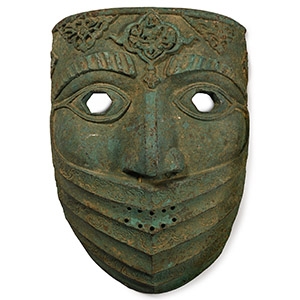
Life-Size Western Asiatic Style Bronze Mask
20th century A.D.Sold for (Inc. bp): £520
Domed profile with pierced eyes, nostrils and several small piercings for the mouth, decorative panels on the forehead and the lower part modelled as a mask covering the mouth with scroll motifs. 1.3 kg, 22.6 cm
From the family collection of a Hampstead gentleman; formerly acquired in the 1980s. This lot is accompanied by an illustrated lot declaration signed by the Head of the Antiquities Department, Dr Raffaele D'Amato. -
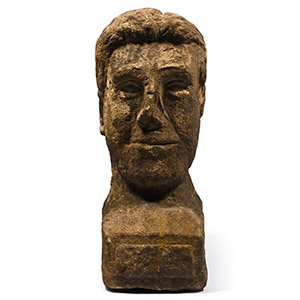
Carved Limestone Head of a Man
18th-19th century A.D.Sold for (Inc. bp): £46
Male bust on a rectangular base, modelled with short curly hair, prominent brow and nose, deep-set eyes; inspired by classical exemplars. 16.5 kg, 36 cm
From a collection acquired on the UK art market. Property of a West Midlands, UK, private collector. This lot is accompanied by an illustrated lot declaration signed by the Head of the Antiquities Department, Dr Raffaele D'Amato. -
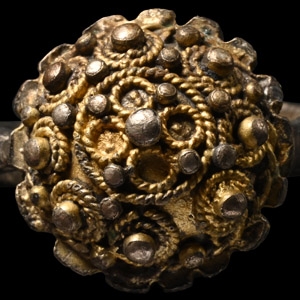
Tudor Period Silver-Gilt Ring with Filigree Bezel
Circa 16th century A.D.Sold for (Inc. bp): £85
With eccentric square-section hoop, domed bezel with granules and filigree. 7.96 grams, 26.60 mm overall, 17.45 mm internal diameter (approximate size British M, USA 6, Europe 12.46, Japan 12)
Acquired on the UK art market. Property of K.P., a Cornish lady collector, UK. This lot is accompanied by an illustrated lot declaration signed by the Head of the Antiquities Department, Dr Raffaele D'Amato.
