
Loading, please wait...


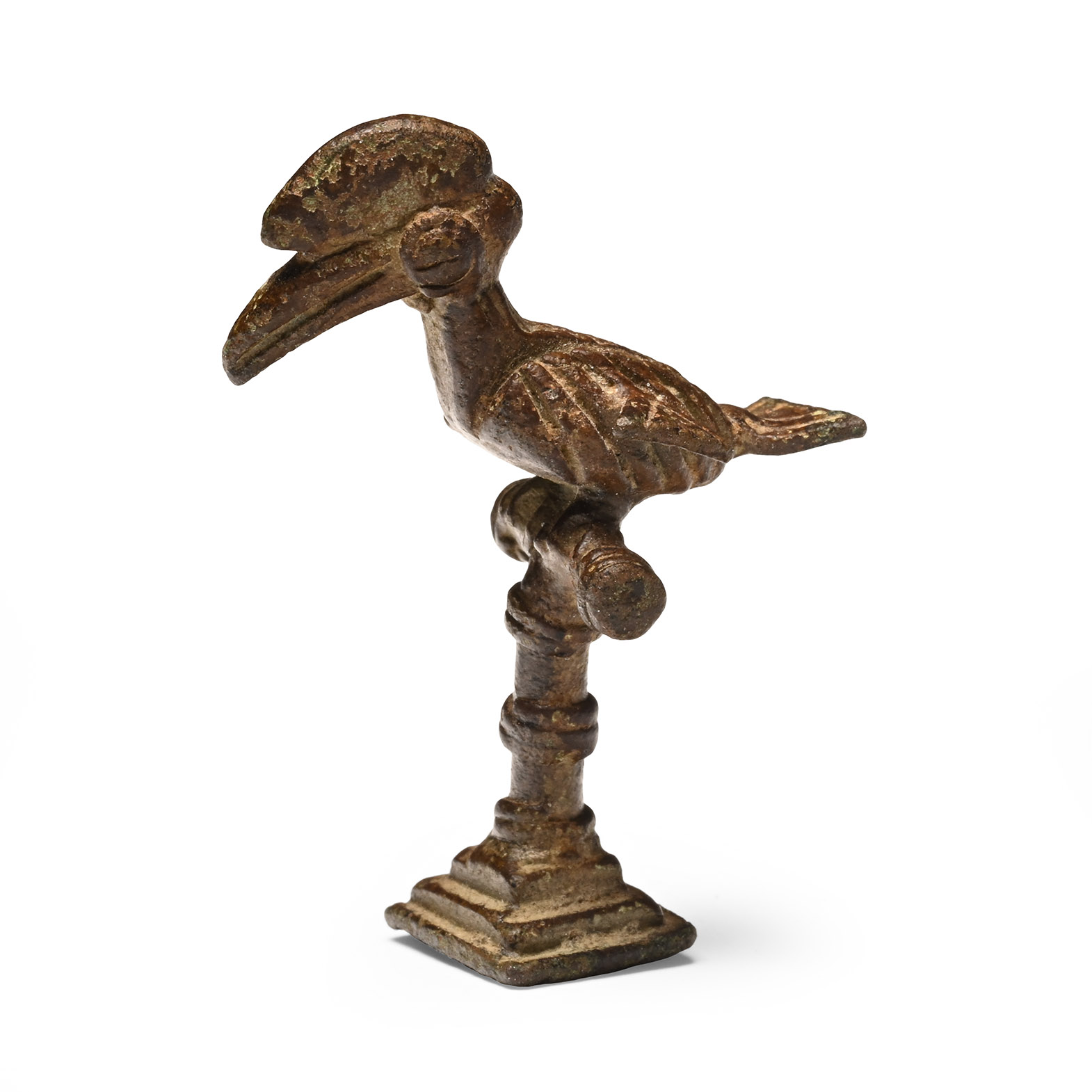
LOT 2028
Georgian Bronze Statuette of a Giant Hornbill
18TH-19TH CENTURY A.D.
1 1/2 in. (11.2 grams, 38 mm).
Perching on a column on a tiered plinth, modelled in the round. [No Reserve]
ProvenanceFound Suffolk, UK.
From an old private collection of Norfolk, UK, gentleman, formed since 1998.
TimeLine Auctions follows a vetting process to ensure the authenticity and legality of all items, reinforcing our commitment to integrity and responsible trading. Each antiquity, antique, and coin lot undergoes thorough examination by a vetting committee of at least ten external specialists, professional trade association members, scientists, and archaeologists: Our Vetting Process
AUCTIONS:
TimeLine is a leading auction house specialising in antiquities, ancient art, collectables, natural history, coins, medals, and books. Our auctions offer museums, collectors, historians, and enthusiasts the opportunity to acquire unique and historically significant pieces.
-
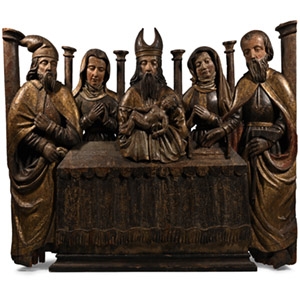
Large Renaissance Lime Wood Bas-Relief of The Presentation of Christ to the Temple
Rhineland, circa 1480-1500 A.D.Sold for (Inc. bp): £12,350
The gilt polychrome carving showing Saint Simeon holding the infant Christ in his arms before his circumcision, Saint Simeon wearing a priestly mitre, holding the infant above an altar covered by an embroidered brocade; Virgin Mary to his left gazing at the infant tenderly, veiled and wearing a long robe with gilt decoration; to her left Saint Joseph dressed in a long robe and gilt cloak, holding a carpenter's axe in his left hand; praying Saint Anna to the right of Saint Simeon, wearing a simple dress and veil; to her right Saint Joachim, wearing a yellow cap and gilt cloak; the columns of the Temple of Jerusalem on the background; on a wooden stand. 10.15 kg, 86.5 cm wide
Crait and Muller, 8 June 2021, no.2. Ex central London gallery. Accompanied by an academic report by Dr Raffaele D’Amato. This lot has been checked against the Interpol Database of stolen works of art and is accompanied by search certificate no.12181-221704.
The relief shows the parents and relatives of infant Jesus following the Jewish tradition of circumcising young boys eight days after their birth. This iconography is symbolic as, according to the tradition, Saint Anna and Saint Joachim, parents of Mary, died before the birth of Christ. This panel originally would have adorned the interior panels of a large altarpiece, showing the cycle of life of Christ. -
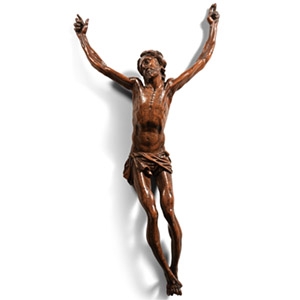
Large Wooden Corpus Christi
17th century A.D.Sold for (Inc. bp): £1,170
Carved in the round with legs crossed and nail to the feet, hands pierced for attachment; the head tilted with short beard, wearing a loincloth secured by a rope belt; detailed musculature; one thumb absent. 176 grams, 37 cm
Private collection, England. -
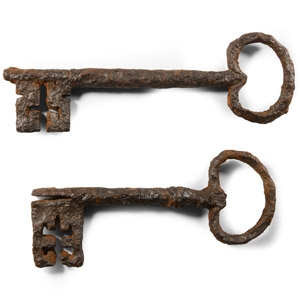
Large Georgian Iron Key Pair
Early 18th century A.D.Sold for (Inc. bp): £33
Comprising one with kidney-shaped bow and square bit with cruciform void, the other similar with slotted forward end to the shank. 236 grams total, 13.7-16.5 cm
Found on various UK sites since 1974. Property of an Essex collector.
