
Loading, please wait...
LOT 1893
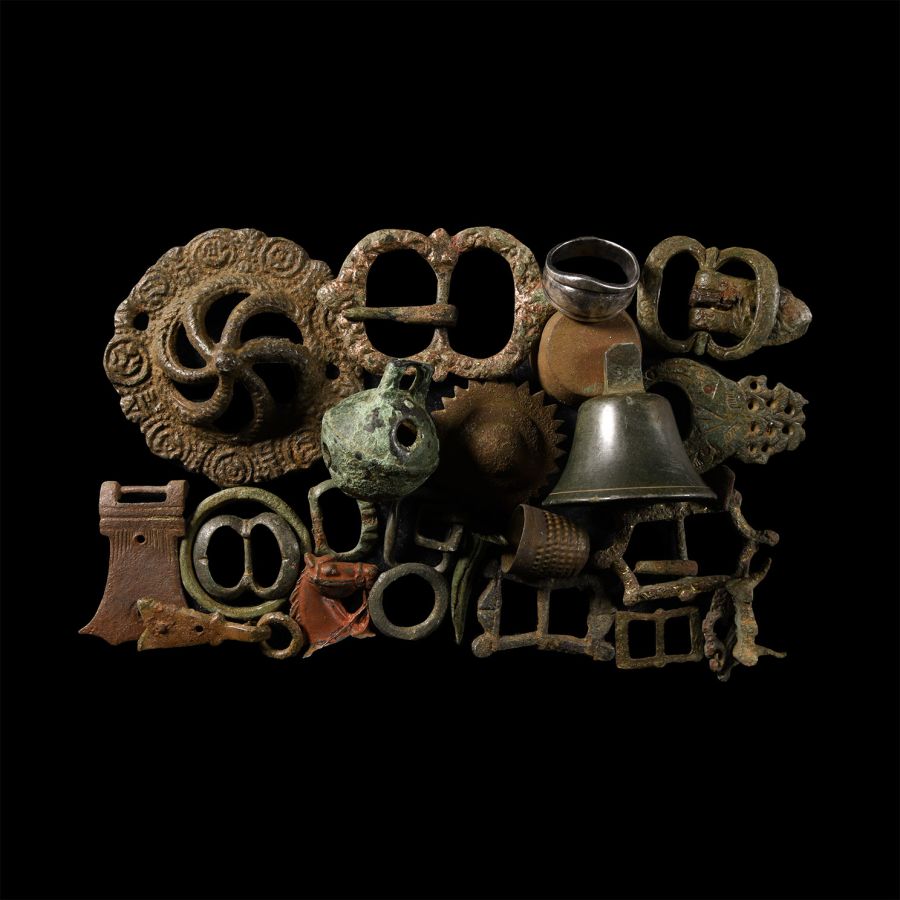
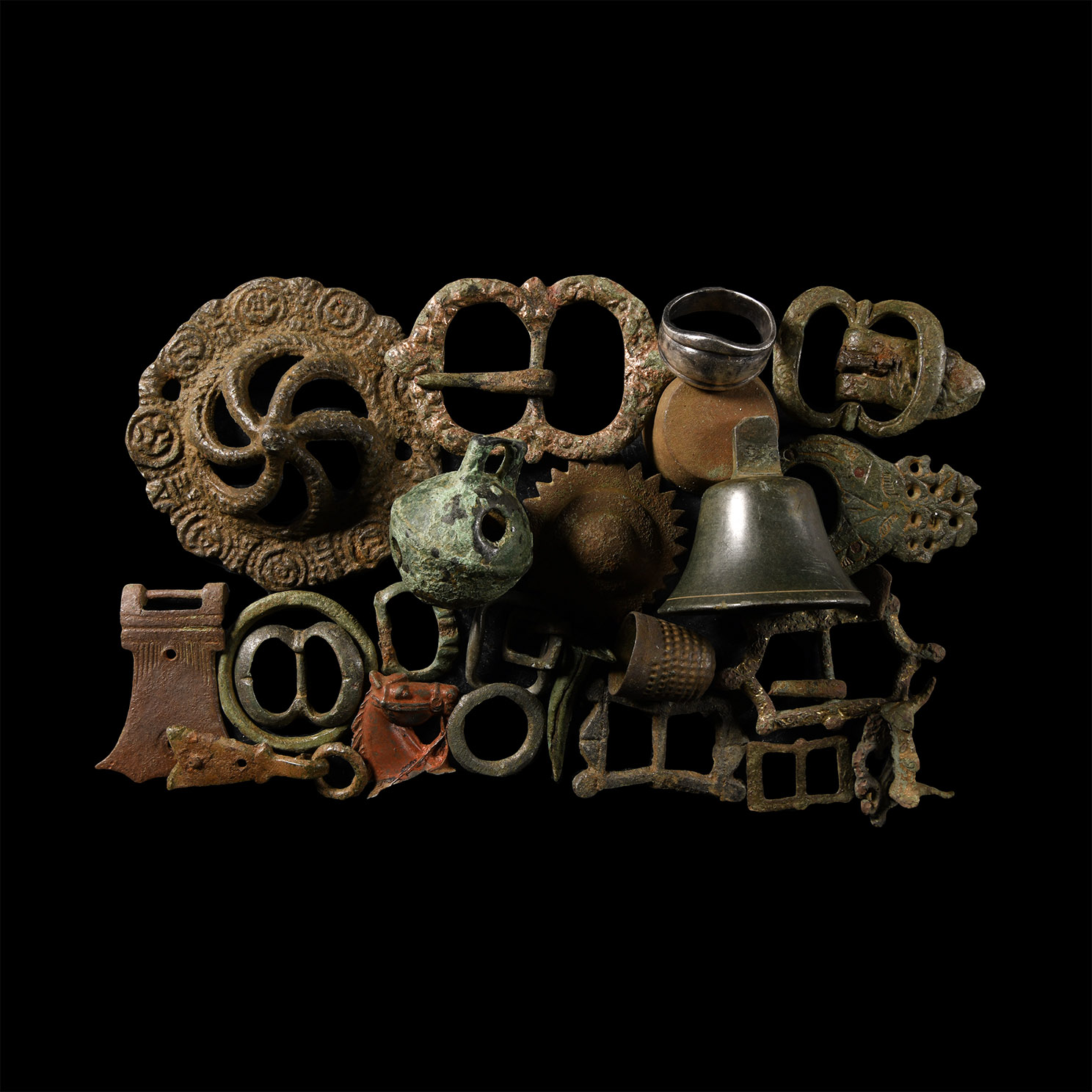
Georgian and Other Copper-Alloy Artefact Group
CIRCA 15TH-20TH CENTURY A.D.
3/8 - 2 1/2 in. (269 grams total, 11-64 mm).
Comprising: bells; buckles; decorative fittings and mounts; thimble; heart-shaped mount; ring stamped '925'; together with other miscellaneous items. [26, No Reserve]
ProvenanceFound Wiltshire, UK.
CONDITIONTimeLine Auctions follows a vetting process to ensure the authenticity and legality of all items, reinforcing our commitment to integrity and responsible trading. Each antiquity, antique, and coin lot undergoes thorough examination by a vetting committee of at least ten external specialists, professional trade association members, scientists, and archaeologists: Our Vetting Process
AUCTIONS:
TimeLine is a leading auction house specialising in antiquities, ancient art, collectables, natural history, coins, medals, and books. Our auctions offer museums, collectors, historians, and enthusiasts the opportunity to acquire unique and historically significant pieces.
-
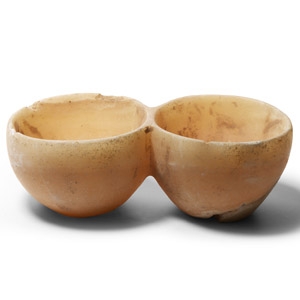
Bactrian Style Alabaster Bowls
20th century A.D.Estimate: £100 - 140 (+bp*)
Opening Bid: £50
Carved as two conjoined hemispherical bowls; repaired. 950 grams, 18.5 cm
Property of a North London, UK, gentleman. -
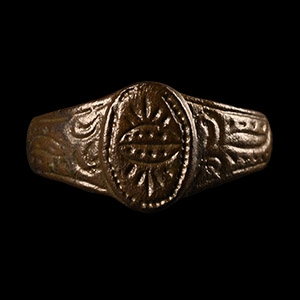
Post Medieval Bronze Ring with Armorial Motif
17th-18th century A.D.Sold for (Inc. bp): £39
Incuse tendrils to the shoulders, stylised shield motif to the bezel. 3.74 grams, 23.65 mm overall, 20.30 mm internal diameter (approximate size British U 1/2, USA 10 1/4, Europe 23.15, Japan 22)
Private collection formed since the 1940s. UK art market. Property of an Essex gentleman. -
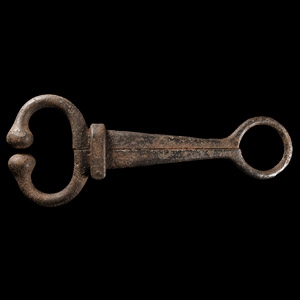
Post Medieval Iron Bull Nose Tether
18th-19th century A.D. or earlierEstimate: £150 - 200 (+bp*)
Opening Bid: £75
Formed as a circular spring and two expanding arms developing to a penannular clamp with bulb finials; sliding retainer clip. 325 grams, 21 cm
From a Home Counties collection, 1970-1980.
