
Loading, please wait...
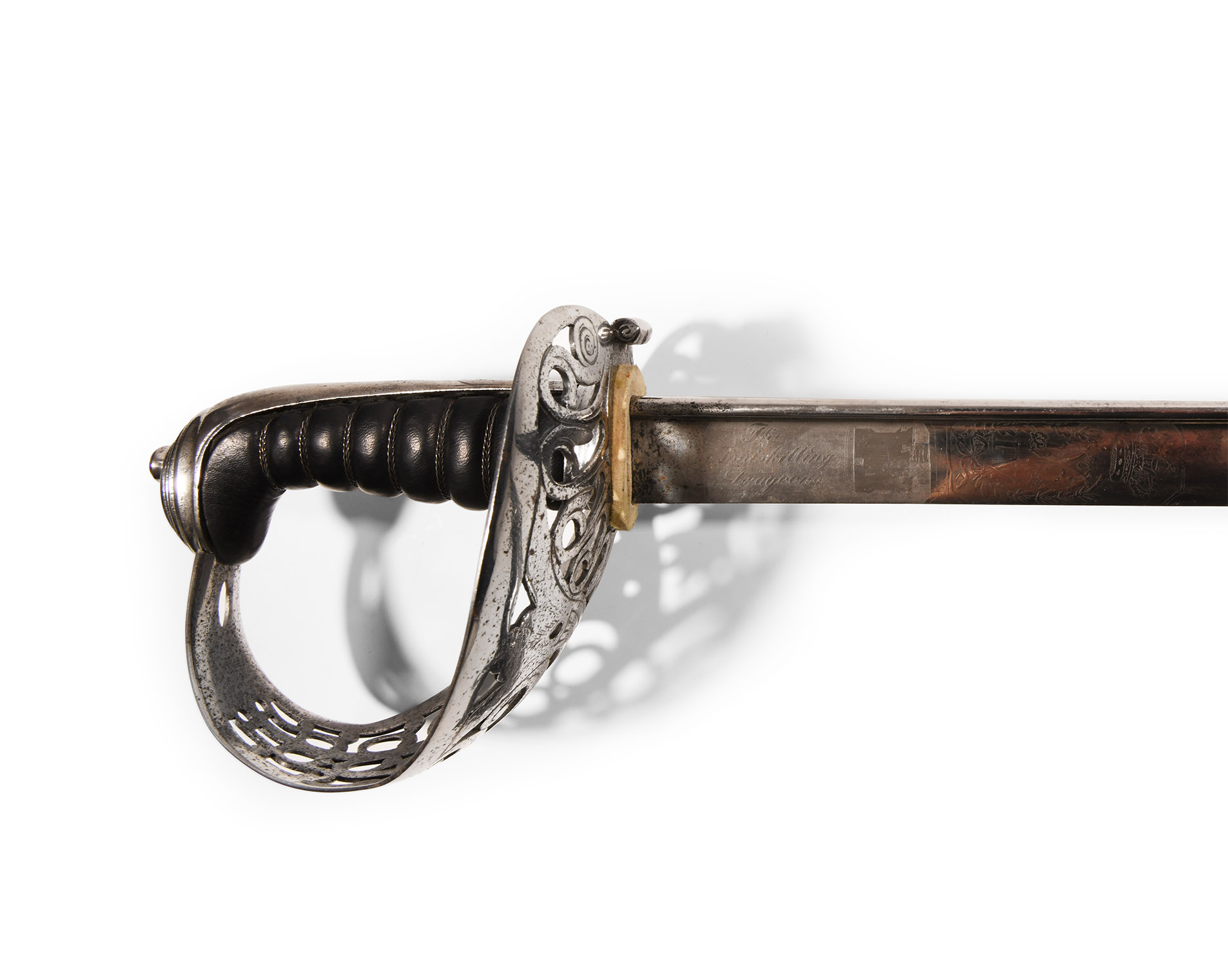
LOT 0284
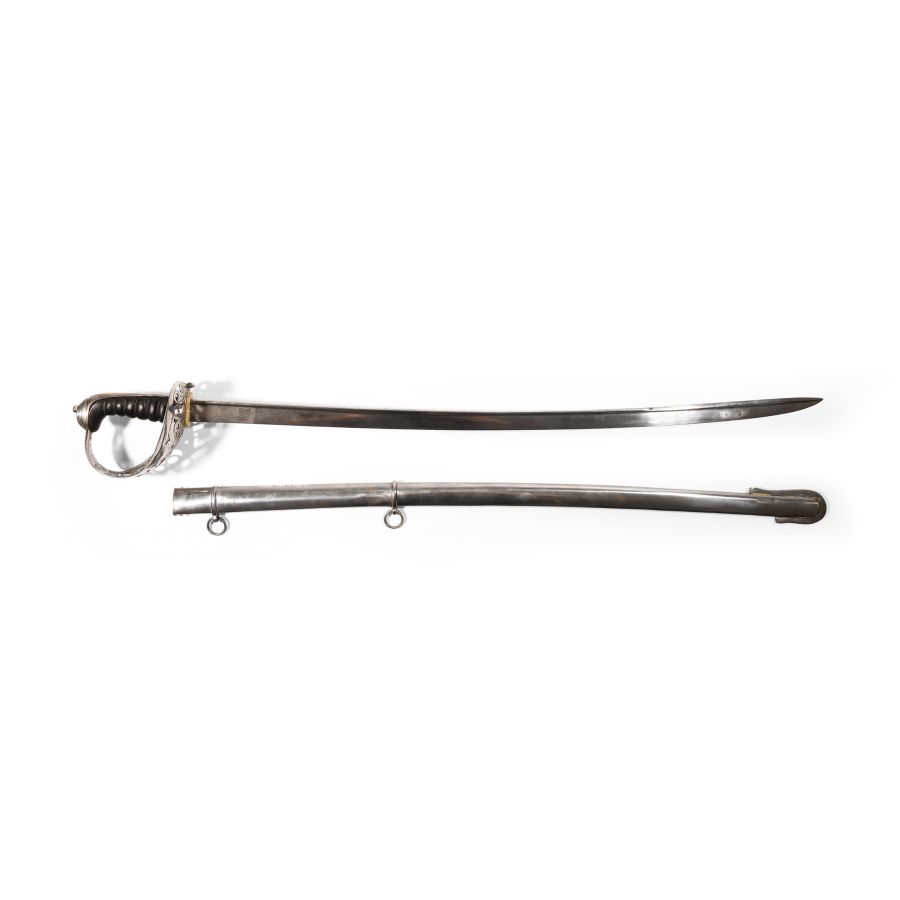
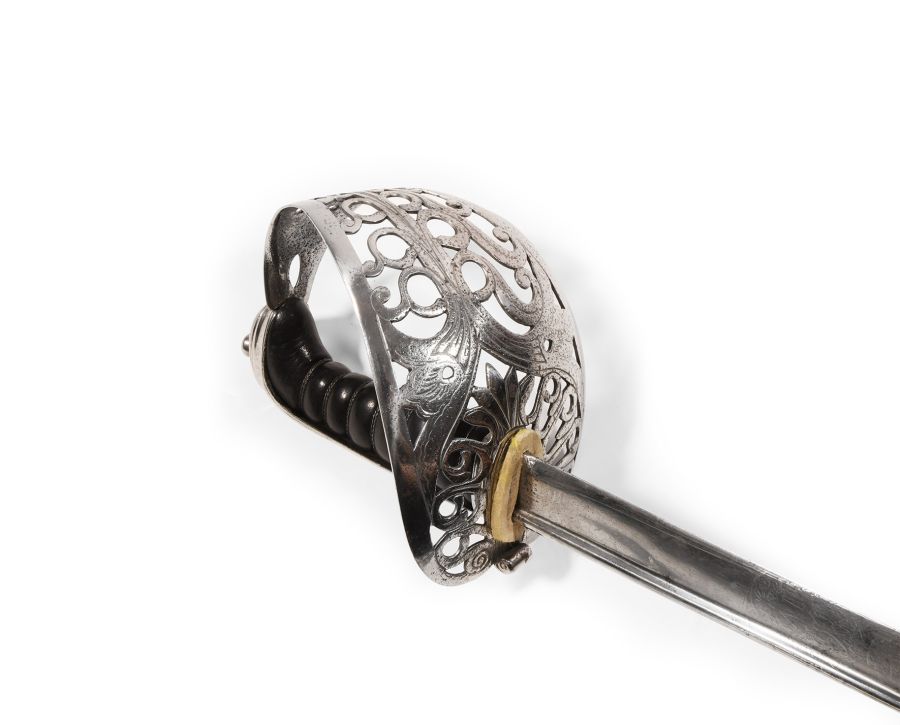
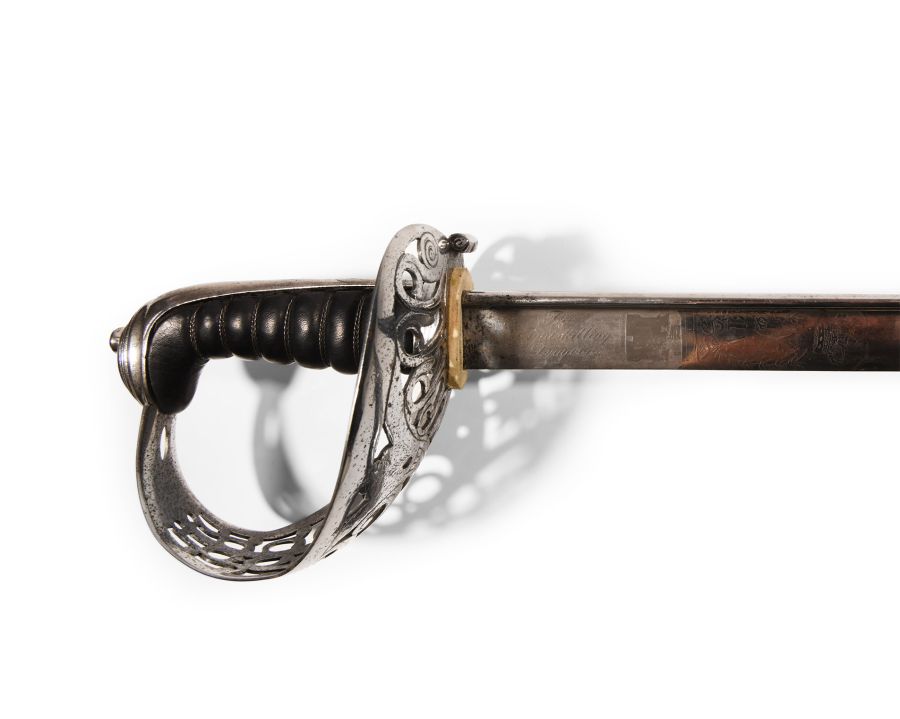
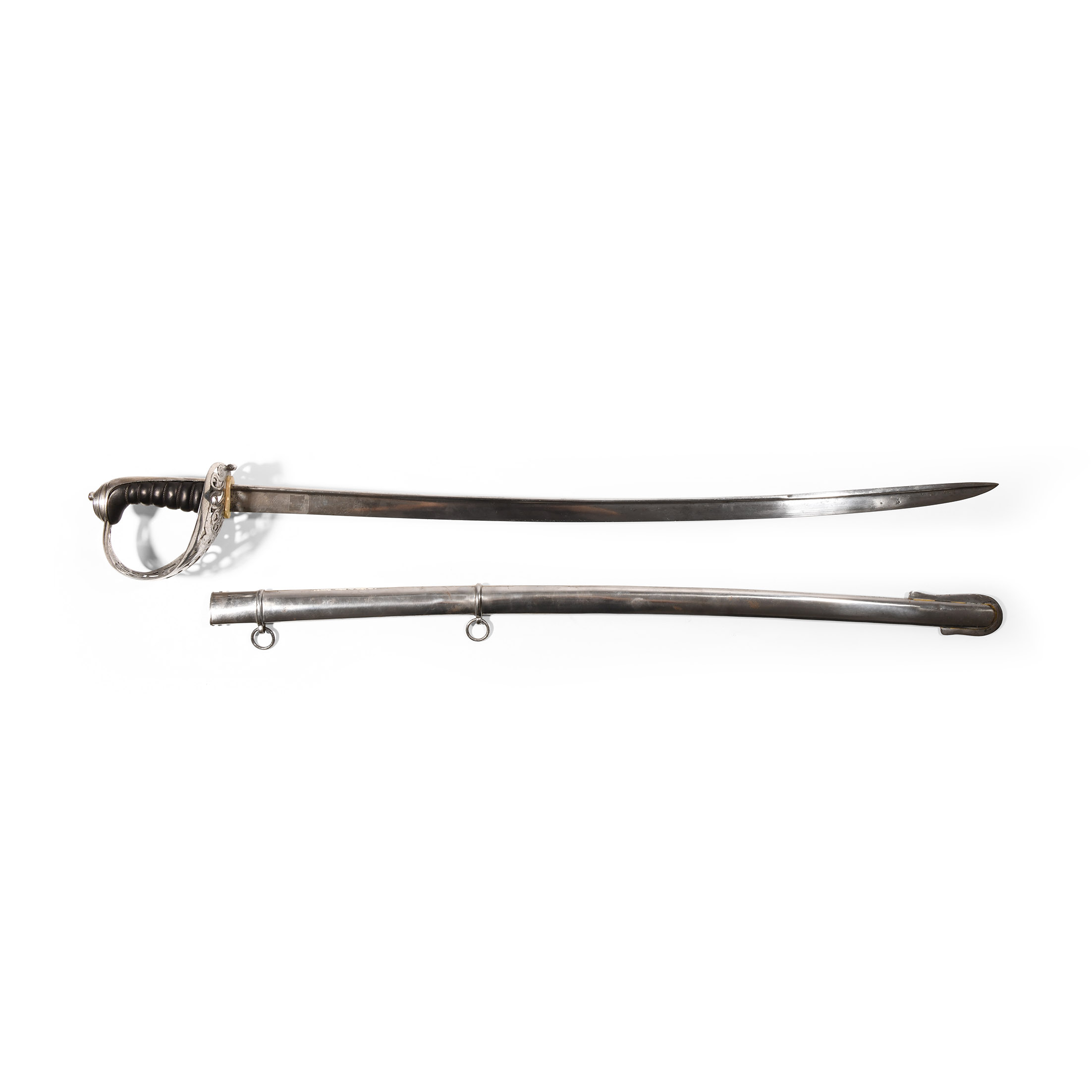
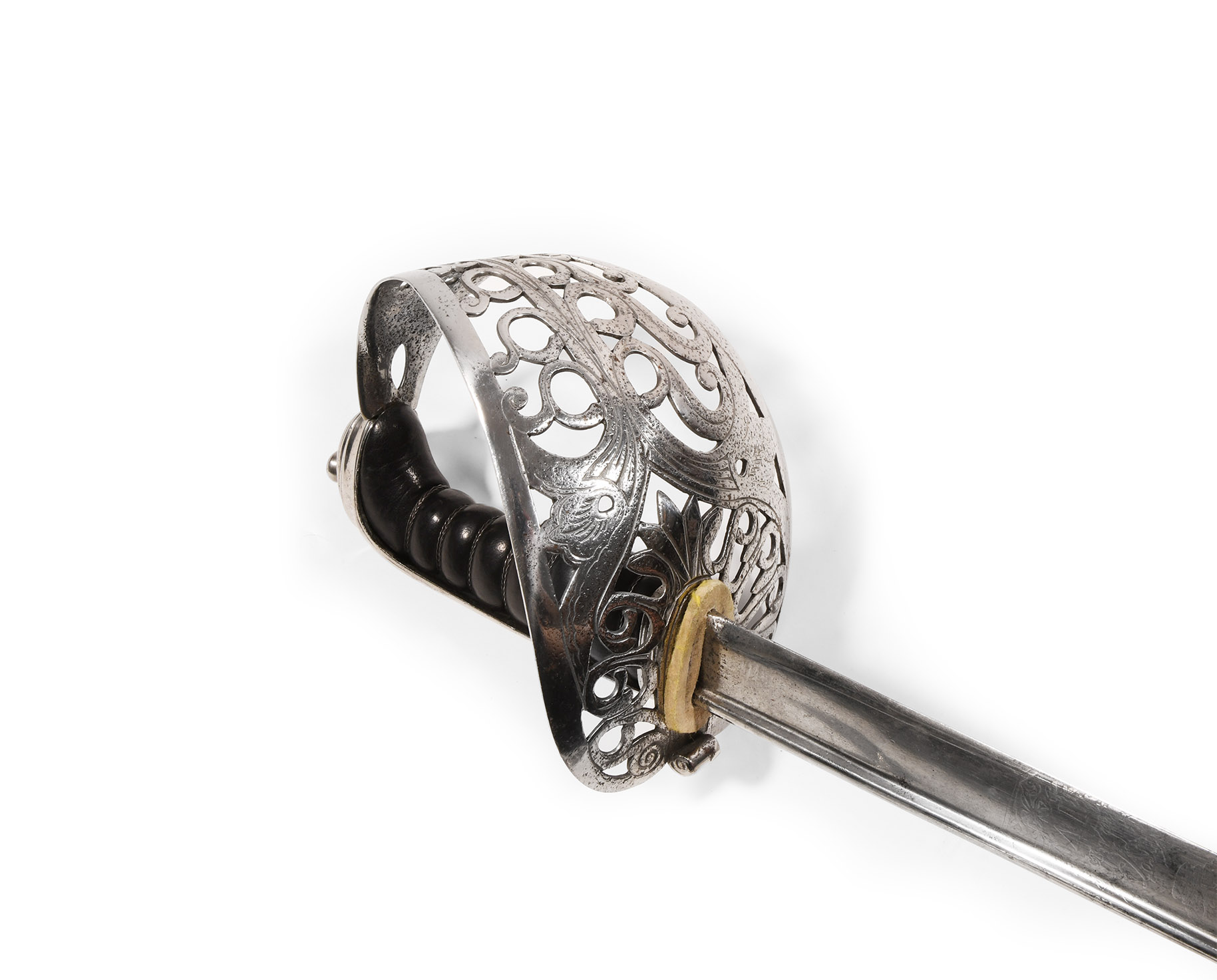
George IV Inniskilling Dragoons Heavy Cavalry Officer's Sword
19TH CENTURY A.D.
41 3/4 in. (907 grams, 1.06 m).
1821 Pattern, composed of a slightly curved blade marked with crown over GRIV monograms and 'The Iniskilling Dragoons'; fitted with wire-bound ray skin hilt and openwork basket guard, lion's head pommel; complete with original steel scabbard.
ProvenanceAcquired from MDL Historic Military Antiques, UK.
The Kusmirek Collection, UK.
Accompanied by a copy of the purchase invoice and regiment details.
See Withers, Harvey J. S., Swords and Sabres, 2011, p.194, for the type.
FootnotesThis pattern sword would have been in use during the Crimean War period and the regiment served at Balaclava as part of the Heavy Brigade.
CONDITIONTimeLine Auctions follows a vetting process to ensure the authenticity and legality of all items, reinforcing our commitment to integrity and responsible trading. Each antiquity, antique, and coin lot undergoes thorough examination by a vetting committee of at least ten external specialists, professional trade association members, scientists, and archaeologists: Our Vetting Process
AUCTIONS:
TimeLine is a leading auction house specialising in antiquities, ancient art, collectables, natural history, coins, medals, and books. Our auctions offer museums, collectors, historians, and enthusiasts the opportunity to acquire unique and historically significant pieces.
LOT 0284
George IV Inniskilling Dragoons Heavy Cavalry Officer's Sword
Sold for (Inc. bp): £624
-
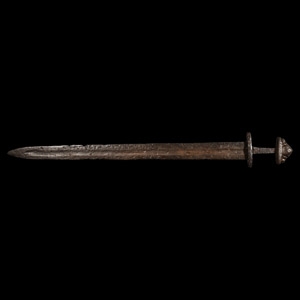
Viking Age Iron Sword with Five-Lobed Pommel
Circa 10th-11th century A.D.Sold for (Inc. bp): £4,940
Composed of a double-edged tapering blade of Petersen Type T variant, with a slightly rounded point, shallow fullers; boat-shaped cross guard with traces of vertical silver strips, narrow tang; boat-shaped upper guard supporting a five-lobed pommel with traces of silver inlay. 1.05 kg, 89.5 cm
The general blade structure is still homogenous, few delamination traces on the sides, some flaking along the pattern-welds, small corrosion damages along the edge; in general fine condition, an excellent weapon.
Acquired 1971-1972. From the collection of the vendor's father. Property of a London, UK, collector. Accompanied by an academic report by Dr Raffaele D’Amato. This lot has been checked against the Interpol Database of stolen works of art and is accompanied by search certificate number no.11755-202775. -
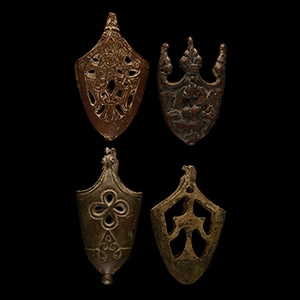
Viking Age Bronze Sword Scabbard Chape Collection
9th-11th century A.D.Sold for (Inc. bp): £715
Comprising: one heater-shaped with openwork raven motif to each face; one similar with openwork raven enmeshed in tendrils; one with fleur-de-lys to the centre of each upper edge and a lobed spur to each side; one with openwork quatrefoil to each face and knop finial to the apex. 145 grams total, 55-85 mm
From the collection of a North American gentleman, formed in the 1990s. -
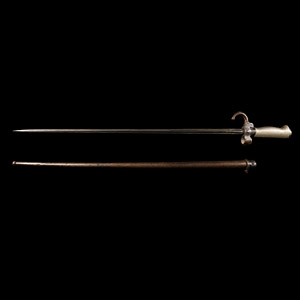
French Lebel 1886 Model 'Rosalie' Epee Bayonet with Scabbard
19th-20th century A.D.Sold for (Inc. bp): £52
Sword bayonet for use with the 8 mm M1886 Lebel rifle; fitted with 'German silver' grip scales; original scabbard. 532 grams, 65 cm
Property of a Luton, UK gentleman, by inheritance.
Known affectionately as “Rosalie” to French troops, the M1886 was the French mainstay during WWI and many were still in service at the Fall of France in 1940. The Lebel also saw extensive use worldwide by native troops in the French colonies. The M1886 introduced the distinctive cruciform blade, which remained a feature of most French bayonets until 1956. This example was made in 1890 at the Manufacture D'Armes St. Etienne (MAS). The scabbard was made by Manufacture Nationale d'Armes de Châtellerault (MAC). This is an early example that escaped later modifications, retaining its long blade, quillon, and raised round press stud. The silver-alloy grip is removable.
