
Loading, please wait...
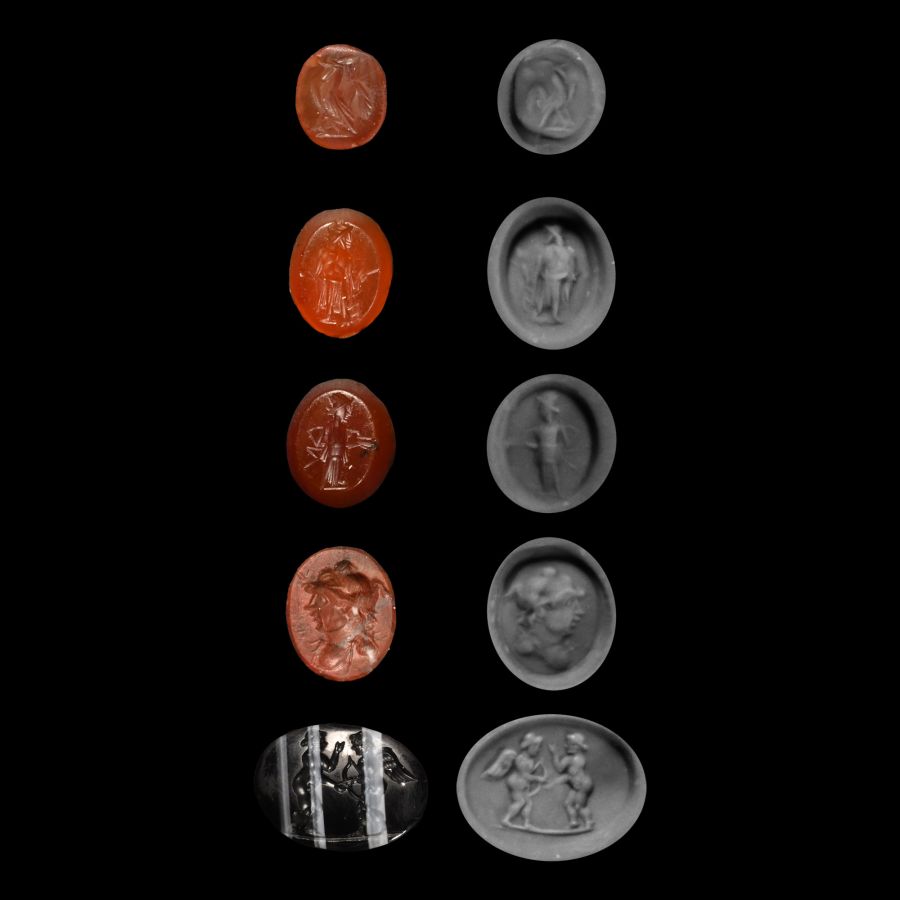
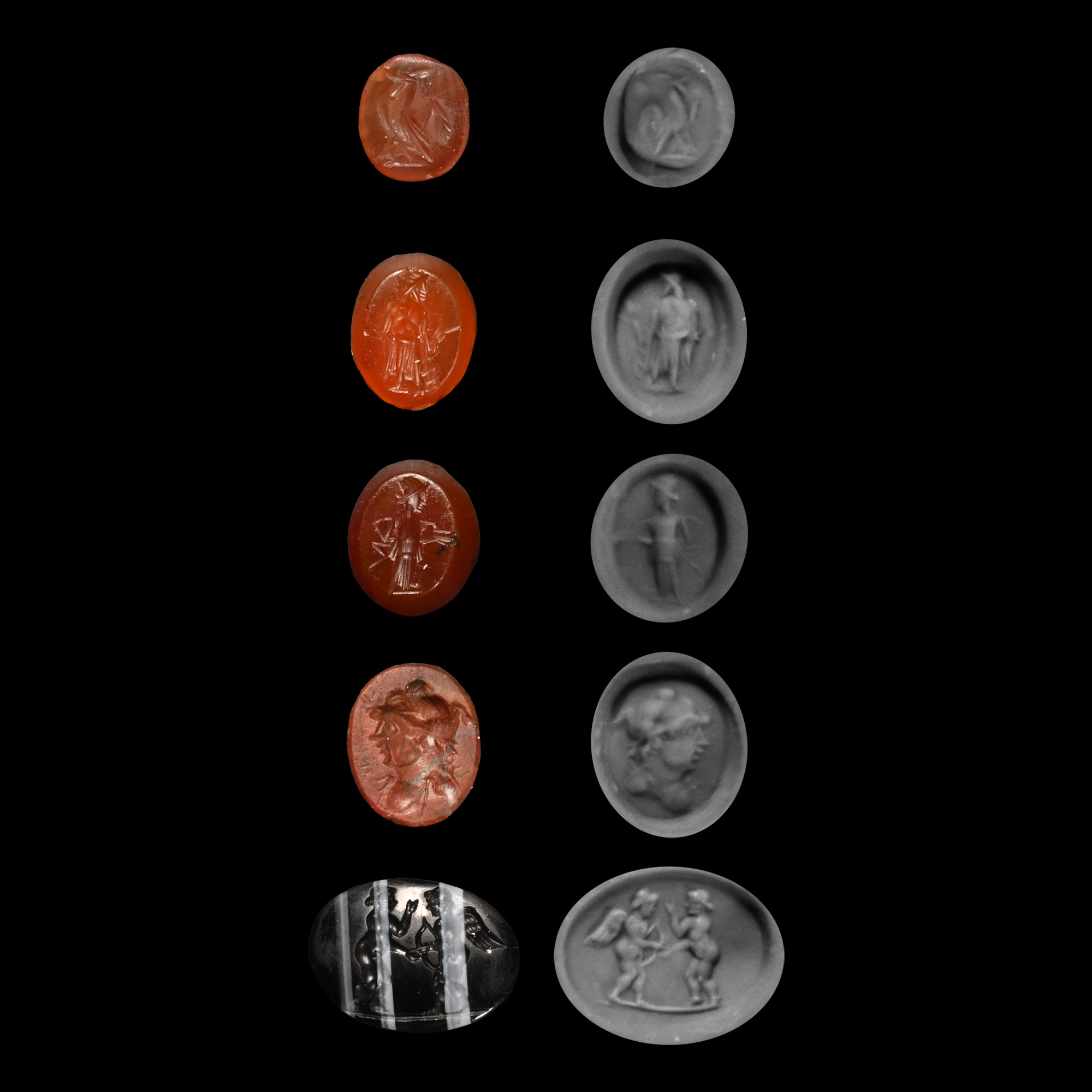
LOT 0732
Gemstone Collection
ROMAN, 2ND CENTURY A.D. AND LATER
1/4 - 1/2 in. (2.41 grams total, 8-13 mm).
Including two putti on a baseline, eagle perching, standing figure, female bust, in carnelian and other gemstones; each supplied with a museum-quality impression. [5]
ProvenancePrivate collection, England.
CONDITIONTimeLine Auctions follows a vetting process to ensure the authenticity and legality of all items, reinforcing our commitment to integrity and responsible trading. Each antiquity, antique, and coin lot undergoes thorough examination by a vetting committee of at least ten external specialists, professional trade association members, scientists, and archaeologists: Our Vetting Process
AUCTIONS:
TimeLine is a leading auction house specialising in antiquities, ancient art, collectables, natural history, coins, medals, and books. Our auctions offer museums, collectors, historians, and enthusiasts the opportunity to acquire unique and historically significant pieces.
-
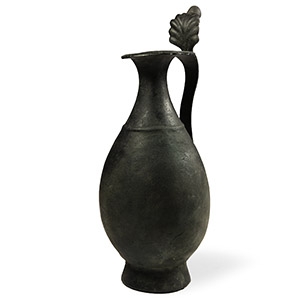
Large Roman Bronze Jug with Handle
3rd century A.D.Sold for (Inc. bp): £520
Piriform in profile with a flared foot and raised collar at the shoulder, everted rim to the mouth with crescent plate to the rear ending in profile avian heads; curved acanthus-leaf with bulb finial forming the thumb-pad, with a swept curve to the strap handle ending in a deer's head at the junction with the body; heavily restored. 1.69 kg, 35.5 cm
UK private collection before 2000. Acquired on the UK art market. Property of a London gentleman. -
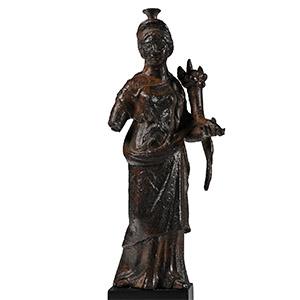
Roman Bronze Statuette of Isis Fortuna
2nd century A.D.Sold for (Inc. bp): £715
Modelled standing erect wearing a floor-length peplos-style robe and palla draped above, gathered and secured at the waist; diadem to the hair dressed in a chignon and with a trumpet-shaped modius above, the left arm supporting a cornucopia; mounted on a custom-made stand. 287 grams total, 15.4 cm high including stand
From a collection acquired on the UK art market from various auction houses and collections mostly before 2000. From an important Cambridgeshire estate; thence by descent. -
.jpg)
Bronze Age to Roman Bronze Artefact Collection
11th century B.C.-3rd century A.D.Sold for (Inc. bp): £26
Comprising two arrowheads with foliate head and square-sectioned tang and three awls. 45 grams total, 3.6-10.8 cm
Acquired prior to 2000. Ex private collection, Cambridgeshire, UK.
The two arrowheads are similar to specimens found in Luristan. They belong to the type V of the Khorasani classification. The bow was widely used by the Luristan people. The shape of the blade is often flat or ovate in the cross section with lanceolate profile and two cutting edges.
