
Loading, please wait...

LOT 2383
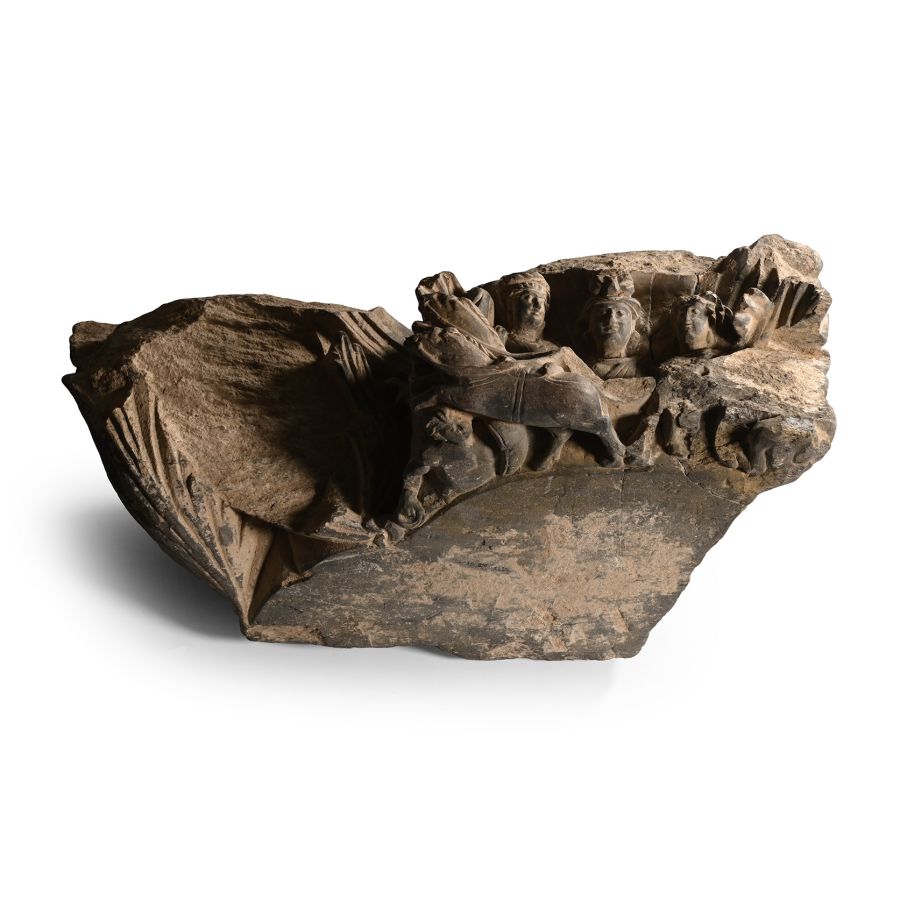
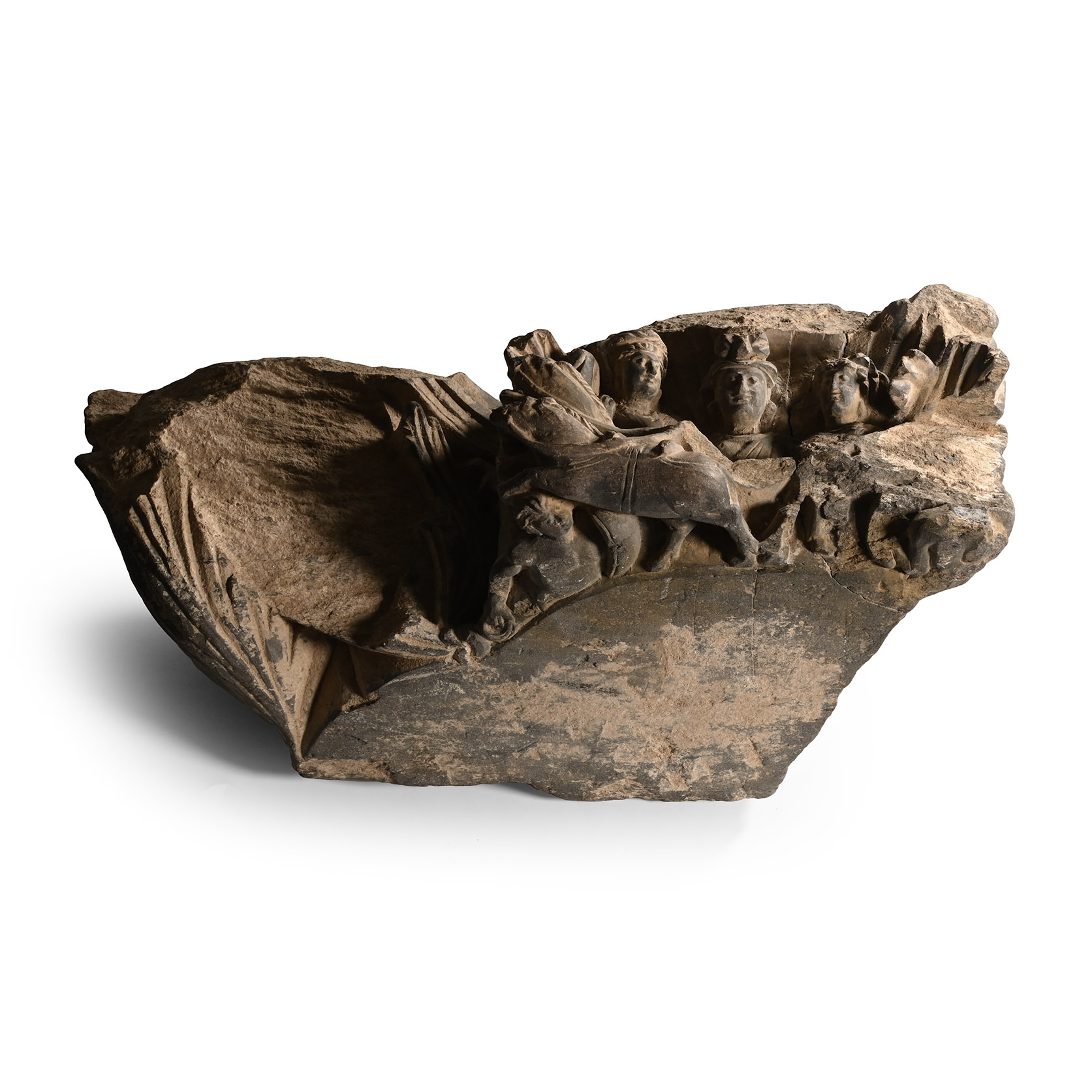
Gandharan Schist Frieze Fragment
2ND-4TH CENTURY A.D. OR LATER
14 1/2 in. (13.3 kg, 37 cm wide).
Carved corbel or column fragment with scrolled foliage to three faces and socket to upper face to accept a statue; three youthful figures - two females flanking a larger male - each wearing the hair dressed in a topknot, with radiating sunburst behind them and below a team of two horses galloping left with empty saddles and their reins flung back towards the central character, probably a charioteer.
ProvenanceLondon, UK, collection, 1990s.
CONDITIONTimeLine Auctions follows a vetting process to ensure the authenticity and legality of all items, reinforcing our commitment to integrity and responsible trading. Each antiquity, antique, and coin lot undergoes thorough examination by a vetting committee of at least ten external specialists, professional trade association members, scientists, and archaeologists: Our Vetting Process
AUCTIONS:
TimeLine is a leading auction house specialising in antiquities, ancient art, collectables, natural history, coins, medals, and books. Our auctions offer museums, collectors, historians, and enthusiasts the opportunity to acquire unique and historically significant pieces.
LOT 2383
Gandharan Schist Frieze Fragment
Estimate £300 - 400€350 - 460 (for guidance only)$410 - 540 (for guidance only)
-
Gandharan Terracotta Head
2nd-4th century A.D.Estimate: £200 - 300 (+bp*)
Opening Bid: £90
With top-knot ushnisha, long lobed ears and large lentoid eyes; mounted on a custom-made stand. 320 grams total, 10.4 cm high including stand
Acquired in the London art market. Private collection, 1970s. -
Indus Valley and Other Terracotta Vessel Group
3rd-2nd millennium B.C.Sold for (Inc. bp): £143
Including a trumpet-shaped funnel, a squat jar with painted concentric circles to the shoulder and a vessel with flared rim and triangular hood with applied ropework decoration. 680 grams total 9.3-11.1 cm
From a collection acquired on the UK art market from various auction houses and collections mostly before 2000. From an important Cambridgeshire estate; thence by descent. -
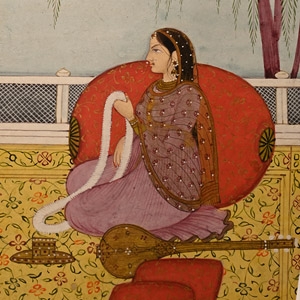
Indian Painting of a Noblewoman
Kangra Region, Circa 1780 A.D.Sold for (Inc. bp): £234
In a rectangular white card reveal with ellipsoid opening, hand-painted watercolour scene depicting a noblewoman in a garden, resting against a large decorated pillow, wearing a transparent shawl with floral detailing over a lavender-coloured robe, sitar and water vessel beside her and two red pillows on a decorated yellow mat with flowers and tendrils; fences in foreground and behind the figure, and willow tree beyond; liquid gold detailing to the shawl, sitar and vessel. 152 grams, 31 x 25.2 cm
Acquired on the UK art market. Scottish private collection.
