
Loading, please wait...
LOT 1111
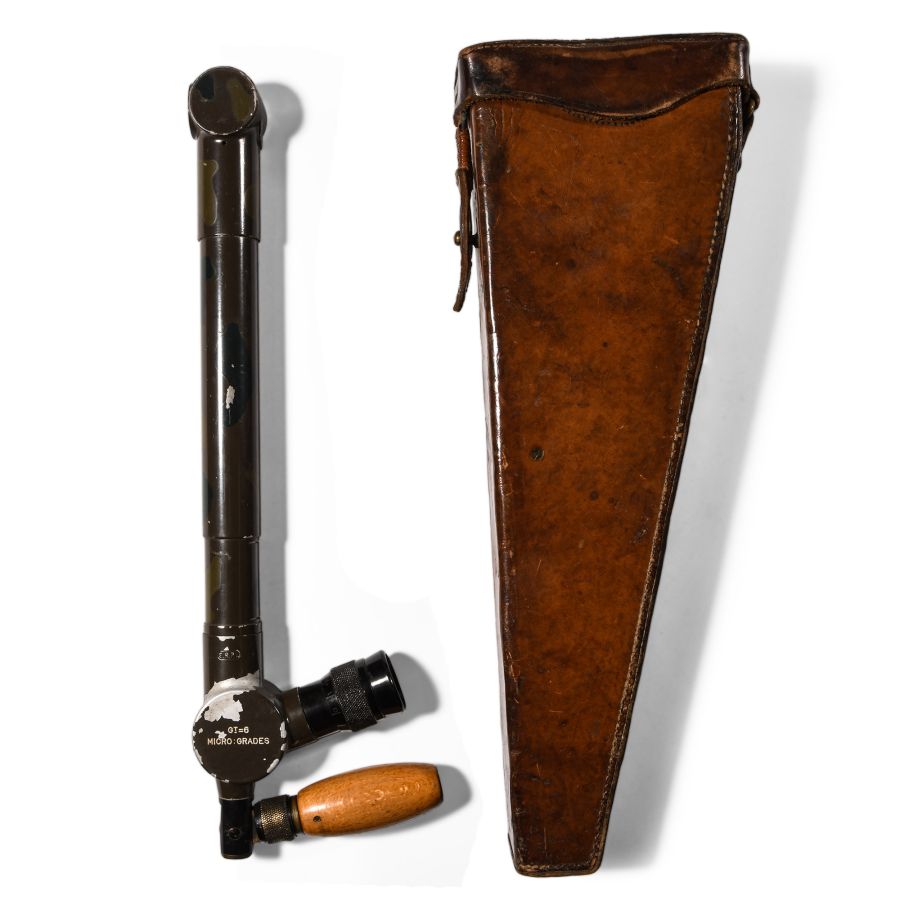
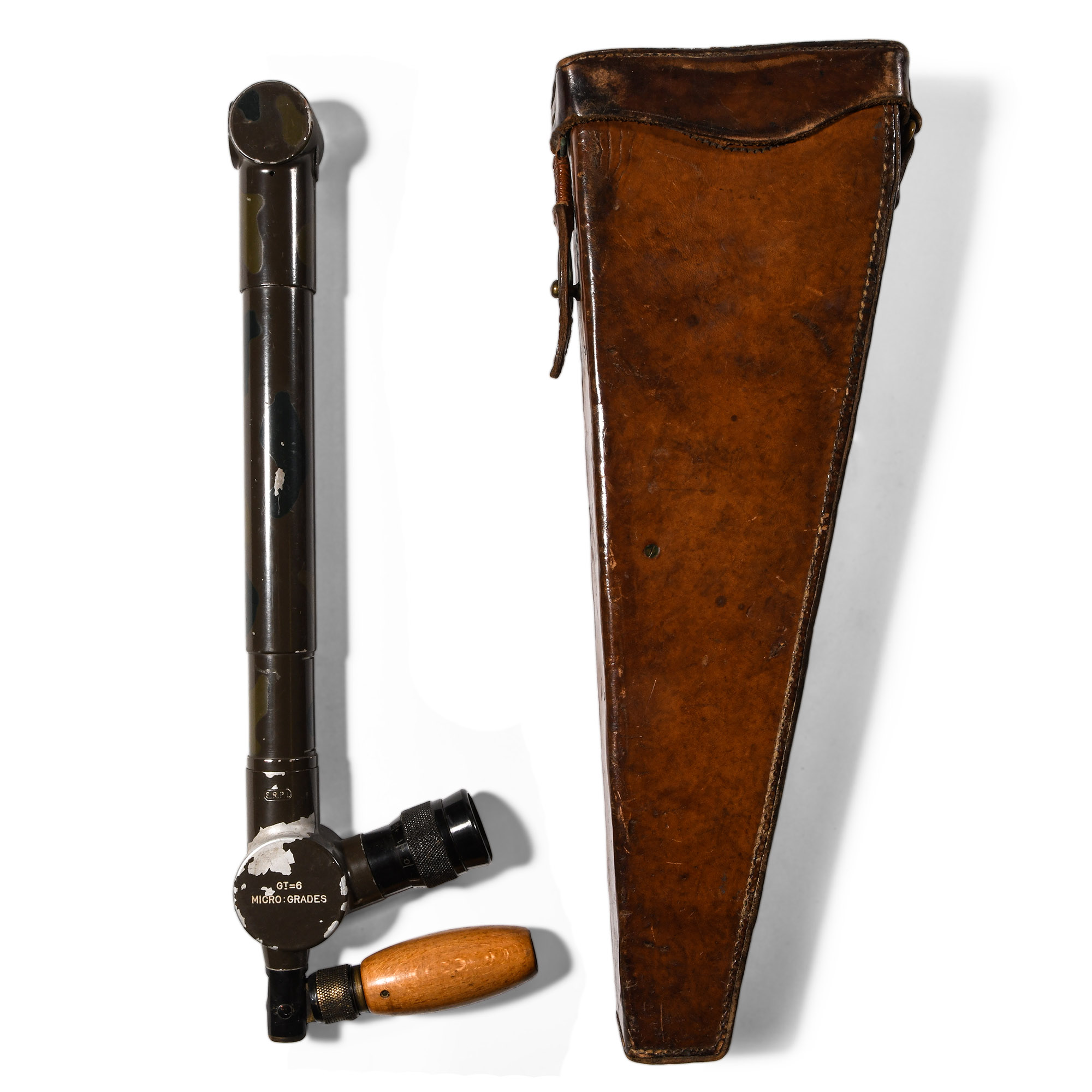
French WWII Trench Periscope
1940S A.D.
15 3/4 in. (1.36 kg, 40 cm).
Aluminium rotating bodied vertical trench periscope with camouflage finish, marked 'GT=6 / MICRO:GRADES' to one side and M.G. / No.34185' to other, fitted with hinged wood handle; including original leather case with loops for belt/webbing.
ProvenanceThe Kusmirek Collection, UK.
CONDITIONTimeLine Auctions follows a vetting process to ensure the authenticity and legality of all items, reinforcing our commitment to integrity and responsible trading. Each antiquity, antique, and coin lot undergoes thorough examination by a vetting committee of at least ten external specialists, professional trade association members, scientists, and archaeologists: Our Vetting Process
AUCTIONS:
TimeLine is a leading auction house specialising in antiquities, ancient art, collectables, natural history, coins, medals, and books. Our auctions offer museums, collectors, historians, and enthusiasts the opportunity to acquire unique and historically significant pieces.
LOT 1111
French WWII Trench Periscope
Estimate £100 - 140€120 - 160 (for guidance only)$140 - 190 (for guidance only)
-
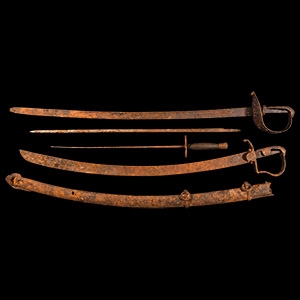
Post Medieval Iron Sword Group
18th-19th century A.D.Sold for (Inc. bp): £156
Comprising military and civilian weapons: short rapier; basket hilted sword; sabre seemingly with scabbard; rapier blade. 3.45 kg total, 62-100 cm
Acquired 1990s-early 2000s. East Anglian private collection.
The two sabres, with the particular hilt and steel scabbard, seems to have affinities with Hungarian sabres of about 1837-1838, destined to staff and senior officers of the Austro-Hungarian Kingdom Hussars. At the end of the 1830s, the Austrian military leaders introduced a new type of sabre for the Hussar officers, while the 1837 infantry officer sabre was standardised. -
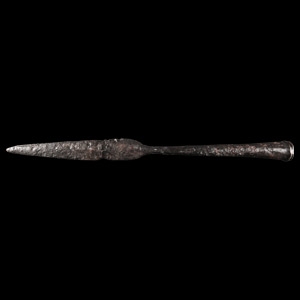
Massive Viking Age Finno-Ugrian Spearhead
Circa 12th-13th century A.D.Sold for (Inc. bp): £169
Comprising a leaf-shaped blade and long tubular socket. 388 grams, 42.2 cm
UK collection since the 1990s. Property of a Sussex, UK, teacher.
The more common weapons of Finno-Ugrian people were axes commonly found from all Finnic areas, as well as spears. Among Baltic-Finnic people, especially in Finland and Karelia, knives called 'puukko' were common, as well as axes, spears, flat bows and long bows, while swords were usually imported from Germanic areas, Sweden or from elsewhere Scandinavia, some having often typically Scandinavian animal ornaments, although there are some Finnish made finds too. -
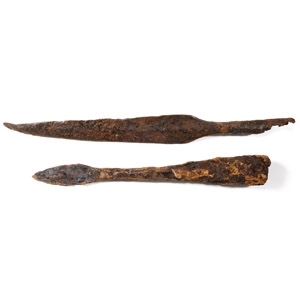
Medieval Iron Spear Group
Circa 15th century A.D.Sold for (Inc. bp): £20
With conical sockets, one with foliate head, the other with long triangular head. 480 grams total, 27.5-35 cm
UK private collection, 1990s. Acquired from a provincial auction.
The spear was one of the many weapons of infantrymen and peasants during the Middle Ages. Götz von Berlichingen, who in 15th century A.D. was appointed as the leader of the peasants revolting against the noblemen, was recorded saying that ‘I beheld myself, suddenly encompassed with muskets, spears, and halberds, pointed at me. They cried that I should be their captain, in whether I would or not’.
