
Loading, please wait...
LOT 1542
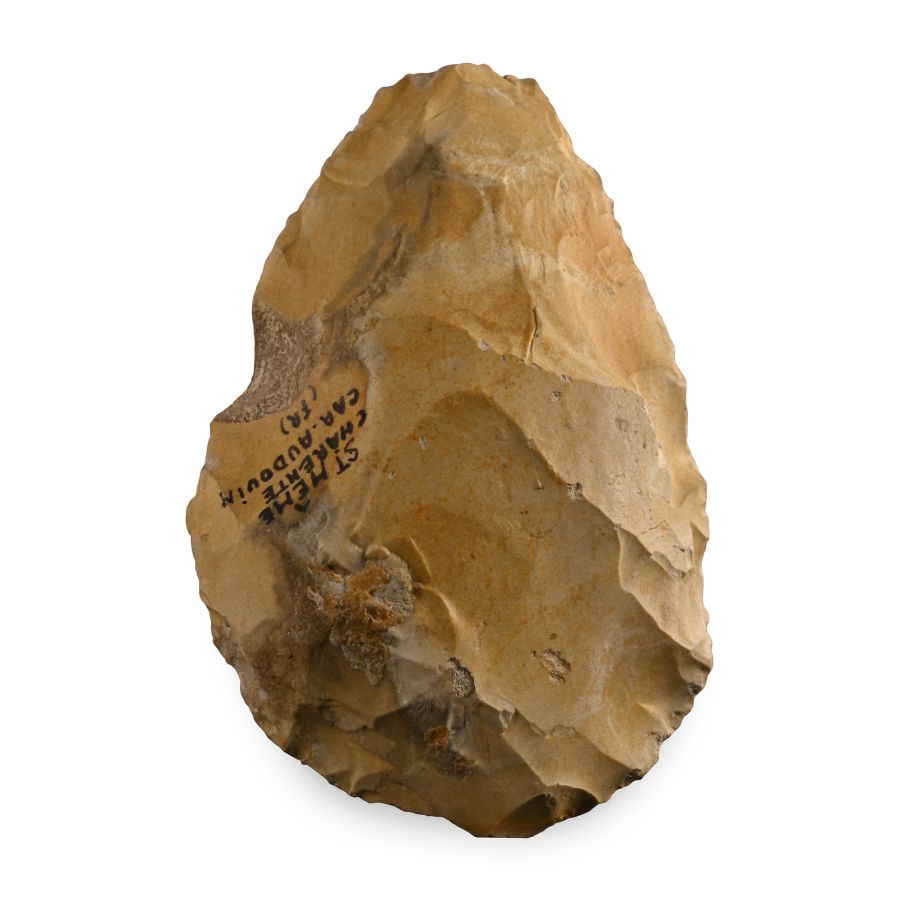
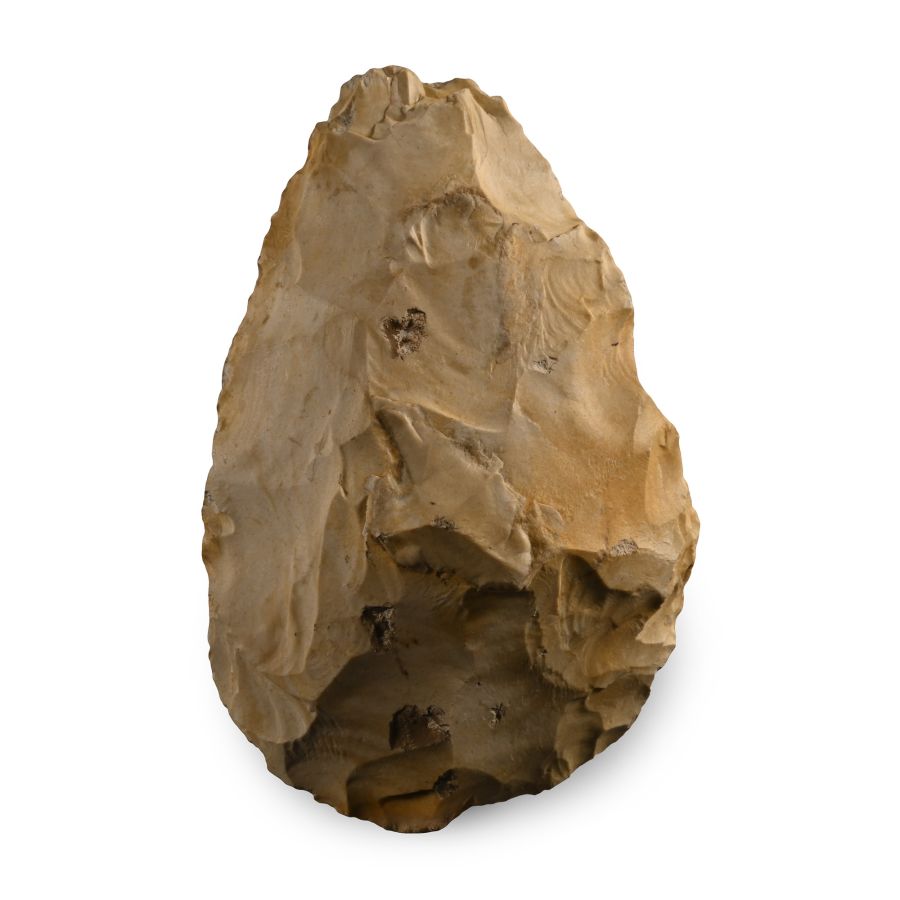
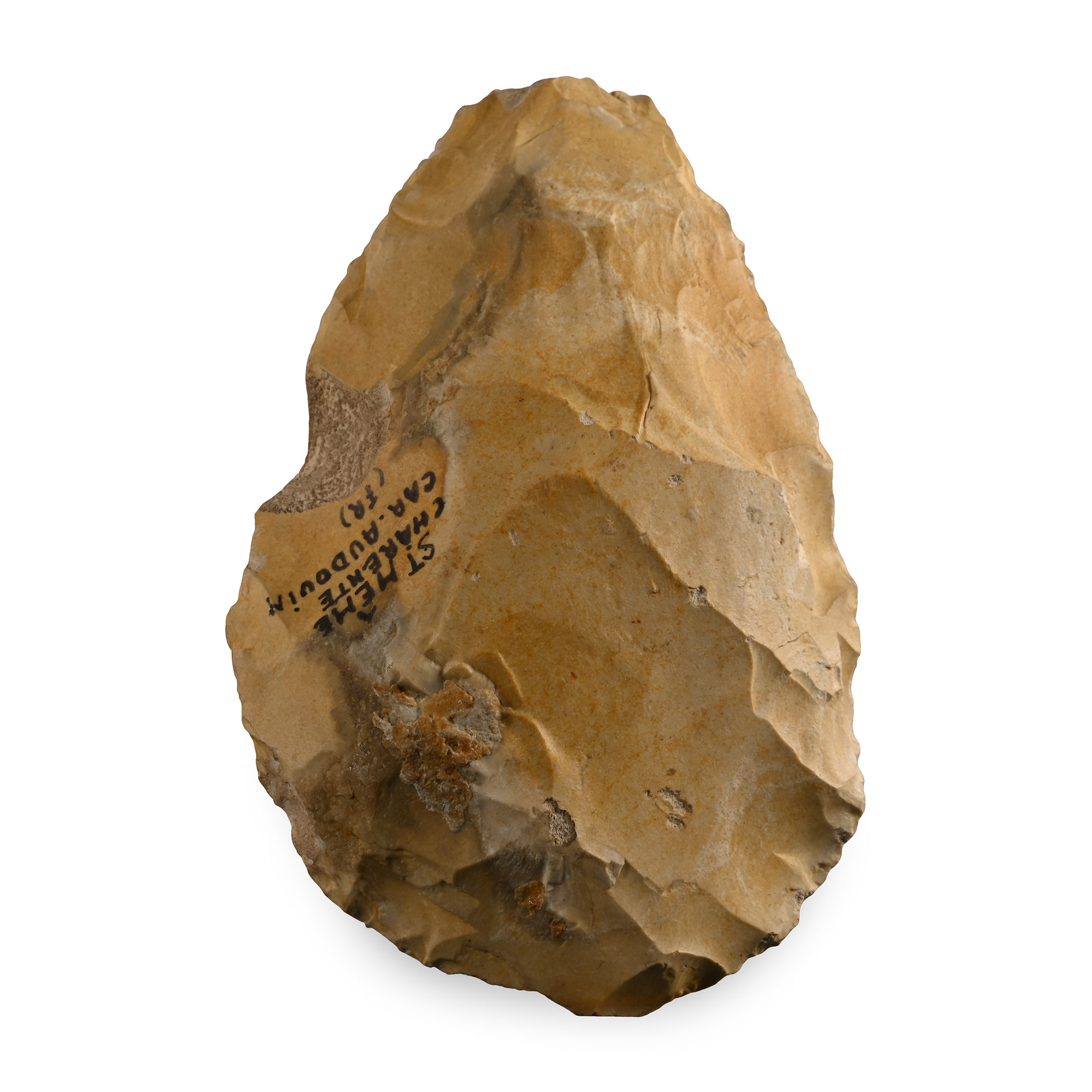
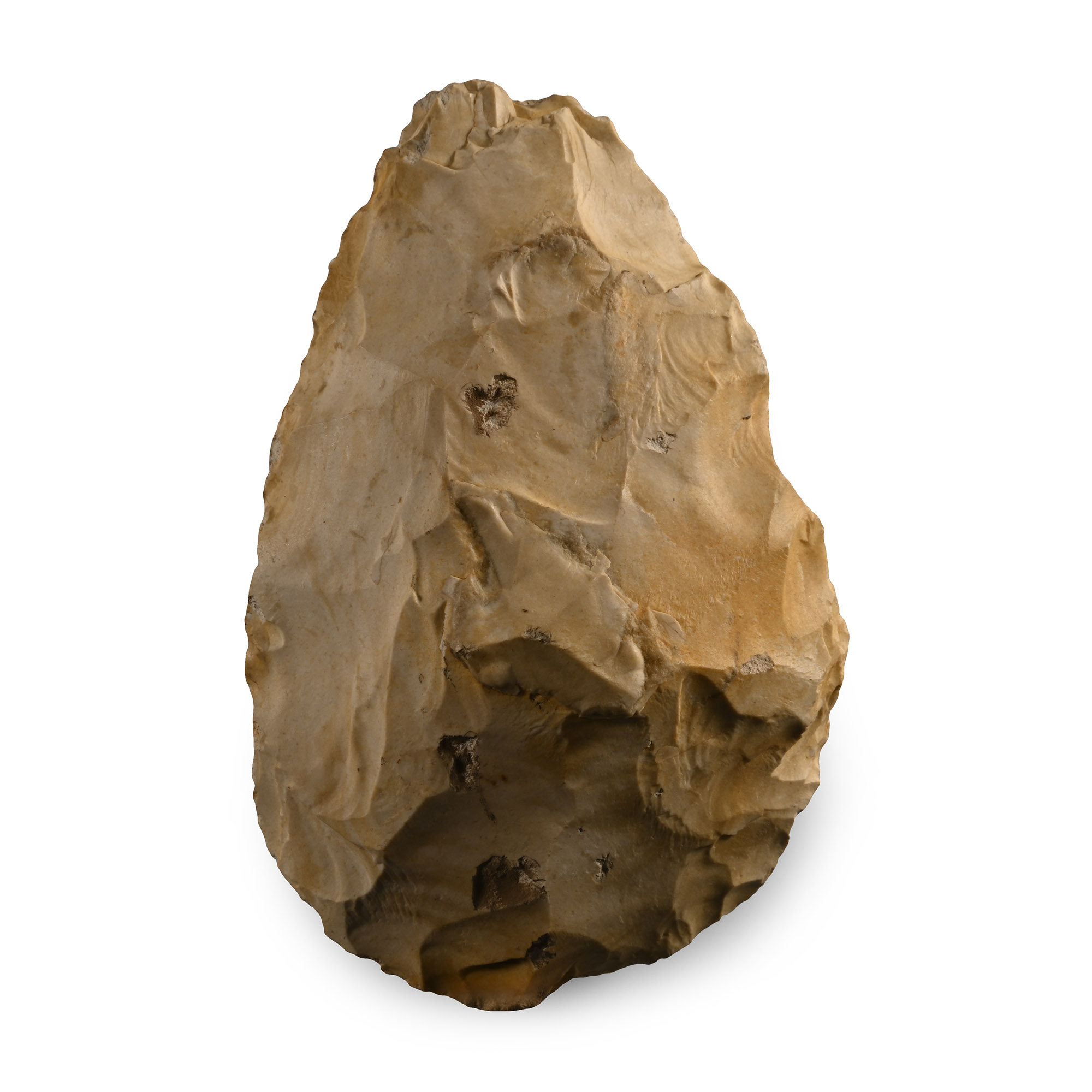
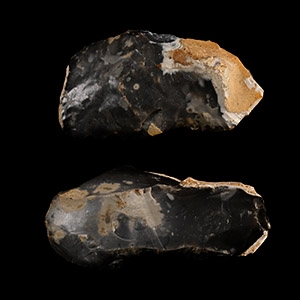
French Stone Age Acheulean Handaxe
LOWER PALAEOLITHIC PERIOD, CIRCA 450,000-300,000 B.P.
1/2 in. (338 grams, 13 cm).
Well made with a Cordiform shape with small panel of cortex remaining, inked legend 'St. Même / Charente / Car. Audouin / (FR)'. [No Reserve]
ProvenanceFrom the well regarded long closed quarry site of St Meme, Charente, France.
From an old large French collection.
Acquired on the European art market.
From the private collection of an East Anglian, UK, specialist collector.
This lot is accompanied by an illustrated lot declaration signed by the Head of the Antiquities Department, Dr Raffaele D'Amato.
Likely made by Homo Heidelbergensis or the first Neanderthals in to France.
CONDITIONTimeLine Auctions follows a vetting process to ensure the authenticity and legality of all items, reinforcing our commitment to integrity and responsible trading. Each antiquity, antique, and coin lot undergoes thorough examination by a vetting committee of at least ten external specialists, professional trade association members, scientists, and archaeologists: Our Vetting Process
AUCTIONS:
TimeLine is a leading auction house specialising in antiquities, ancient art, collectables, natural history, coins, medals, and books. Our auctions offer museums, collectors, historians, and enthusiasts the opportunity to acquire unique and historically significant pieces.
-
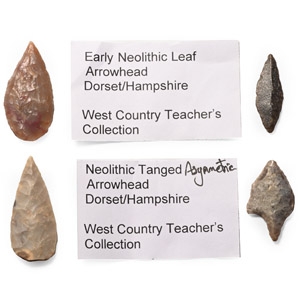
British Stone Age Arrowhead Collection
Neolithic Period, 6000-4500 B.C.Sold for (Inc. bp): £78
Comprising two leaf-shaped, one lentoid, and one tanged. 7.4 grams total, 26-34 mm
Found in Dorset & Hampshire. Ex N. Thomas collection, 1980s. This lot is accompanied by an illustrated lot declaration signed by the Head of the Antiquities Department, Dr Raffaele D'Amato. -
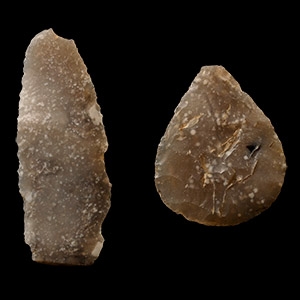
Stone Age Ryedale Flint Arrowhead Group
Neolithic Period, 4th-3rd millennium B.C.Sold for (Inc. bp): £26
Comprising two knapped arrowheads, both with some retouching. 4.59 grams total, 25-38 mm
Found Huttons Ambro, Ryedale, North Yorkshire, UK, before 13 November 1999. From the private collection of Robin Sykes, Yorkshire, UK, formed since the late 1990s. Accompanied by two record sheets by Jim Halliday dated 8 February 2000. This lot is accompanied by an illustrated lot declaration signed by the Head of the Antiquities Department, Dr Raffaele D'Amato. -
British Stone Age Flint Chopper and Axe from the Isle of Wight
Mesolithic Period, circa 14000-8000 B.C.Sold for (Inc. bp): £26
Each with much cortex remaining and pencilled 'IOW' notation. 347 grams total, 92-99 mm
Found Isle of Wight, Hampshire, UK. From a Leicestershire, UK, collection. This lot is accompanied by an illustrated lot declaration signed by the Head of the Antiquities Department, Dr Raffaele D'Amato.
