
Loading, please wait...
LOT 1521
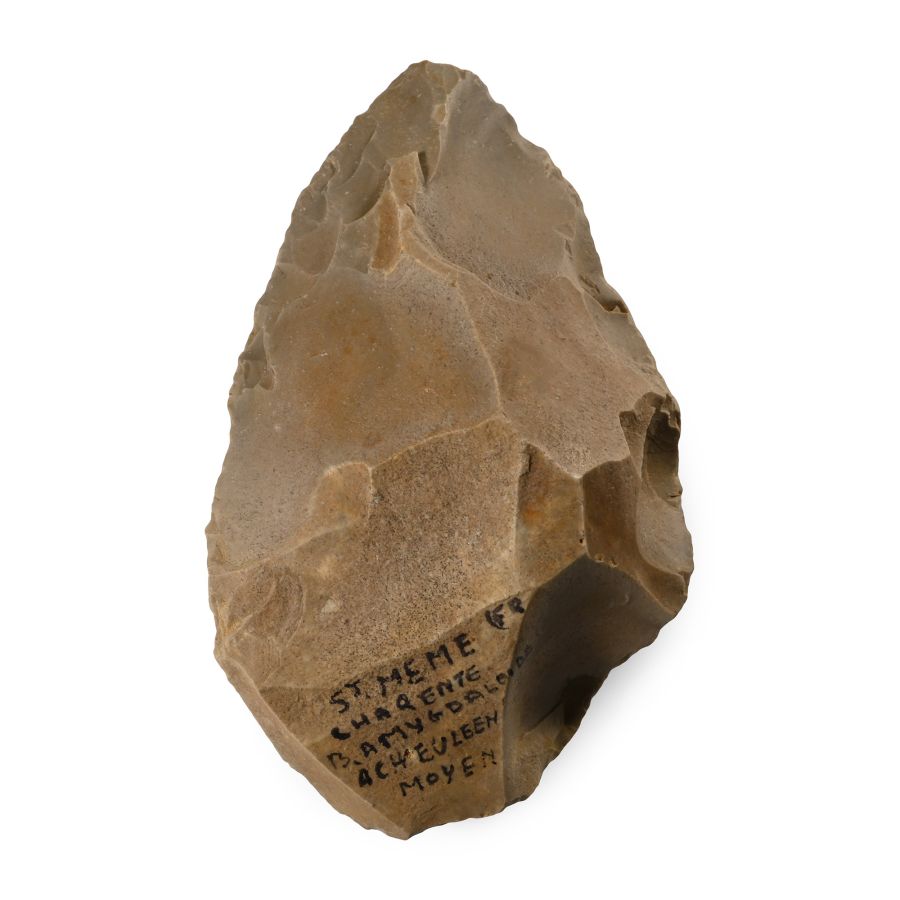
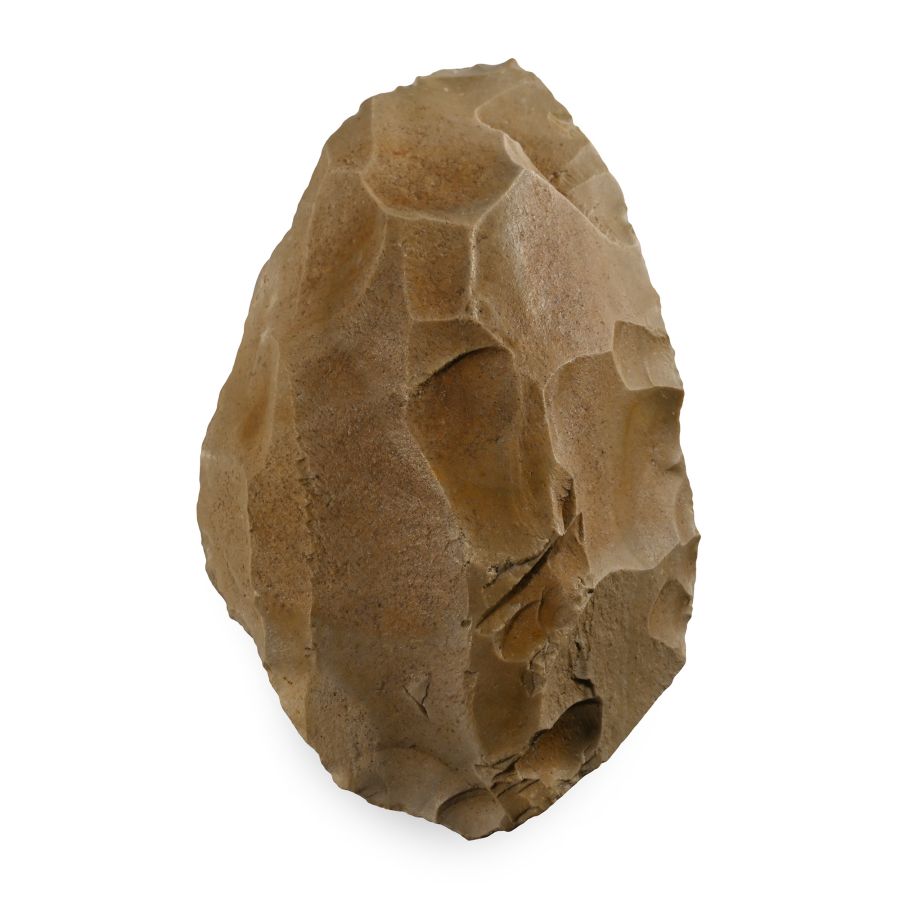
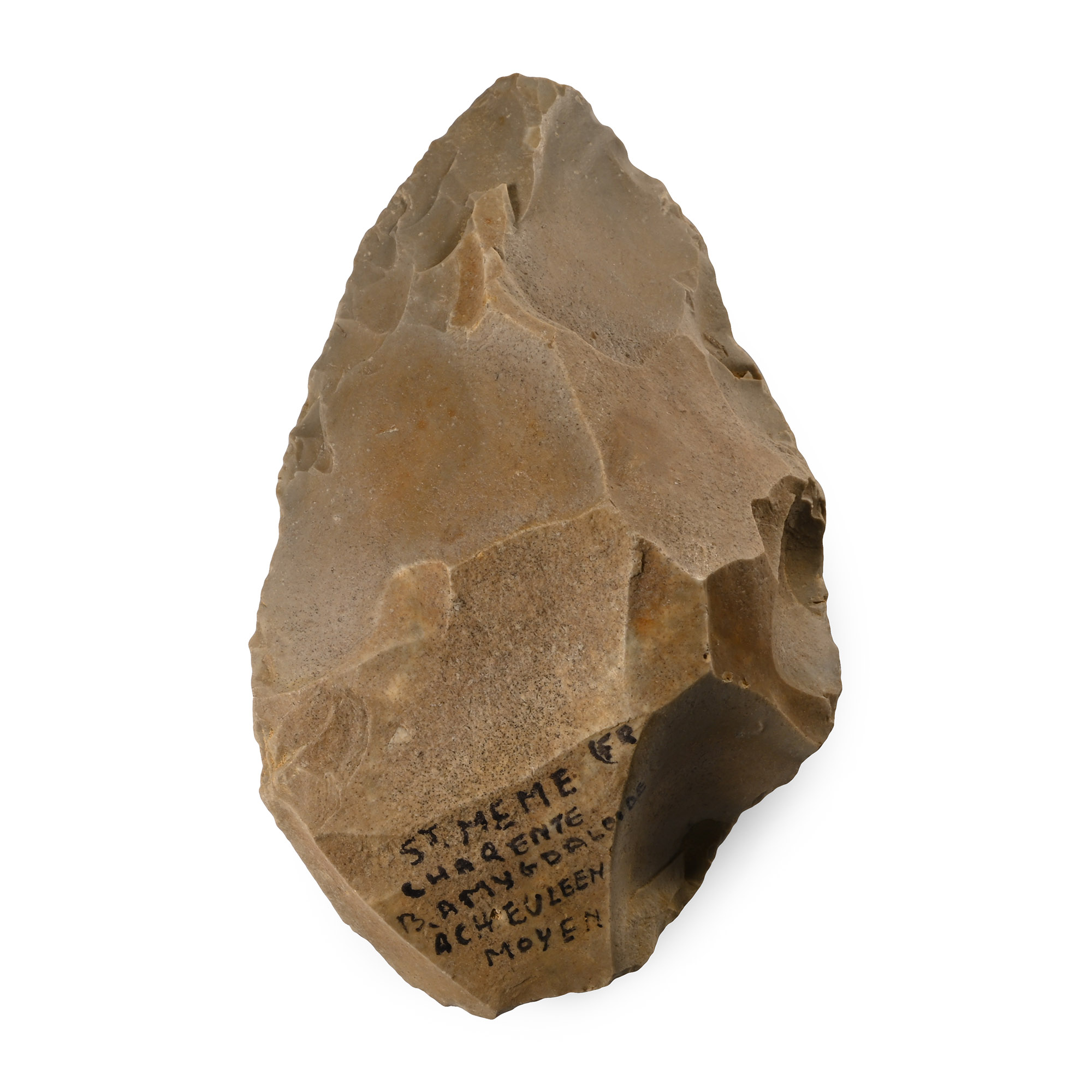
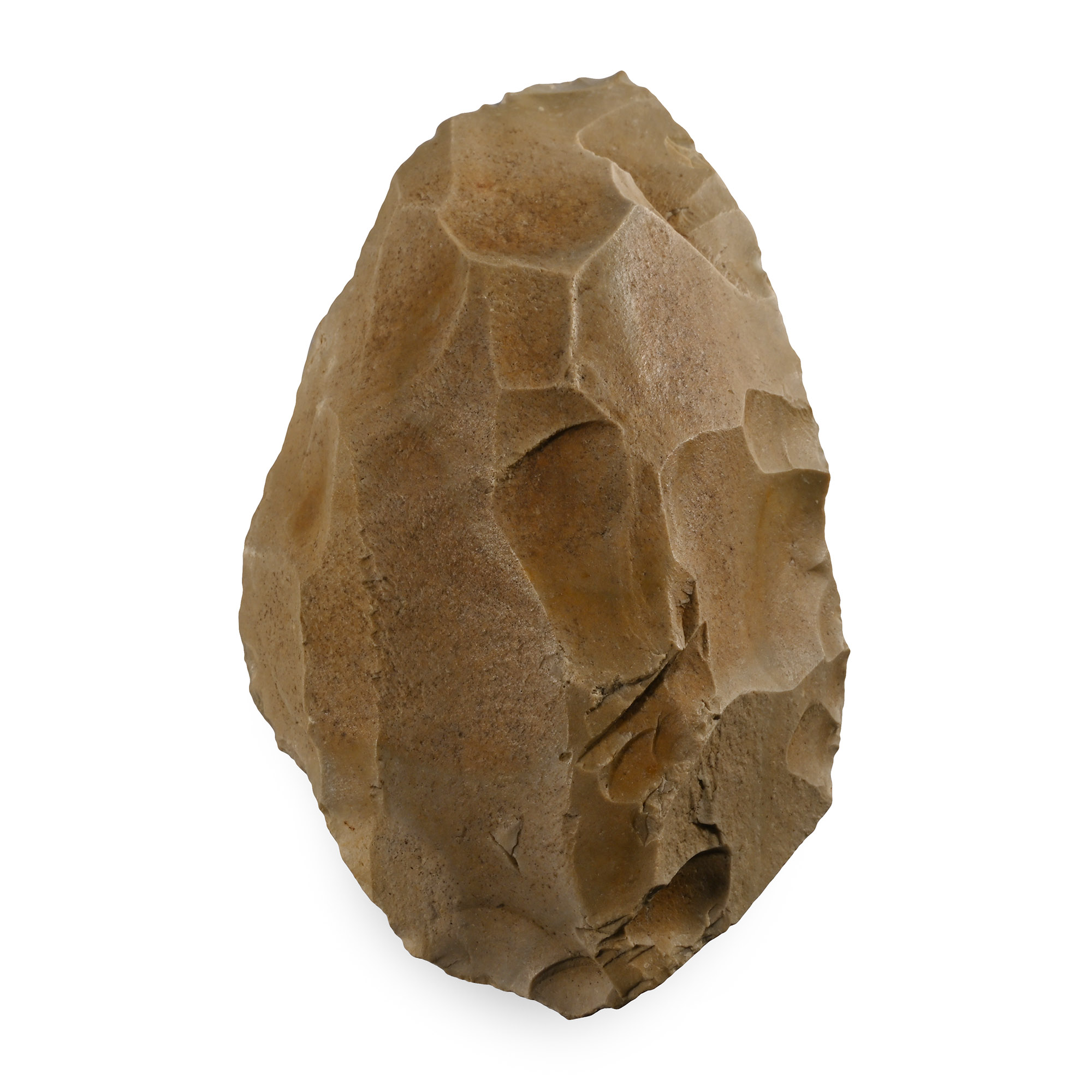
French Stone Age Acheulean Handaxe
LOWER PALAEOLITHIC PERIOD, CIRCA 450,000-300,000 B.P.
4 3/8 in. (280 grams, 11.3 cm).
Well made with a drop ovate form; inked legend ' St. Meme (FR / Charente / B. Amygdaloide / Acheuleen / Moyen'. [No Reserve]
ProvenanceFrom the well regarded long closed quarry site of St Meme, Charente, France.
From an old large French collection.
Acquired on the European art market.
From the private collection of an East Anglian, UK, specialist collector.
This lot is accompanied by an illustrated lot declaration signed by the Head of the Antiquities Department, Dr Raffaele D'Amato.
Likely made by Homo Heidelbergensis or the first Neanderthals in to France.
CONDITIONTimeLine Auctions follows a vetting process to ensure the authenticity and legality of all items, reinforcing our commitment to integrity and responsible trading. Each antiquity, antique, and coin lot undergoes thorough examination by a vetting committee of at least ten external specialists, professional trade association members, scientists, and archaeologists: Our Vetting Process
AUCTIONS:
TimeLine is a leading auction house specialising in antiquities, ancient art, collectables, natural history, coins, medals, and books. Our auctions offer museums, collectors, historians, and enthusiasts the opportunity to acquire unique and historically significant pieces.
-
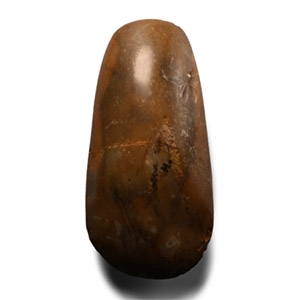
'The Greenstead Green' Stone Age Polished Brown Patinated Flint Axehead
Circa 4000-2350 B.C.Sold for (Inc. bp): £572
Sub-oval in plan, tapering towards the square butt, crescentic blade with the pointed edge extending around the entire object. 534 grams, 14.8 cm
Found whilst fieldwalking in Greenstead Green, Braintree, Essex, UK, on Sunday 18 September 2022. Accompanied by a copy of the British Museum's Portable Antiquities Scheme (PAS) report no.ESS-B342ED. This lot is accompanied by an illustrated lot declaration signed by the Head of the Antiquities Department, Dr Raffaele D'Amato. -

French Stone Age Mousterian Flint Convergent Tool
Middle Palaeolithic Period, Mousterian, circa 150,000- 60,000 B.PSold for (Inc. bp): £46
Very well formed example with neat retouch leading to a sharp point; milky light blue and cream patina; inked legend to flat face 'MG / Georgean / CM'. 65 grams, 89 mm
Found in the Dordogne, France. Ex M.G. Georgeon collection. Acquired on the European art market. From the private collection of an East Anglian, UK, specialist collector. This lot is accompanied by an illustrated lot declaration signed by the Head of the Antiquities Department, Dr Raffaele D'Amato.
Made by Neanderthals. -
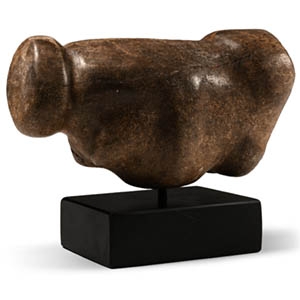
Large Stone Age Pregnant Animal Idol
Neolithic Period, circa 6th-4th millennium B.C. or laterSold for (Inc. bp): £845
Carved in the round with sturdy body, swollen belly and ovoid-section head; mounted on a custom-made stand. 1.66 kg total, 15.5 cm including stand
From a collection acquired on the UK art market from various auction houses and collections mostly before 2000. From an important Cambridgeshire estate; thence by descent. Accompanied by an academic report by Dr Raffaele D’Amato. This lot has been checked against the Interpol Database of stolen works of art and is accompanied by search certificate number no.12337-224209. This lot is accompanied by an illustrated lot declaration signed by the Head of the Antiquities Department, Dr Raffaele D'Amato.
Most scholars consider these as symbols of the fertility cult and as evidence of the existence of a matriarchal society as a form of organisation of the earliest human society. The people of the Stone Age may have considered figures such as this to represent women and mothers with their life-giving powers, or as depictions of the ancestors.
