
Loading, please wait...
LOT 1044
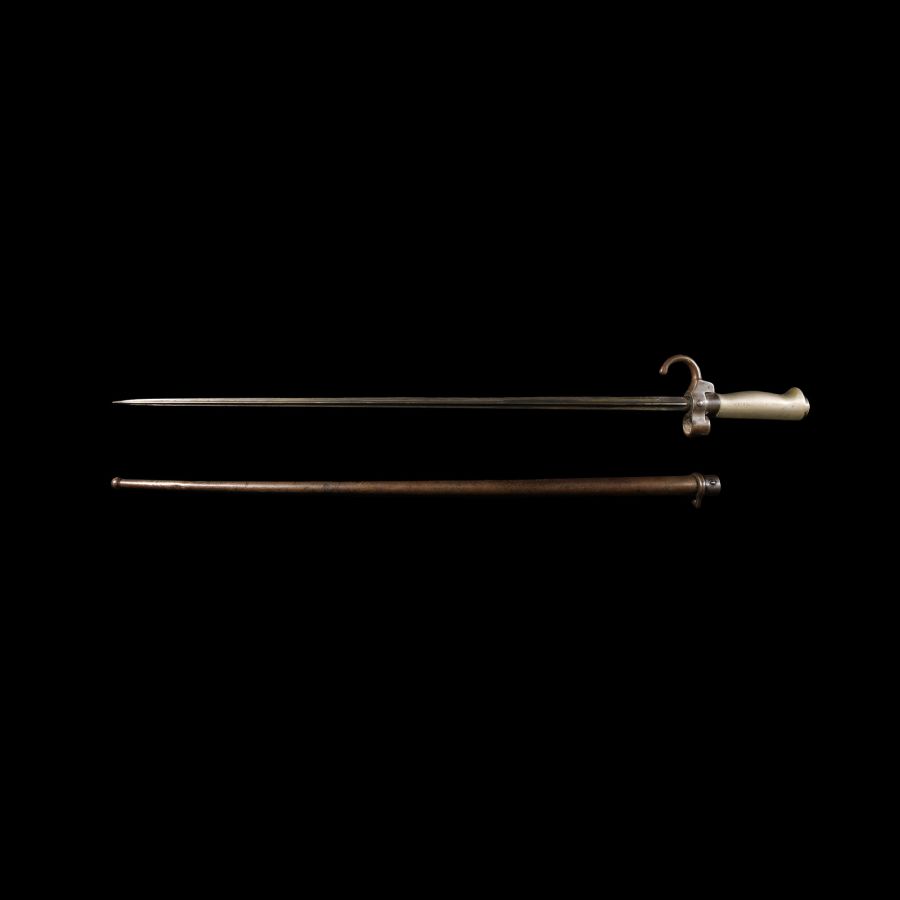
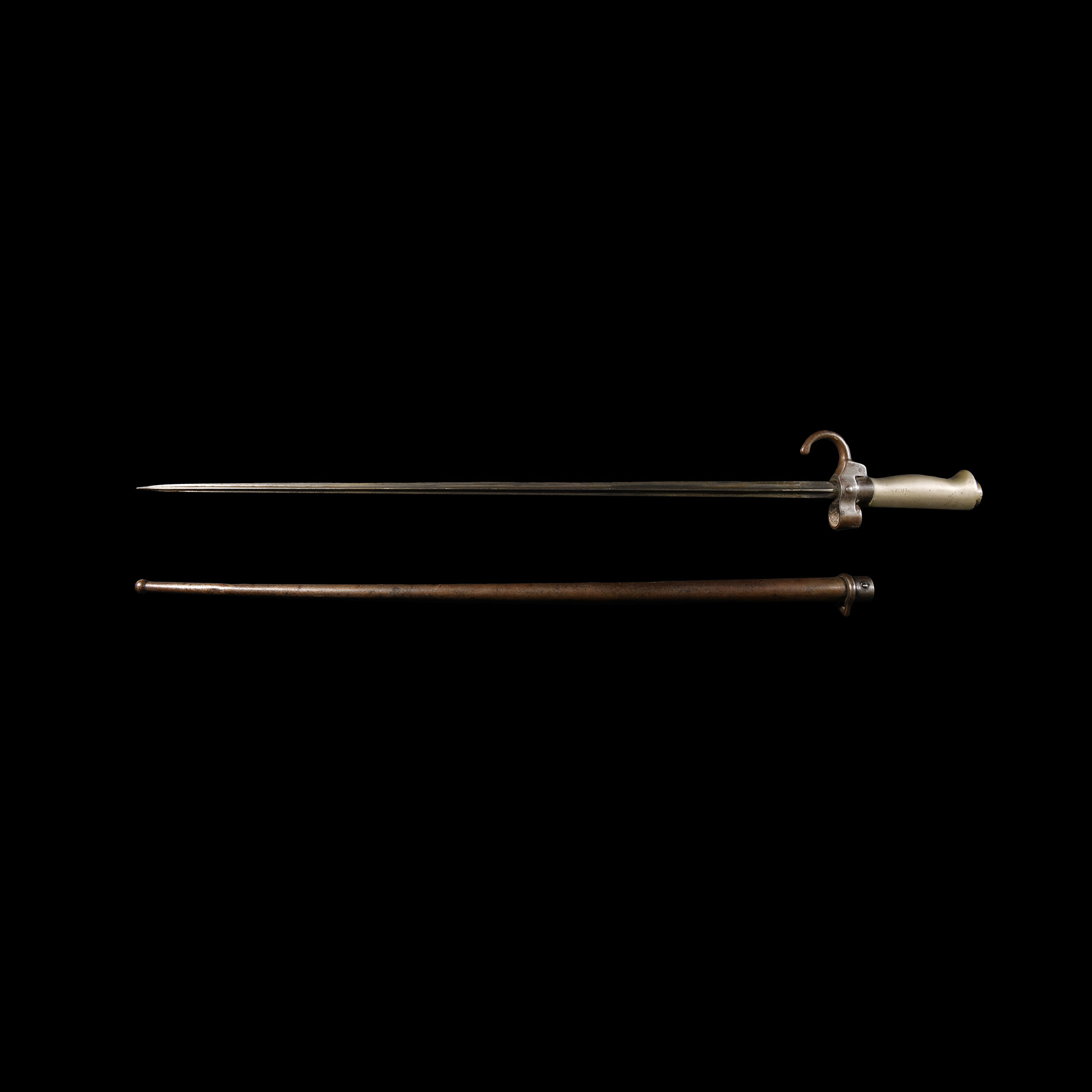
French Lebel 1886 Model 'Rosalie' Epee Bayonet with Scabbard
19TH-20TH CENTURY A.D.
25 5/8 in. (532 grams, 65 cm).
Sword bayonet for use with the 8 mm M1886 Lebel rifle; fitted with 'German silver' grip scales; original scabbard. [No Reserve]
ProvenanceProperty of a Luton, UK gentleman, by inheritance.
LiteratureSee Capwell, T., Knives, Daggers and Bayonets, Lorenz, 2009, p.190, for type and details.
FootnotesKnown affectionately as “Rosalie” to French troops, the M1886 was the French mainstay during WWI and many were still in service at the Fall of France in 1940. The Lebel also saw extensive use worldwide by native troops in the French colonies. The M1886 introduced the distinctive cruciform blade, which remained a feature of most French bayonets until 1956. This example was made in 1890 at the Manufacture D'Armes St. Etienne (MAS). The scabbard was made by Manufacture Nationale d'Armes de Châtellerault (MAC). This is an early example that escaped later modifications, retaining its long blade, quillon, and raised round press stud. The silver-alloy grip is removable.
CONDITIONTimeLine Auctions follows a vetting process to ensure the authenticity and legality of all items, reinforcing our commitment to integrity and responsible trading. Each antiquity, antique, and coin lot undergoes thorough examination by a vetting committee of at least ten external specialists, professional trade association members, scientists, and archaeologists: Our Vetting Process
AUCTIONS:
TimeLine is a leading auction house specialising in antiquities, ancient art, collectables, natural history, coins, medals, and books. Our auctions offer museums, collectors, historians, and enthusiasts the opportunity to acquire unique and historically significant pieces.
LOT 1044
French Lebel 1886 Model 'Rosalie' Epee Bayonet with Scabbard
Sold for (Inc. bp): £52
-
.jpg)
Nathan Starr 1816 Pattern Musket
1832 A.D.Sold for (Inc. bp): £715
Type III, made under contract by Nathan Starr of Middletown, CT; with .69 calibre, 107 cm (42”) browned barrel with side lock marked with Starr’s earlier style of 'US / (ornate sunburst) / N. STARR' ahead of the cock and 'MIDDTN / CONN / 1832 / (rosette)' to the rear with 'US / JM' over a raised 'P' in sunken circular cartouche to top of breech, with various inspection and other small marks, fitted with sling swivels (upper possibly a replacement), steel ramrod with flared tip, full wood stock with steel butt plate, trigger guard, side-plate, barrel rings and fore-end, lock with brass pan; action in good working order. 4.10 kg, 148 cm
Acquired from M J Noble Ltd, UK, 2015. The Kusmirek Collection, UK. Accompanied by the Noble purchase invoice and listing.
Sold as an exempt item under Section 58 (2) of the Firearms Act, 1968, to be held as a curiosity or ornament. No license required but buyer must be over 18 years of age. Overseas bidders should note that, due to UK regulations governing export of all firearms, overseas buyers will need to make arrangements for shipping this lot out of the UK directly, by air freight, with a specialist company or agent. -
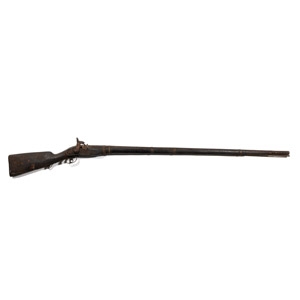
Percussion Long Musket
19th century A.D.Estimate: £200 - 300 (+bp*)
Opening Bid: £80
Long-barrelled (101cm) and slightly flared to an octagonal muzzle, bound to wood stock with six brass bands; with percussion lock (working order); fitted with iron butt plate and brass trigger guard; numbered 'D22/81' to side of butt; with a steel ramrod to underside of barrel (end ferrule of slot absent); probably native workmanship, copying European type. 4.50 kg, 150 cm overall
Acquired 1990s-early 2000s. East Anglian private collection.
Sold as an exempt item under Section 58 (2) of the Firearms Act, 1968, to be held as a curiosity or ornament. No license required but buyer must be over 18 years of age. Overseas bidders should note that, due to UK regulations governing export of all firearms, overseas buyers will need to make arrangements for shipping this lot out of the UK directly, by air freight, with a specialist company or agent. -
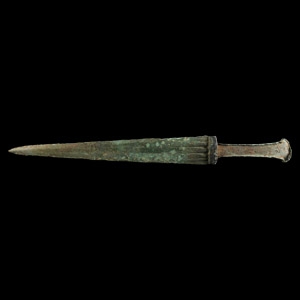
Luristan Bronze Dirk
Circa 1000 B.C.Sold for (Inc. bp): £234
Cast in one piece, with narrow blade having almost parallel edges, flanged hilt with narrow grip widening slightly towards the ricasso, decorated from five parallel grooves, and running smoothly into the blade. 188 grams, 33 cm
Ex German collection, Cologne, 1980-1990s.
The dirk belongs to the type III in the Medvedskaya classification, but with a smallest hand guard at the base. The dating of type III to the 12th century B.C., suggested by Medvedskaya and confirmed by Khorasani, was based on the series of dirks with an inscription of the Babylonian King Nebuchadnezzar I and of the name of Marduk Nadin Ahhe on similar types of daggers.
