
Loading, please wait...
LOT 1060
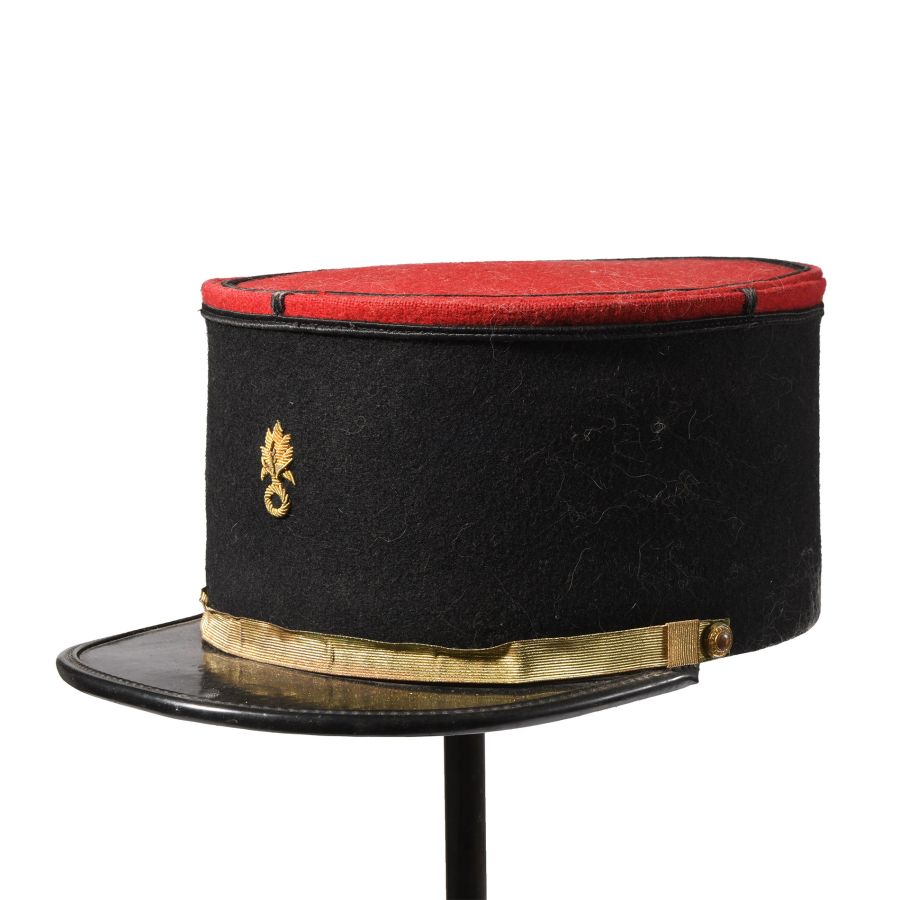
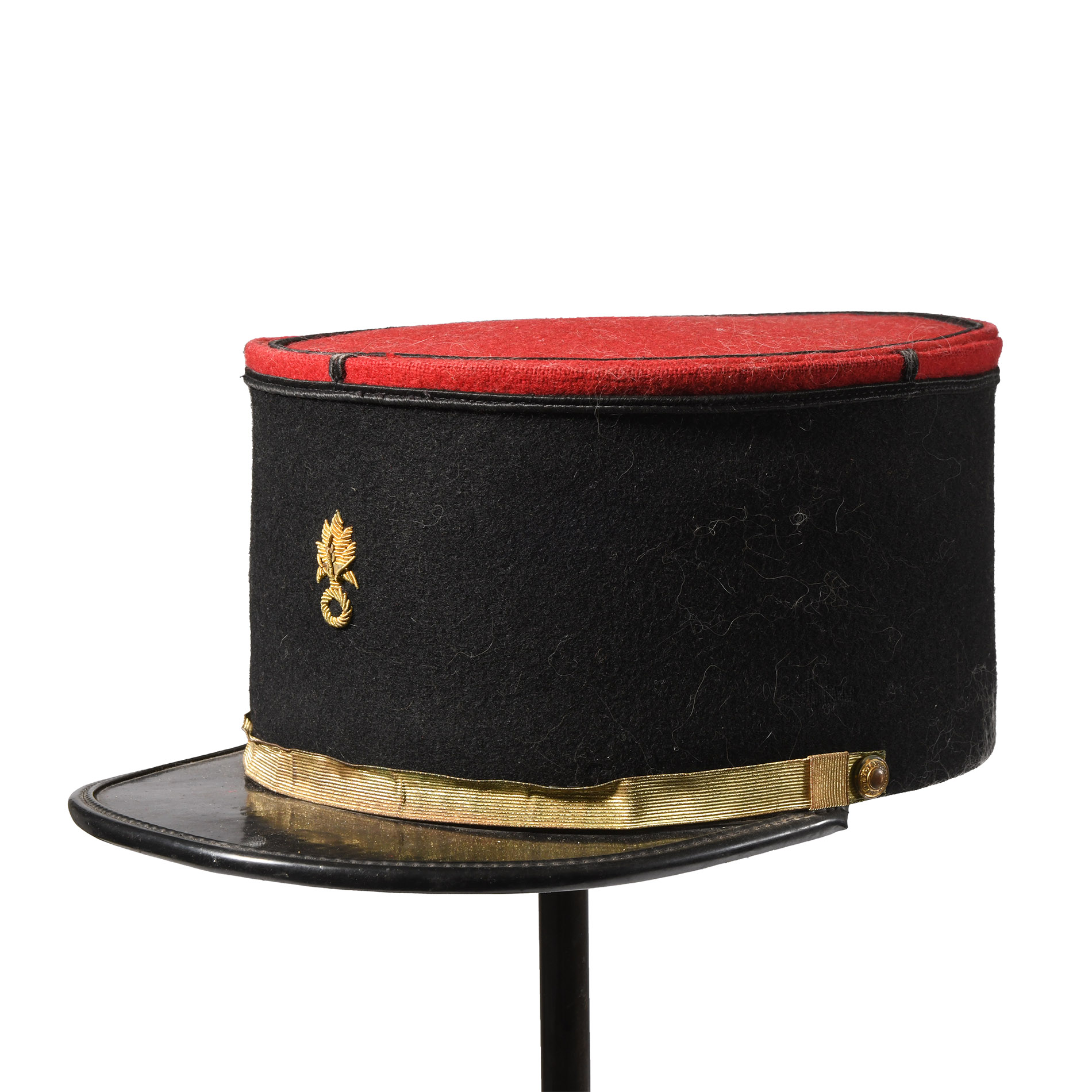
French Foreign Legion Kepi
CIRCA 1930-1940S A.D.
9 3/4 in. (197 grams, 24.5 cm wide).
Black and red cloth with gold-coloured banding and 'button'; red lining and typed label reading 'Sergent BUYUKISPIR Haluk 1o R.E. Quartier Viénot C.S.L.E./S.I.H.L.E....'. [No Reserve]
ProvenanceAcquired from Czerny's Auctions, Italy, lot 104, 2016.
The Kusmirek Collection, UK.
Accompanied by copy of Czerny's invoice and information.
TimeLine Auctions follows a vetting process to ensure the authenticity and legality of all items, reinforcing our commitment to integrity and responsible trading. Each antiquity, antique, and coin lot undergoes thorough examination by a vetting committee of at least ten external specialists, professional trade association members, scientists, and archaeologists: Our Vetting Process
AUCTIONS:
TimeLine is a leading auction house specialising in antiquities, ancient art, collectables, natural history, coins, medals, and books. Our auctions offer museums, collectors, historians, and enthusiasts the opportunity to acquire unique and historically significant pieces.
-
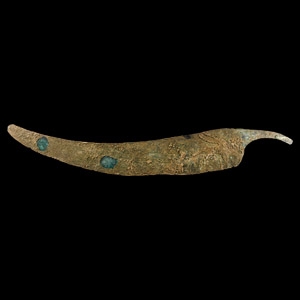
Western Asiatic Bronze Dagger
2nd-1st millennium B.C.Estimate: £100 - 140 (+bp*)
Opening Bid: £50
Single-edged, curved with scooped shoulder and flat tang. 78 grams, 31 cm
Ex German collection, Cologne, 1980-1990s.
In the middle of the 2nd millennium B.C., combat knives were widely used in Palestine and Syria. Some of them reproduced in local forms and constructions of the beginning of the 2nd millennium B.C., others had a concave blade with a humpbacked back or S-shaped blades which, apparently, should be associated with influences from Asia Minor influence. -
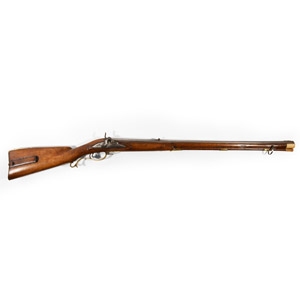
German Jager Set Trigger Percussion Rifle
1730-1830 A.D.Sold for (Inc. bp): £780
Converted from a flintlock of about 3/4" bore with lock modified having 77cm (30¾") rifled barrel swamped to muzzle with set and hair triggers, with full wood stock and shaped butt with patch compartment and sliding top and fitted with brass butt plate, trigger guard, ferrules and engraved side plates and a bone fore-end; the wood ramrod with bone tip; fitted with hinged sling loops; action working well to half cock, full cock and set. 3.70 kg, 116 cm
Acquired from M J Noble, UK, 2015. The Kusmirek Collection, UK. Accompanied by copy of an invoice and information.
Sold as an exempt item under Section 58 (2) of the Firearms Act, 1968, to be held as a curiosity or ornament. No license required but buyer must be over 18 years of age. Overseas bidders should note that, due to UK regulations governing export of all firearms, overseas buyers will need to make arrangements for shipping this lot out of the UK directly, by air freight, with a specialist company or agent. -

Roman Bronze Armour Double Fastening Hooks
Circa 1st century A.D.Estimate: £150 - 200 (+bp*)
Opening Bid: £75
Each a scrolled bar formed as a serpent or other animal with stylised geometric detailing; attachment perforations to both terminals. 19.6 grams total, 64-66 mm
Acquired on the London art market, 1980s-1990s.
In the 1st century B.C.-1st century A.D., the Celtic fastening system of the ring mail armour (gallica, lorica ferro aspera) became the standard in the Imperial Roman army, with a pivot attached to the breast and hinged to the edges of the humeralia (shoulder guards). The chest fastener had various different designs. The double hooks, S-shaped and usually with snake-head terminals, were secured by a central rivet on the chest. The system allowed excellent freedom of movement, giving greater protection to the shoulders and the arms. Similar fasteners for infantry mail have been found on the Kalkriese battlefield, some of them also decorated with niello and inscribed with the name of the soldier.
