
Loading, please wait...
LOT 1886
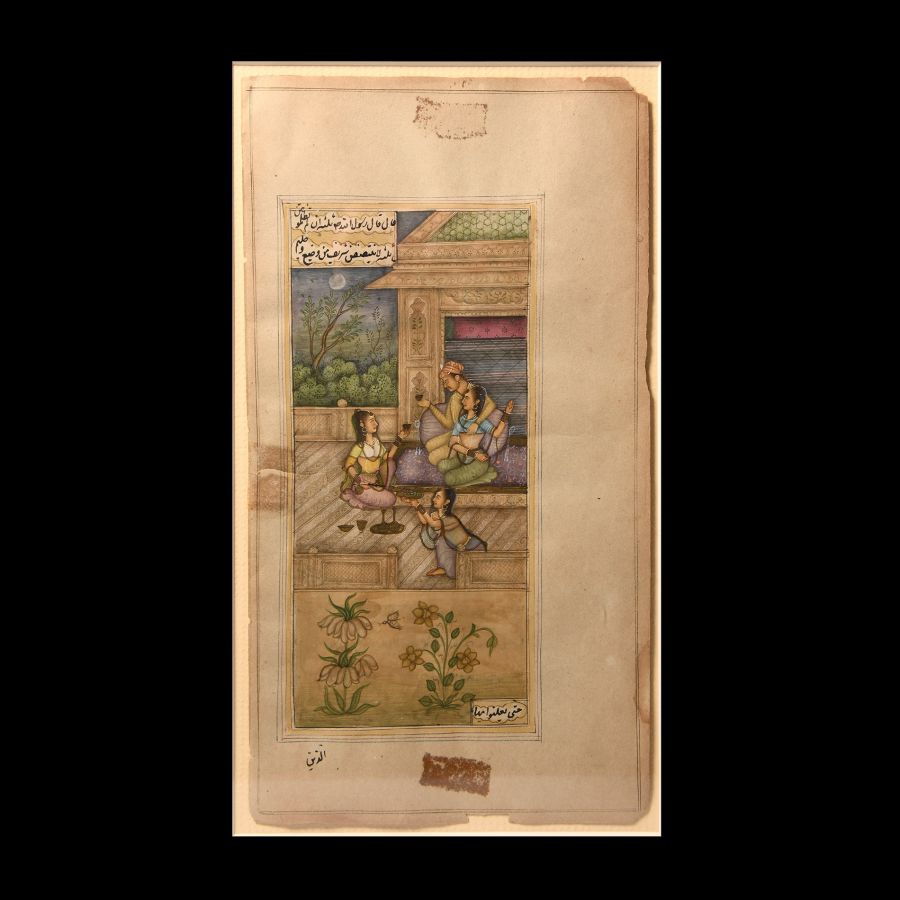
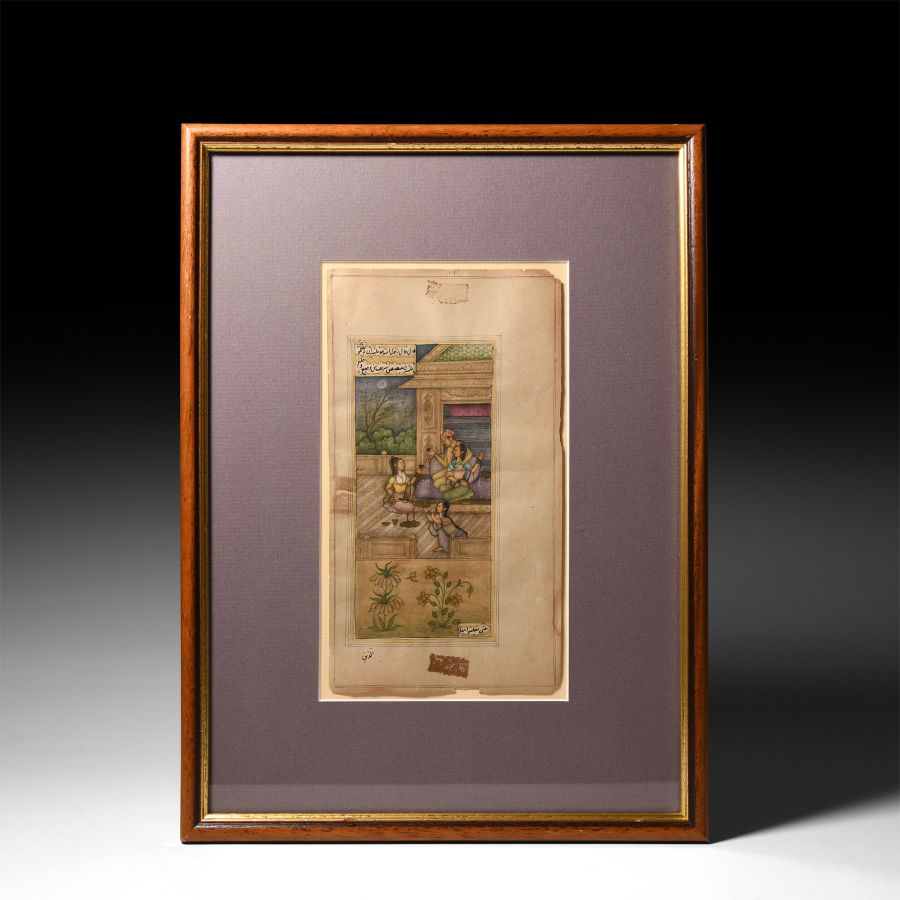
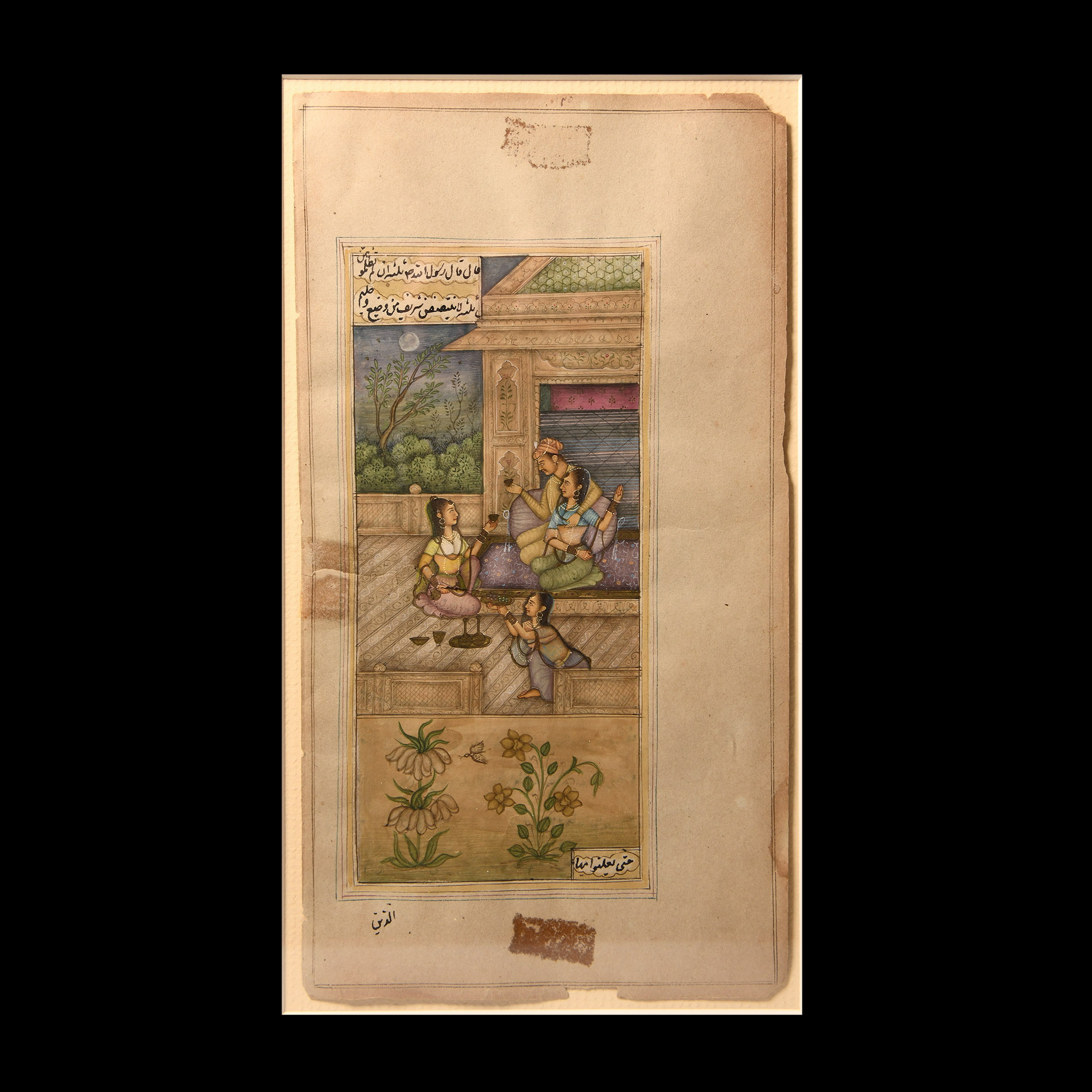
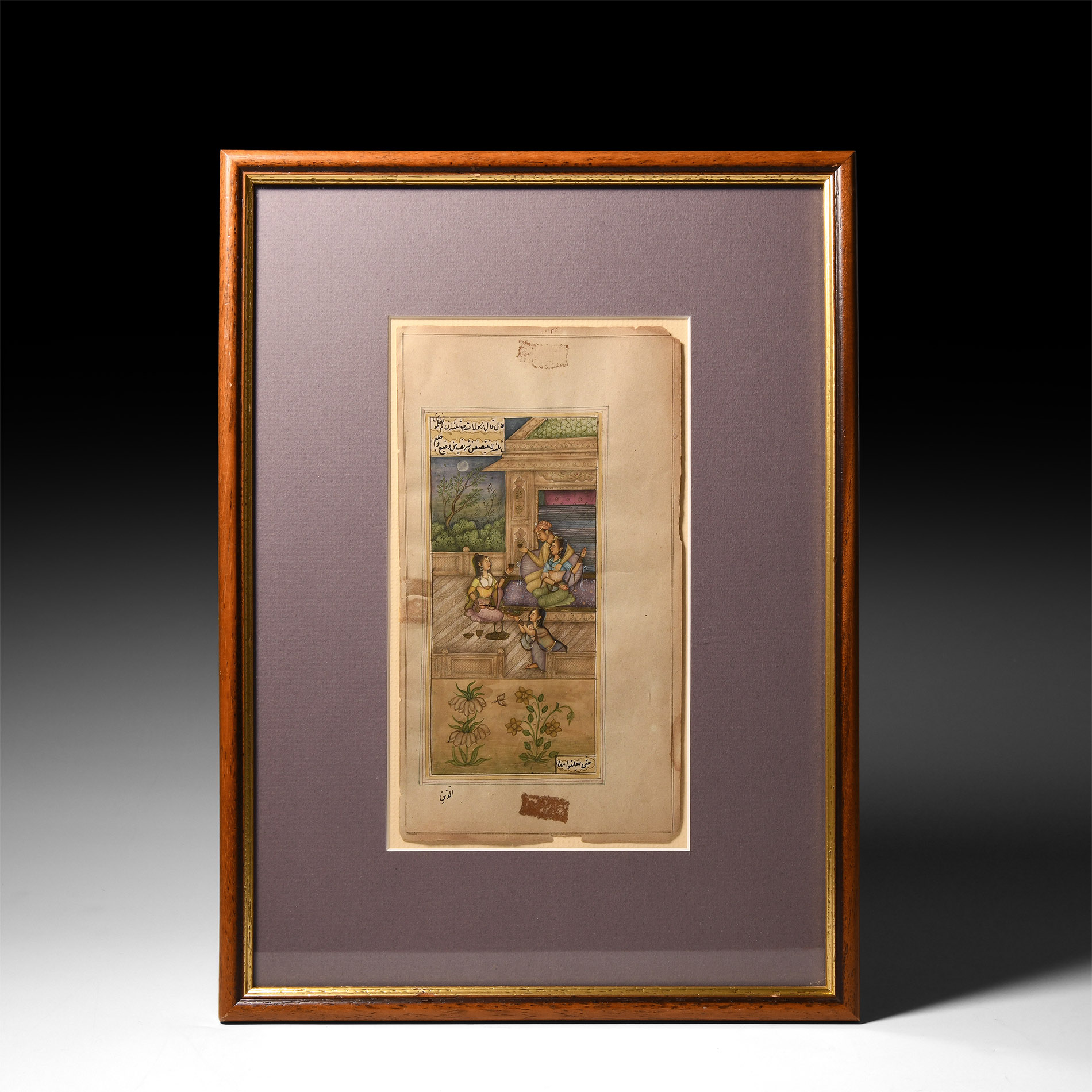
Framed Watercolour Painting
INDIA, 20TH CENTURY A.D.
13 5/8 x 9 7/8 in. (683 grams, 34.6 x 25 cm).
Showing a convivial courtyard scene composed of a man and three women sharing drink and food, flowering plants in the foreground, moonlit treescape beyond; mounted in a reveal and a glazed wooden frame. [No Reserve]
ProvenanceAcquired on the UK art market, 1980s-1990s.
The Woodbridge collection of Indo-Persian art.
TimeLine Auctions follows a vetting process to ensure the authenticity and legality of all items, reinforcing our commitment to integrity and responsible trading. Each antiquity, antique, and coin lot undergoes thorough examination by a vetting committee of at least ten external specialists, professional trade association members, scientists, and archaeologists: Our Vetting Process
AUCTIONS:
TimeLine is a leading auction house specialising in antiquities, ancient art, collectables, natural history, coins, medals, and books. Our auctions offer museums, collectors, historians, and enthusiasts the opportunity to acquire unique and historically significant pieces.
-
Post Medieval Bronze and Silver Thimble Group
Circa 18th-19th century A.D.Sold for (Inc. bp): £13
Mixed group including domed, milled and other types. 129 grams total, 13-25 mm
Found Hertfordshire, UK. -
Box Group with Carnelian Calligraphic Inlays
20th century A.D.Sold for (Inc. bp): £78
Group of two octagonal silver-coloured metal containers, each with a hinged lid and inset carnelian panel, one with a dense nastaliq text, the other in an angular (Kufic?) script. 41 grams total, 24-37 mm
Property of a South West London gentleman. -
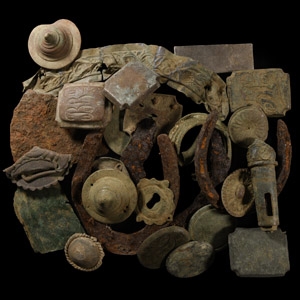
Post Medieval and Later Bronze and Other Large Artefact Group
Circa 18th-20th century A.D.Sold for (Inc. bp): £7
Mixed group including horseshoes, furniture fittings, decorative mounts and other items. 2.21 kg total, 46-230mm
Found Hertfordshire, UK.
