
Loading, please wait...
LOT 2110
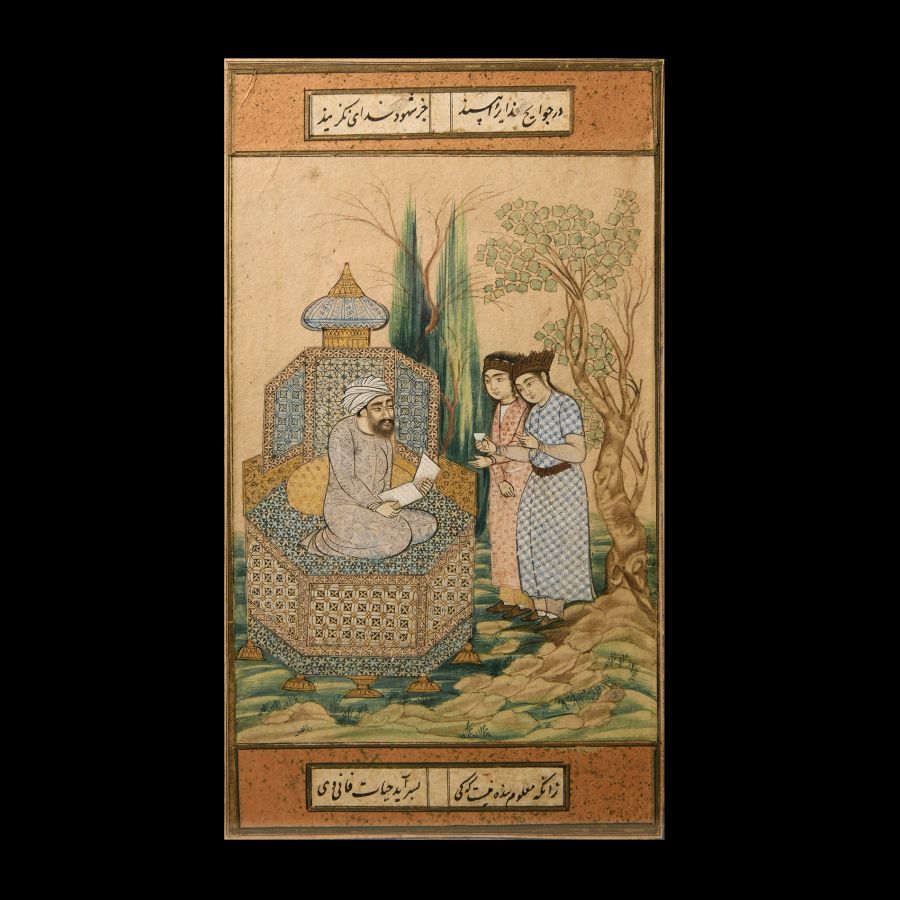
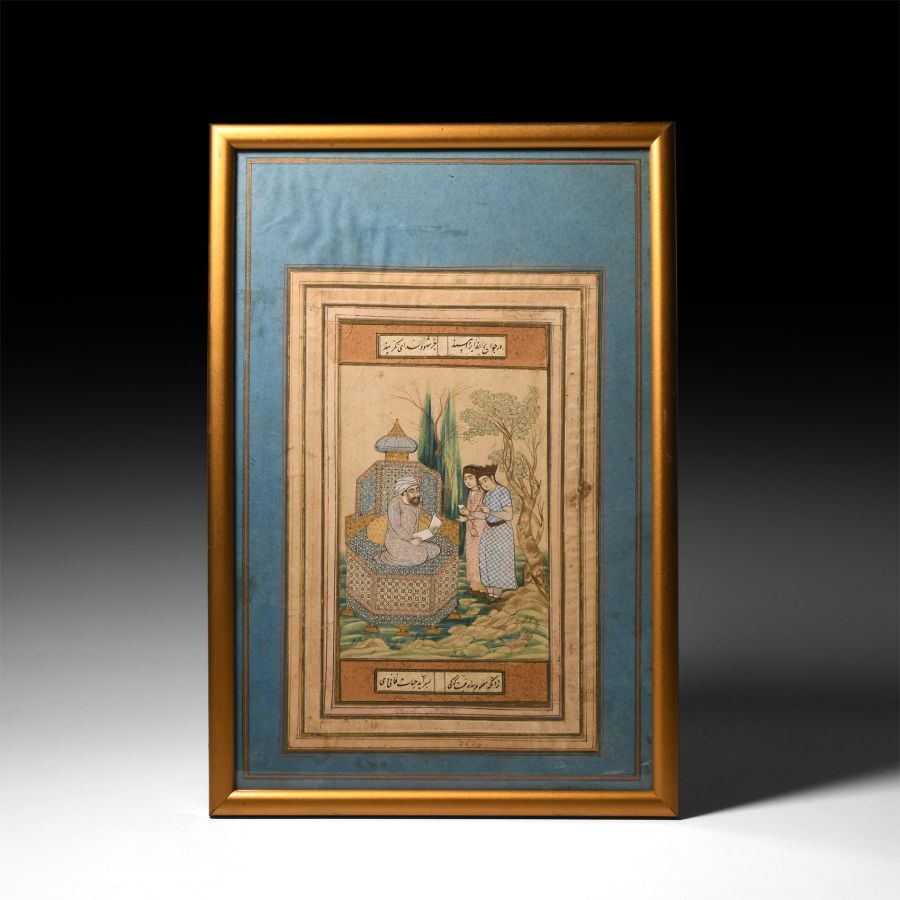
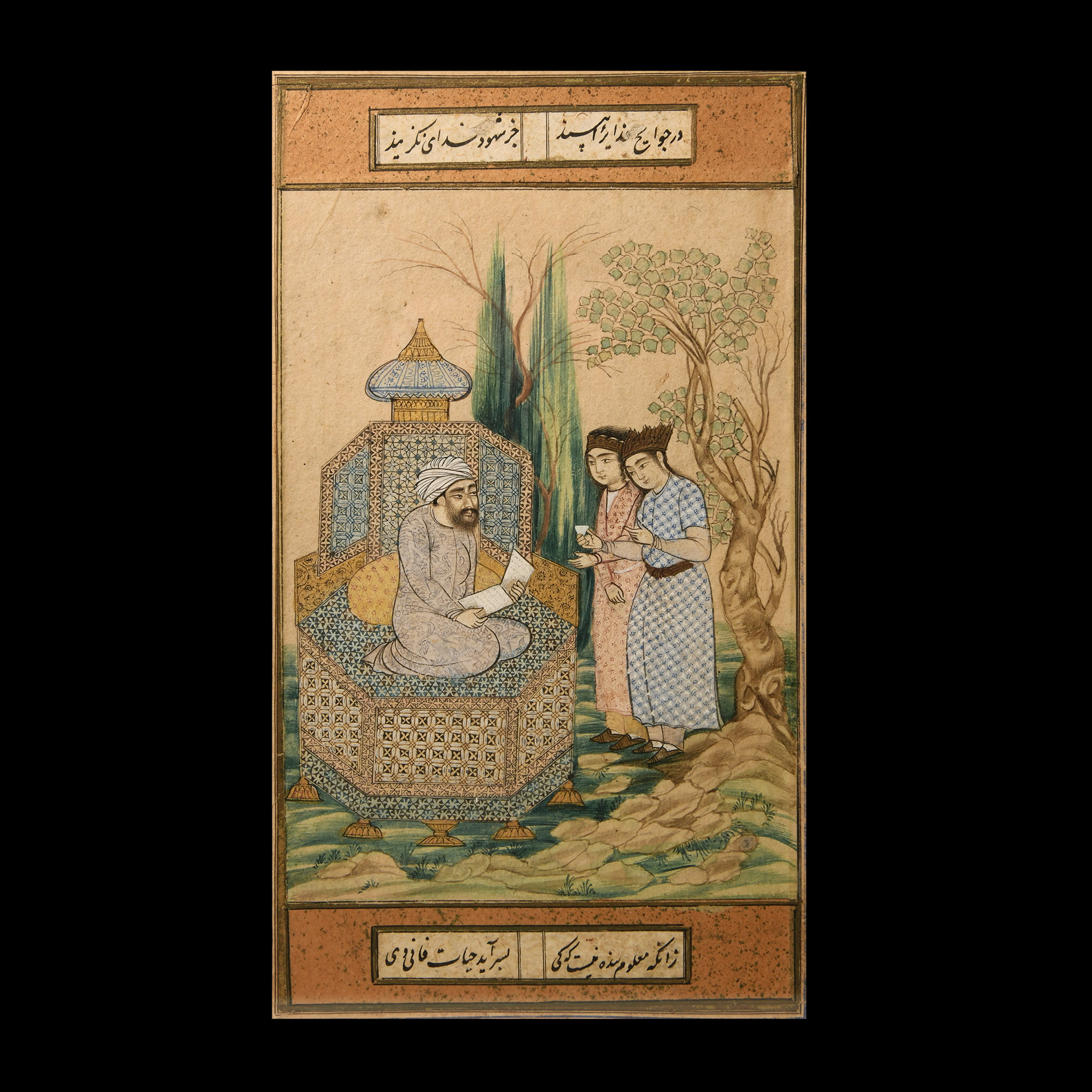
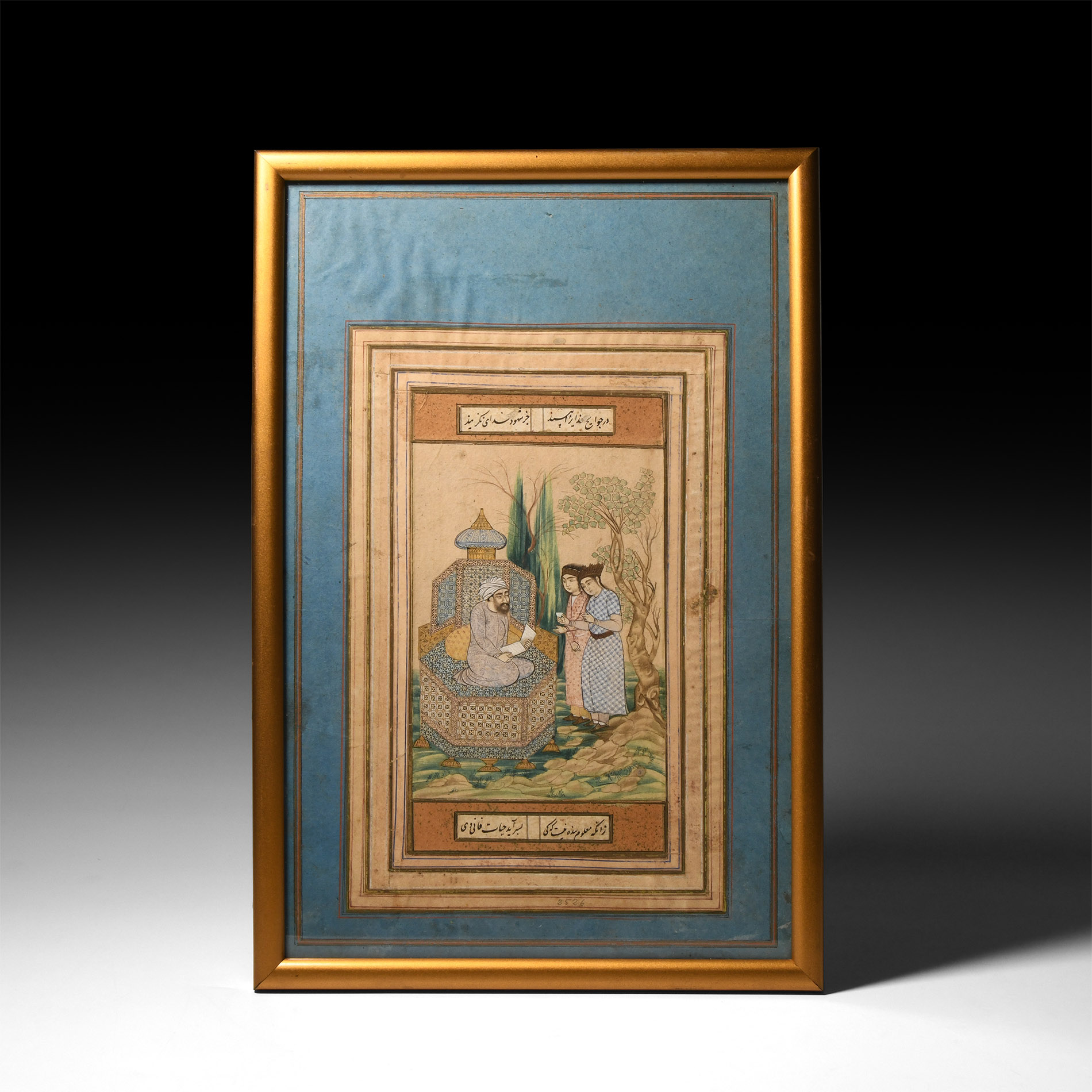
Framed Watercolour Painting
PERSIA, 20TH CENTURY A.D.
13 3/8 x 8 7/8 in. (621 grams, 34 x 22.5 cm).
Showing a nobleman seated in a landscape, possibly reading to his sons, or communicating with two attendants standing nearby; panel of text above and below; mounted in a glazed wooden frame. [No Reserve]
ProvenanceAcquired on the UK art market, 1980s-1990s.
The Woodbridge collection of Indo-Persian art.
TimeLine Auctions follows a vetting process to ensure the authenticity and legality of all items, reinforcing our commitment to integrity and responsible trading. Each antiquity, antique, and coin lot undergoes thorough examination by a vetting committee of at least ten external specialists, professional trade association members, scientists, and archaeologists: Our Vetting Process
AUCTIONS:
TimeLine is a leading auction house specialising in antiquities, ancient art, collectables, natural history, coins, medals, and books. Our auctions offer museums, collectors, historians, and enthusiasts the opportunity to acquire unique and historically significant pieces.
-
Indian Water Colour Painting of Courting Andaman Doves
Circa 1800 A.D.Sold for (Inc. bp): £494
The birds shown on emerald green background, the male bowing and puffing its feathers whilst the female is slowly advancing with its head turned towards the displaying male; a stamp and inscription in Arabic to the reverse. 15 grams, 23 cm
Acquired from the UK art market. Private Scottish collection. -
.jpg)
Indus Valley Polychrome Ceramic Vessel Collection with Animals
3rd-2nd millennium B.C.Sold for (Inc. bp): £221
Each of the three vessels of carinated form and displaying repainted polychrome geometric and zoomorphic motifs within panels; including one cup with a D-shaped handle. 402 grams total, 65-94 mm
Acquired in England in the 2000s. Ex Everitt collection, acquired by descent 2017. -
Mughal Engraved Amuletic Jade Pendant
Circa 19th century A.D.Sold for (Inc. bp): £247
D-shaped bifacial pendant with floral designs to both faces, panel of calligraphic text to obverse. 24.2 grams, 58 mm
Ex London, UK, gallery, 1971.
