
Loading, please wait...
_900x900.jpg "Framed Watercolour Painting")
_200x200.jpg "Framed Watercolour Painting")
.jpg "Framed Watercolour Painting")
LOT 1957
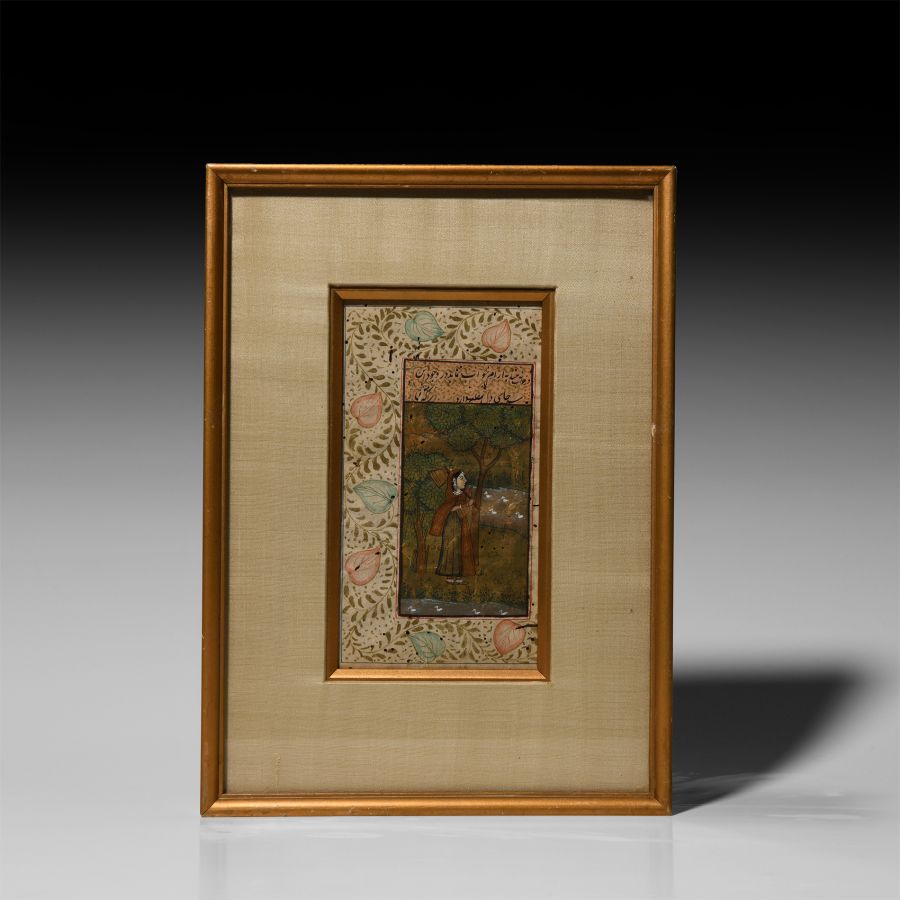
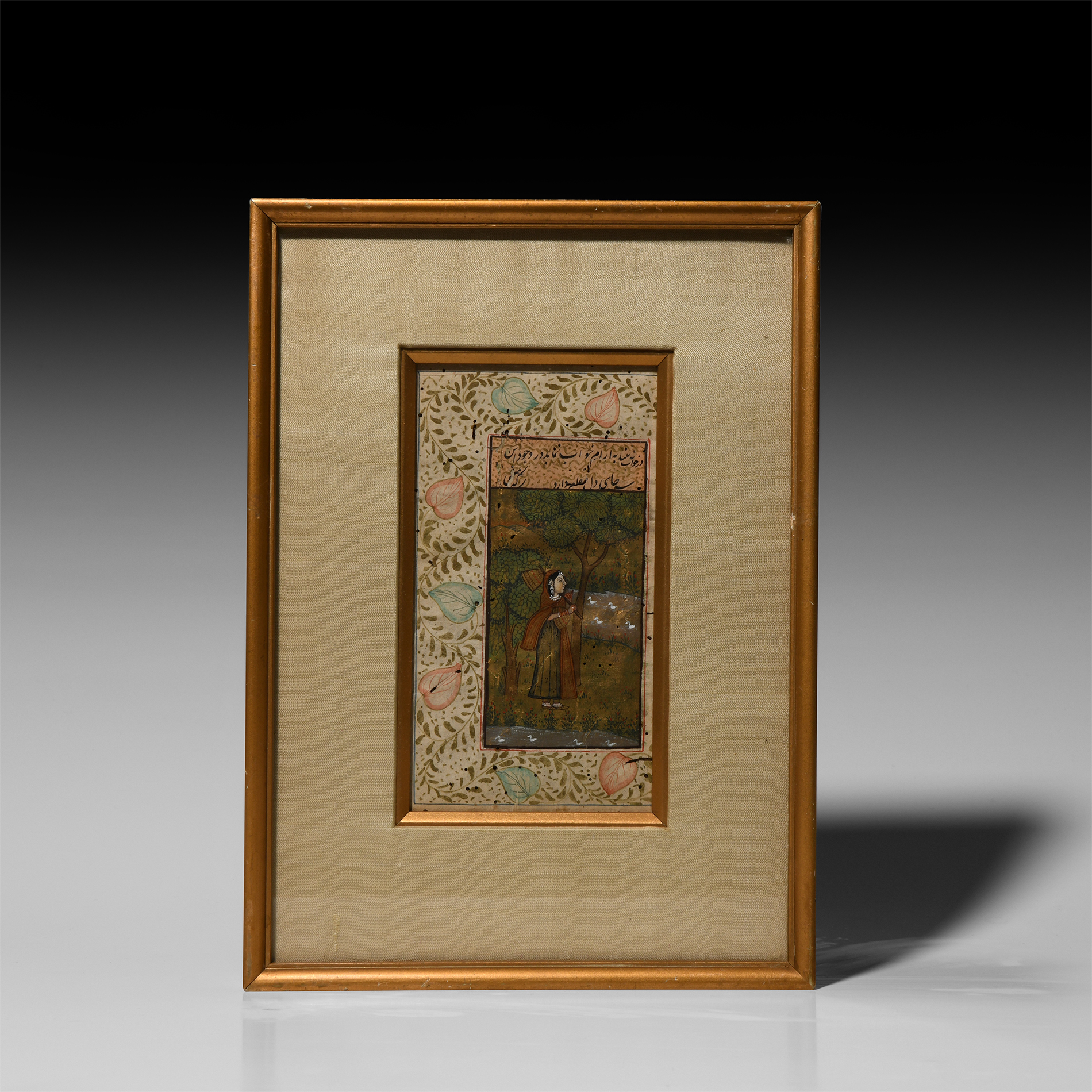
Framed Watercolour Painting
INDIA, EARLY 20TH CENTURY A.D.
10 7/8 x 7 7/8 in. (559 grams, 27.5 x 20 cm).
Depicting a female figure standing in a landscape with trees, water and birds, holding an instrument over her shoulder; set in a reveal within a glazed wooden frame. [No Reserve]
ProvenanceAcquired on the UK art market, 1980s-1990s.
The Woodbridge collection of Indo-Persian art.
TimeLine Auctions follows a vetting process to ensure the authenticity and legality of all items, reinforcing our commitment to integrity and responsible trading. Each antiquity, antique, and coin lot undergoes thorough examination by a vetting committee of at least ten external specialists, professional trade association members, scientists, and archaeologists: Our Vetting Process
AUCTIONS:
TimeLine is a leading auction house specialising in antiquities, ancient art, collectables, natural history, coins, medals, and books. Our auctions offer museums, collectors, historians, and enthusiasts the opportunity to acquire unique and historically significant pieces.
-
Mixed Ring Group
20th century A.D.Sold for (Inc. bp): £33
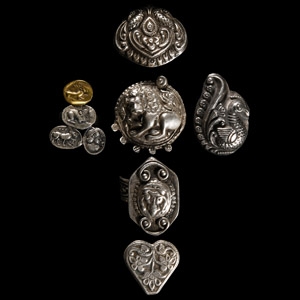
Mixed group of silver-coloured metal finger rings each with an applied bezel, including one heart-shaped with floral motif, one a peacock with lobed tail, and other types. 67 grams total, 23-34 mm
Property of a South West London gentleman. -
Mixed Ring Group
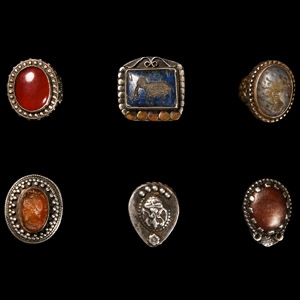
20th century A.D.Sold for (Inc. bp): £13
Group of silver-coloured metal finger rings including two with inset glass cabochon, one with intaglio profile bearded bust, one with lapis lazuli plaque and incuse elephant, and other types. 105 grams total, 29-32 mm
Property of a South West London gentleman. -
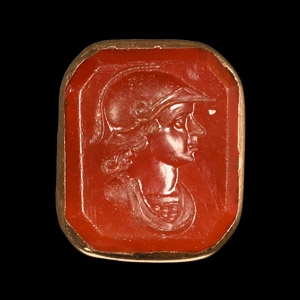
Georgian Gold Fob Seal Pendant with Helmetted Bust Gemstone
19th century A.D.Sold for (Inc. bp): £156
Openwork conical handle formed as scrolled leaves and tendrils, octagonal cell with inset carnelian intaglio helmeted bust with scooped neckline. 4.69 grams, 24 mm
From the collection of an London antiquarian, 1980s.
