
Loading, please wait...
LOT 1937
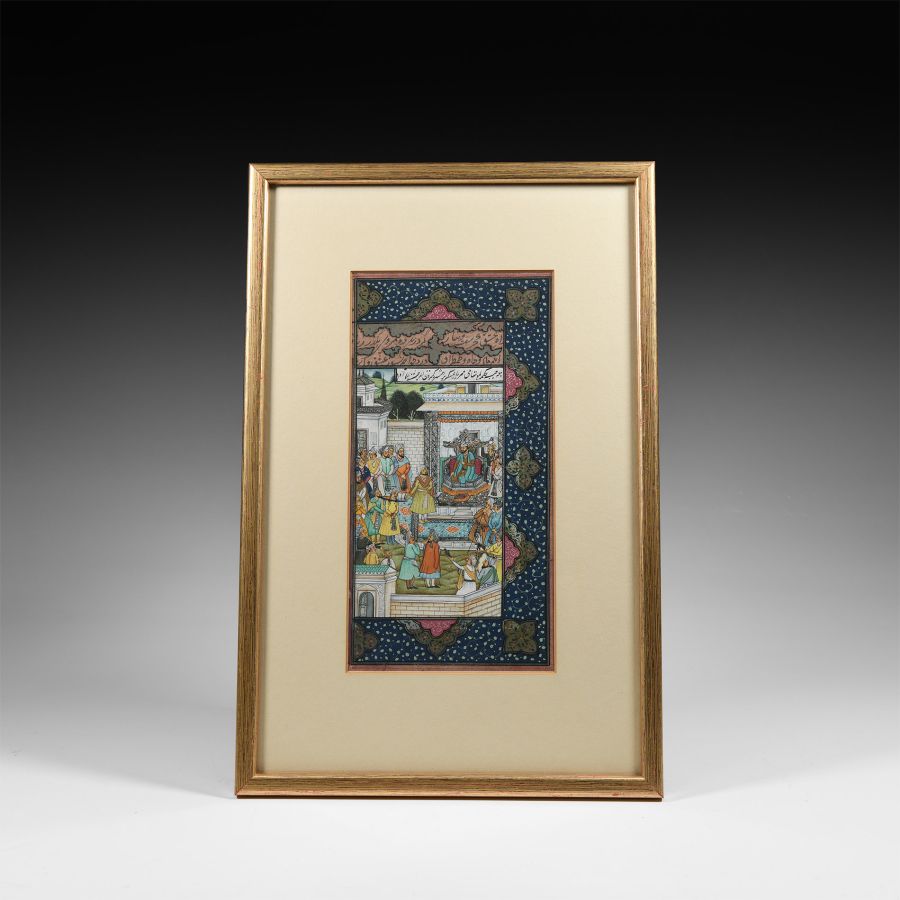
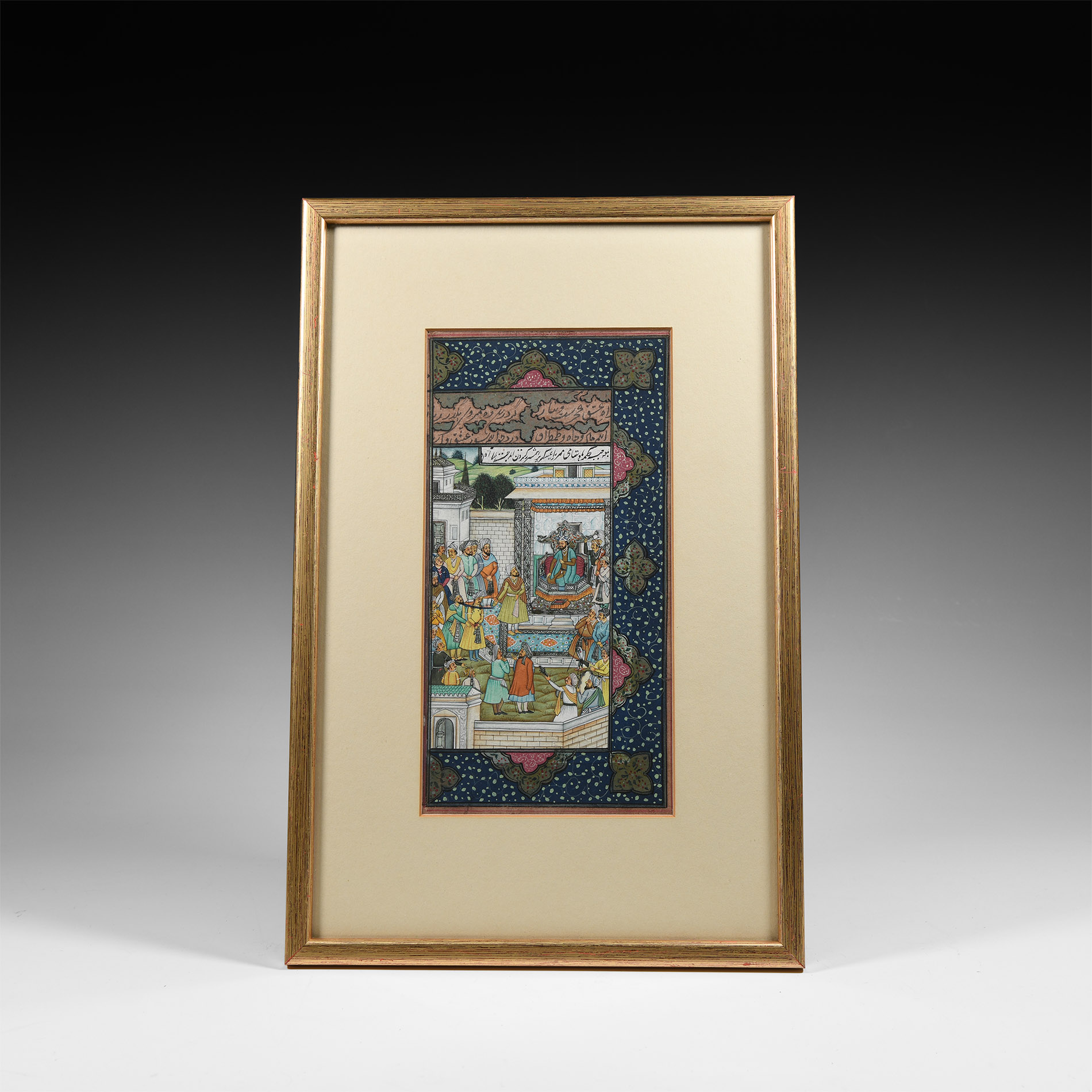
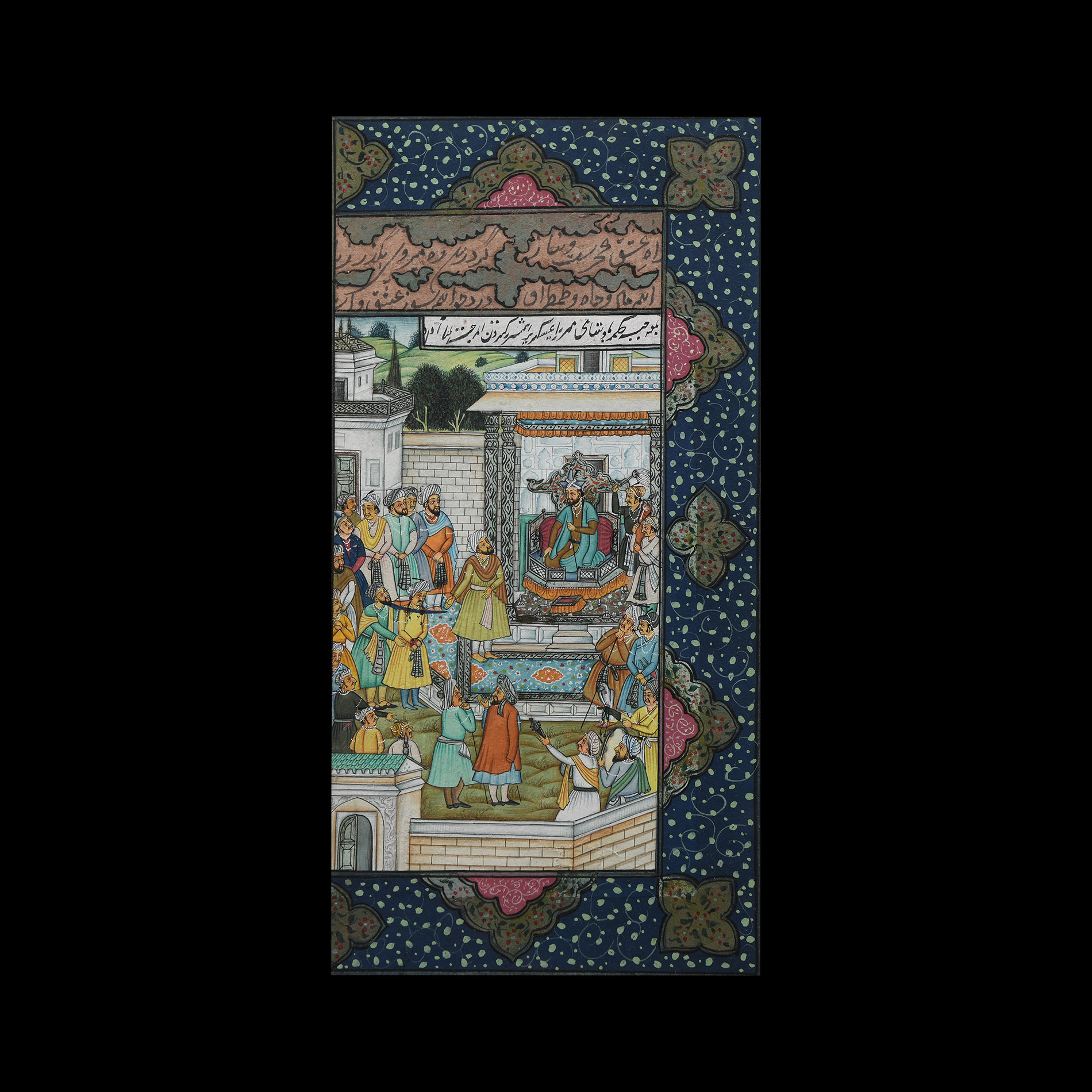
Framed Watercolour Painting
PERSIA, 20TH CENTURY A.D.
15 1/4 x 10 in. (782 grams, 38.6 x 25.5 cm).
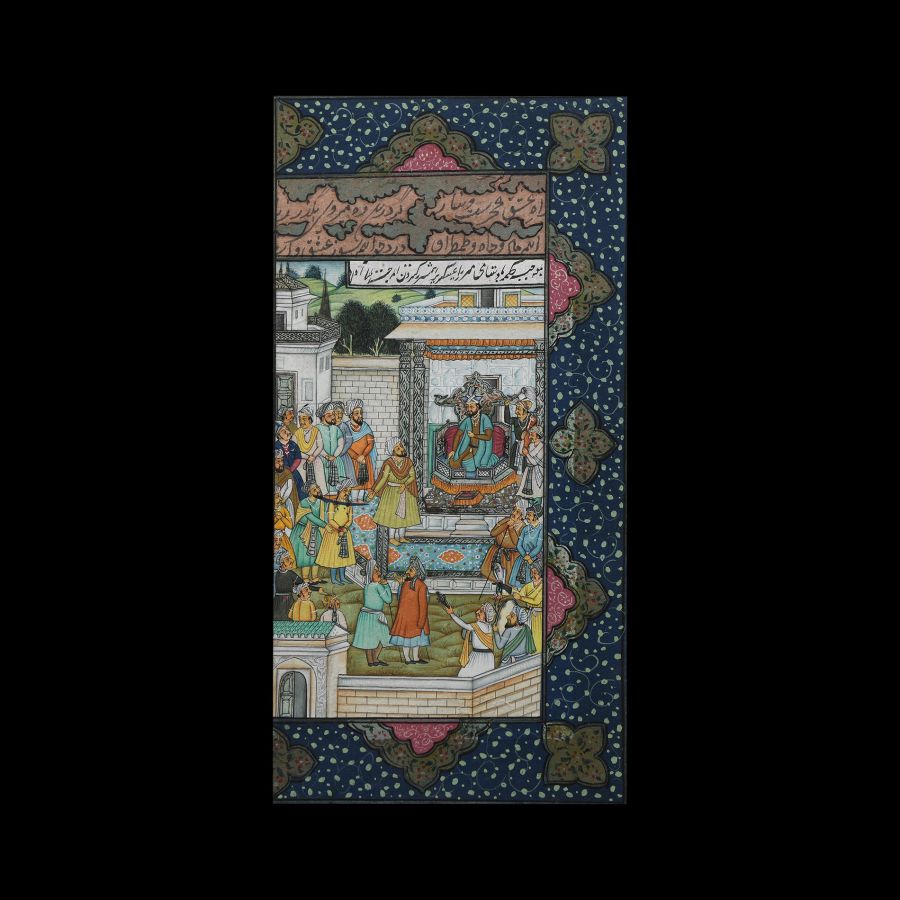
With two lines of a poem, permitting a view into a grand architectural setting, populated by falconers, musicians, attendants and others entertaining a prince seated beneath a pagoda, hilly landscape beyond the walls, broad stylised floral border to three sides, Indian workmanship; mounted in a reveal and a glazed wooden frame. [No Reserve]
ProvenanceAcquired on the UK art market, 1980s-1990s.
The Woodbridge collection of Indo-Persian art.
TimeLine Auctions follows a vetting process to ensure the authenticity and legality of all items, reinforcing our commitment to integrity and responsible trading. Each antiquity, antique, and coin lot undergoes thorough examination by a vetting committee of at least ten external specialists, professional trade association members, scientists, and archaeologists: Our Vetting Process
AUCTIONS:
TimeLine is a leading auction house specialising in antiquities, ancient art, collectables, natural history, coins, medals, and books. Our auctions offer museums, collectors, historians, and enthusiasts the opportunity to acquire unique and historically significant pieces.
-
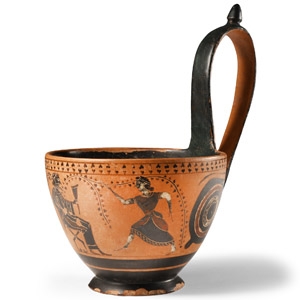
Attic Style Handled Cup
20th century A.D.Sold for (Inc. bp): £59
Terracotta kyathos with tall looped handle and knop thumbpad, painted motifs including a seated bearded male holding a flask flanked by two dancing girls, looped tendrils and concentric rings representing eyes. 235 grams, 18.5 cm
From the late Alison Barker collection, 1970-1990. -
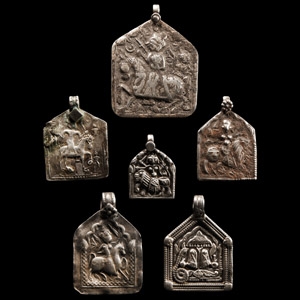
Mixed Pendant Group
20th century A.D.Sold for (Inc. bp): £59
Mixed group of silver-coloured metal pentagonal pendants with repoussé motifs including horsemen. 77 grams total, 33-59 mm
Property of a South West London gentleman. -
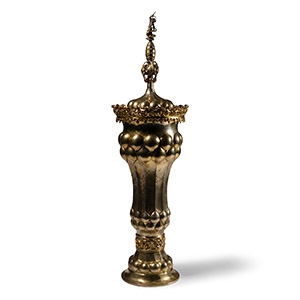
Silver-Gilt Pineapple Chalice with Saint George
Germany, 19th-20th century A.D.Sold for (Inc. bp): £546
With waisted body, bulbous shoulder, everted rim, collared stem and tiered splayed foot, ornamented in repoussé bulbs and ogival ribs; lid with openwork rim of palmettes and foliate forms, central domes, finial with basket of palmettes, oval bulb above ornamented in pellets between spiral band, surmounted by a statuette, modelled in the round as Saint George, clad in armour, driving a spear into the dragon, with naturalistic detailing to the saint's features; various stamps to base; finial repaired. 613 grams, 43.6cm
Fine condition, finial repaired.
From the Deutsch collection, Germany. Ex central London gallery.
