
Loading, please wait...
_900x900.jpg "Framed Watercolour Painting of a Nobleman's Residence")
_200x200.jpg "Framed Watercolour Painting of a Nobleman's Residence")
_900x900.jpg "Framed Watercolour Painting of a Nobleman's Residence")
_200x200.jpg "Framed Watercolour Painting of a Nobleman's Residence")
.jpg "Framed Watercolour Painting of a Nobleman's Residence")
.jpg "Framed Watercolour Painting of a Nobleman's Residence")
LOT 2085
Framed Watercolour Painting of a Nobleman's Residence
PERSIA, 20TH CENTURY A.D.
18 5/8 x 12 3/4 in. (1.16 kg, 47.5 x 32.3 cm).
With two servants bringing lidded chafing dishes of food to the crouching male wearing a helmet and cuirass with a shield at his feet; below, an attendant in helmet and riding coat holds the reins of the horse; panels of nastaliq text above and below; mounted in a glazed wooden frame. [No Reserve]
ProvenanceAcquired on the UK art market, 1980s-1990s.
The Woodbridge collection of Indo-Persian art.
TimeLine Auctions follows a vetting process to ensure the authenticity and legality of all items, reinforcing our commitment to integrity and responsible trading. Each antiquity, antique, and coin lot undergoes thorough examination by a vetting committee of at least ten external specialists, professional trade association members, scientists, and archaeologists: Our Vetting Process
AUCTIONS:
TimeLine is a leading auction house specialising in antiquities, ancient art, collectables, natural history, coins, medals, and books. Our auctions offer museums, collectors, historians, and enthusiasts the opportunity to acquire unique and historically significant pieces.
-
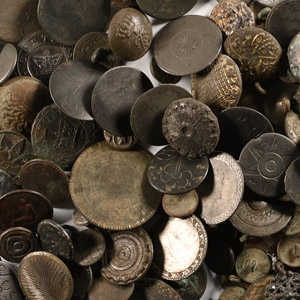
Post Medieval Mixed Bronze Button Collection
18th-20th century A.D.Sold for (Inc. bp): £26
Including tinned and bronze types with heraldic, rosette, geometric and other designs; many of these objects are published in the Detector Finds book series as well as Buttons & Fasteners 500BC-1840AD. 427 grams total, 11-34 mm
From the collection of the famous author, writer and speaker, Gordon Bailey, Essex, UK; formed since 1968. -
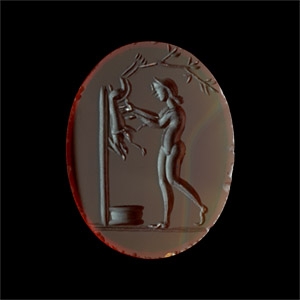
Neoclassical Carnelian Gemstone with Naked Goddess
18th-19th century A.D.Sold for (Inc. bp): £247
Ellipsoid panel with nude female supporting an inverted dog over a libation bowl, frond above; supplied with a museum-quality impression. 1.47 grams, 25 mm
Private collection, England. -
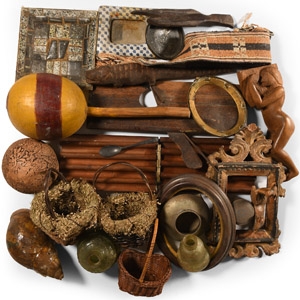
Mixed Group of Objects
20th century A.D.Sold for (Inc. bp): £20
Including a seed-pod shaker with painted median band, glass jar, periwinkle shell and various other items. 1.7 kg total, 3.5-26 cm
From the family collection of a Maida Vale lady, UK.
