
Loading, please wait...
LOT 0010
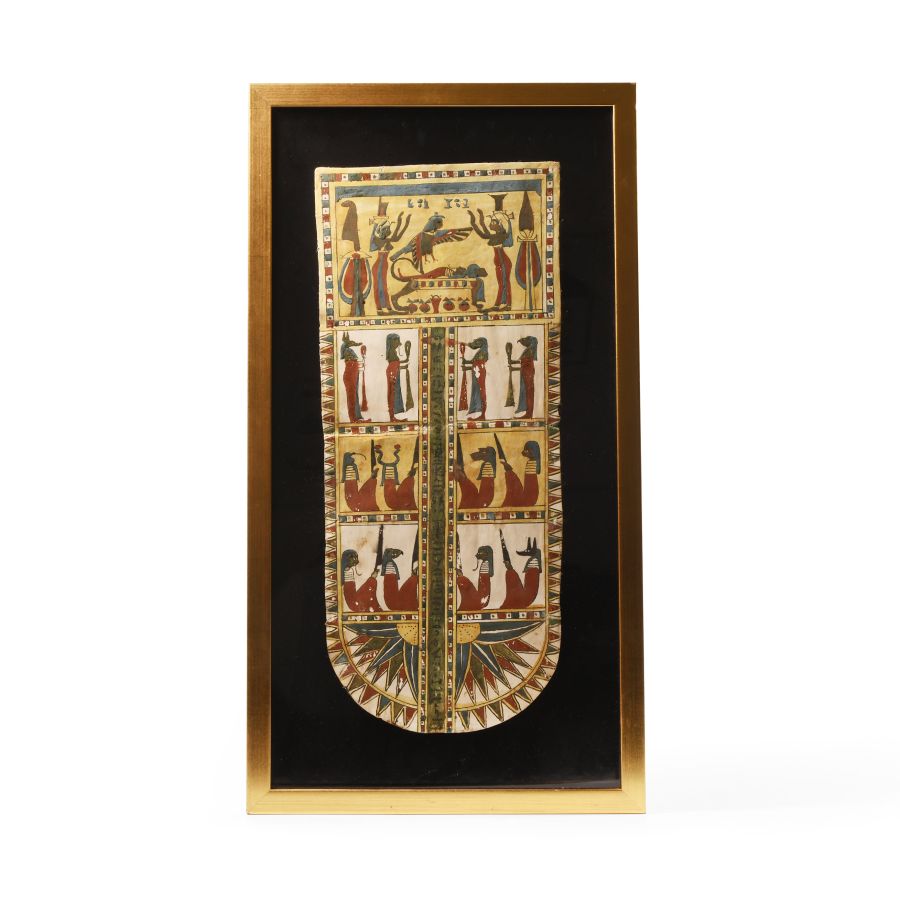
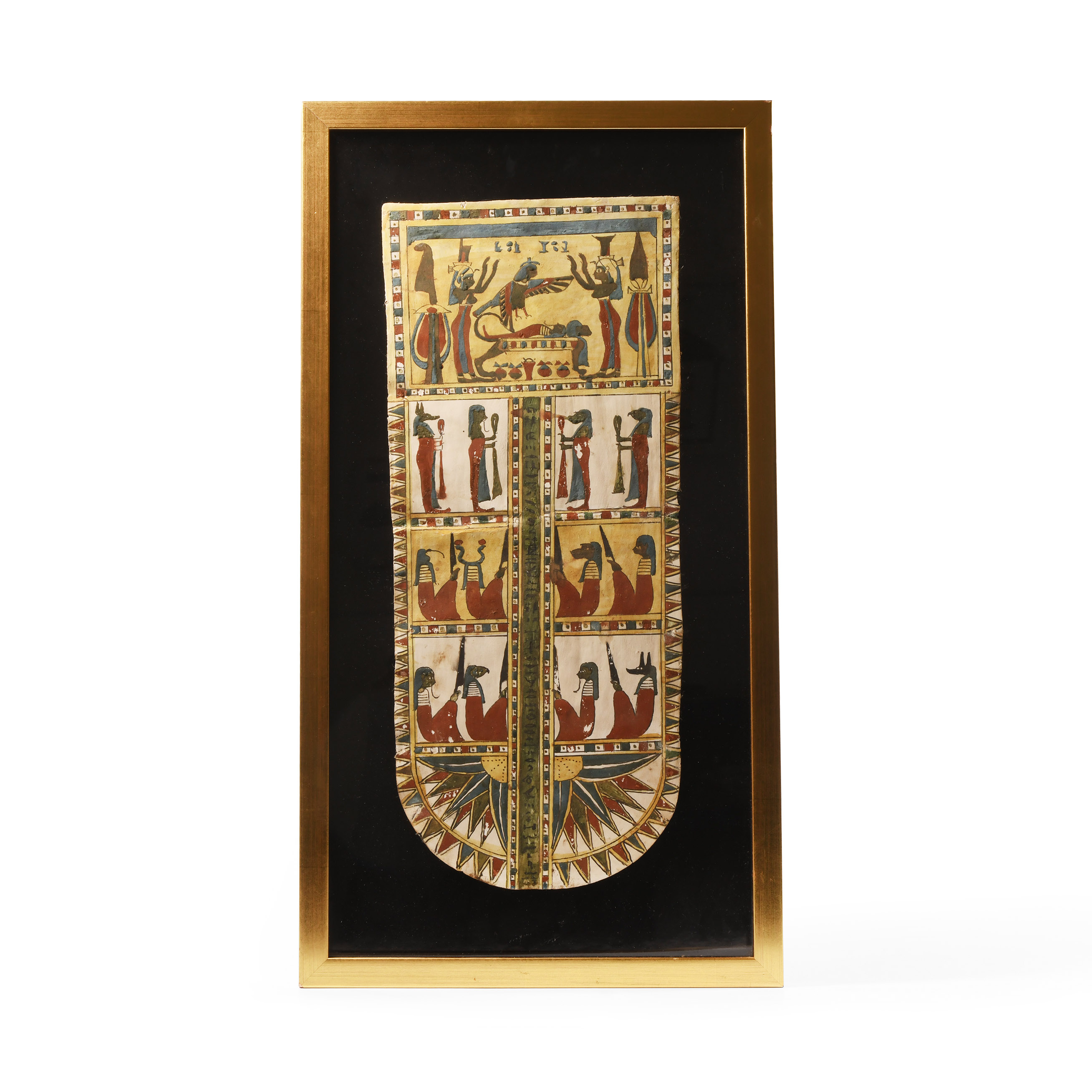
Framed Egyptian Cartonnage Panel with Hieroglyphic Inscription
PTOLEMAIC OR ROMAN PERIOD, AFTER 305 B.C.
25 in. (2.17 kg total, 36.5 cm high).
Tongue-shaped decorative panel with segmented borders; above, funerary scene with the deceased's mummy on a leonine bier, flanked by the attending goddesses Isis and Nephthys; the deceased's Ba-bird hovering above the body; a central vertical band of semi-cursive hieroglyphic text flanked by six panels containing figures of the Four Sons of Horus and squatting knife-wielding guardians; mounted on board in a glazed frame.
ProvenanceFrom a London, UK, collection.
Exhibited in London in mid 2000s.
Private gentleman's collection, J.L., Surrey, UK.
Accompanied by a scholarly report by Egyptologist Paul Whelan.
This lot has been checked against the Interpol Database of stolen works of art and is accompanied by search certificate number no.11772-203499.
Cf. Manley, B. & Dodson, A., Life Everlasting. National Museums Scotland Collection of Ancient Egyptian Coffins, Edinburgh, 2010, pp.110 no. 39, 112 no. 41 and 117 no. 46, for examples of mummy trapping elements.
FootnotesThis cartonnage comes from a set of mummy trappings, usually consisting of four to six individual pieces that were sown on the front of a mummified and bandaged body. The element here is an apron positioned on the body below a mask and collar and above a foot cover or stylised 'sandals'. The central band of inscription calls upon Osiris and Anubis to ensure a good burial for the deceased.
CONDITIONTimeLine Auctions follows a vetting process to ensure the authenticity and legality of all items, reinforcing our commitment to integrity and responsible trading. Each antiquity, antique, and coin lot undergoes thorough examination by a vetting committee of at least ten external specialists, professional trade association members, scientists, and archaeologists: Our Vetting Process
AUCTIONS:
TimeLine is a leading auction house specialising in antiquities, ancient art, collectables, natural history, coins, medals, and books. Our auctions offer museums, collectors, historians, and enthusiasts the opportunity to acquire unique and historically significant pieces.
LOT 0010
Framed Egyptian Cartonnage Panel with Hieroglyphic Inscription
Estimate £8,000 - 10,000€9,280 - 11,600 (for guidance only)$10,800 - 13,500 (for guidance only)
-
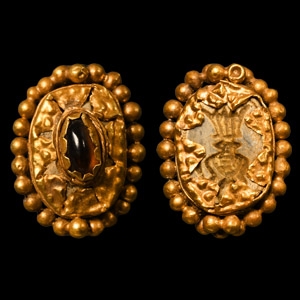
Egyptian Gold Mounted Scarab with Bes
Late Period, 664-332 B.C.Sold for (Inc. bp): £585
The stone or faience scarab decorated with a pale blue glaze with figure of the god Bes; gold bulbs to the perimeter; gold setting inlaid with a polished garnet cabochon to the domed upper face. 1.82 grams, 16 mm
From an early 20th century collection. -
.jpg)
Egyptian Faience Bead Necklace
New Kingdom-Late Period, 1550-332 B.C.Sold for (Inc. bp): £260
Composed of polychrome glazed beads of mainly tubular and annular types, together with pendant beads including two blue Amarna bunches of grapes, fruits and lotus buds; restrung with a modern clasp. 5.64 grams, 49 cm long
From the collection of a London gentleman, 1980s-1990s. -
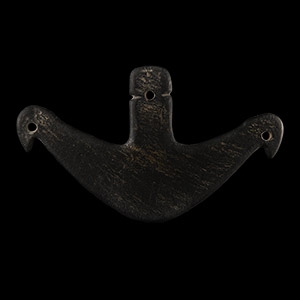
Egyptian Schist Double Bird Palette
Predynastic Period, circa 3500 B.C.Sold for (Inc. bp): £910
The crescentic body with stylised bird head ends; eyes pierced; central stem with single hole. 59 grams, 13.5 cm wide
Acquired prior to 2000 from a UK collection. Canadian private collection of Mr A.K. of Montreal.
