
Loading, please wait...
LOT 0468
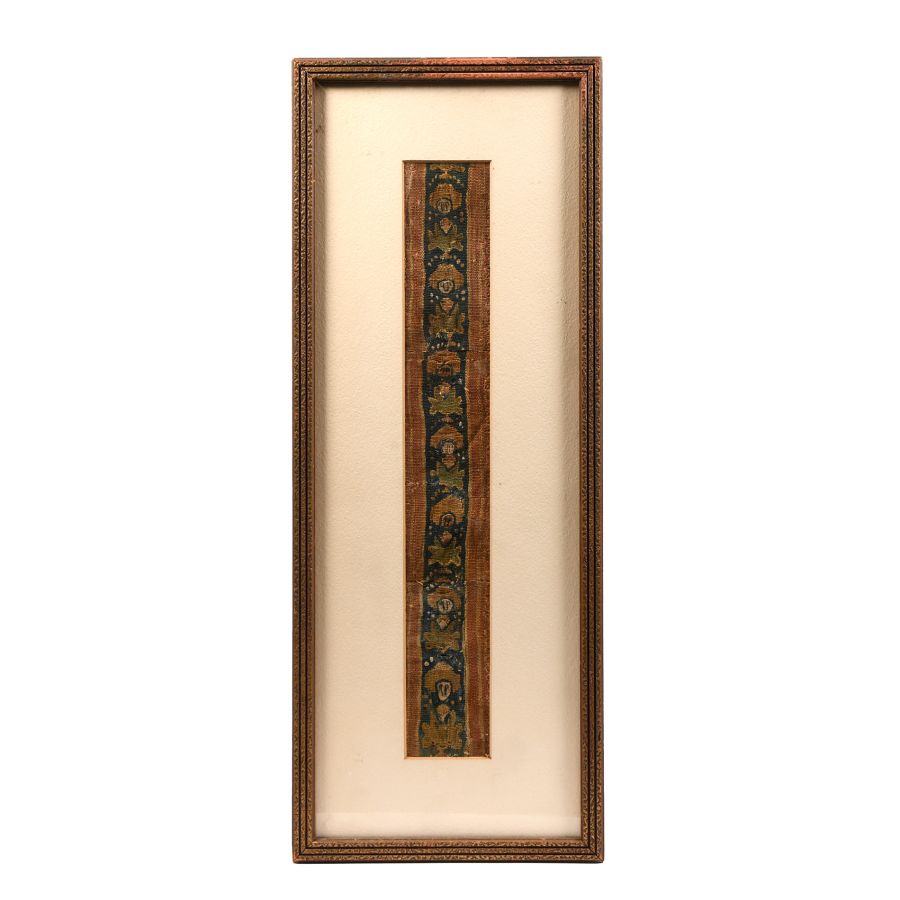
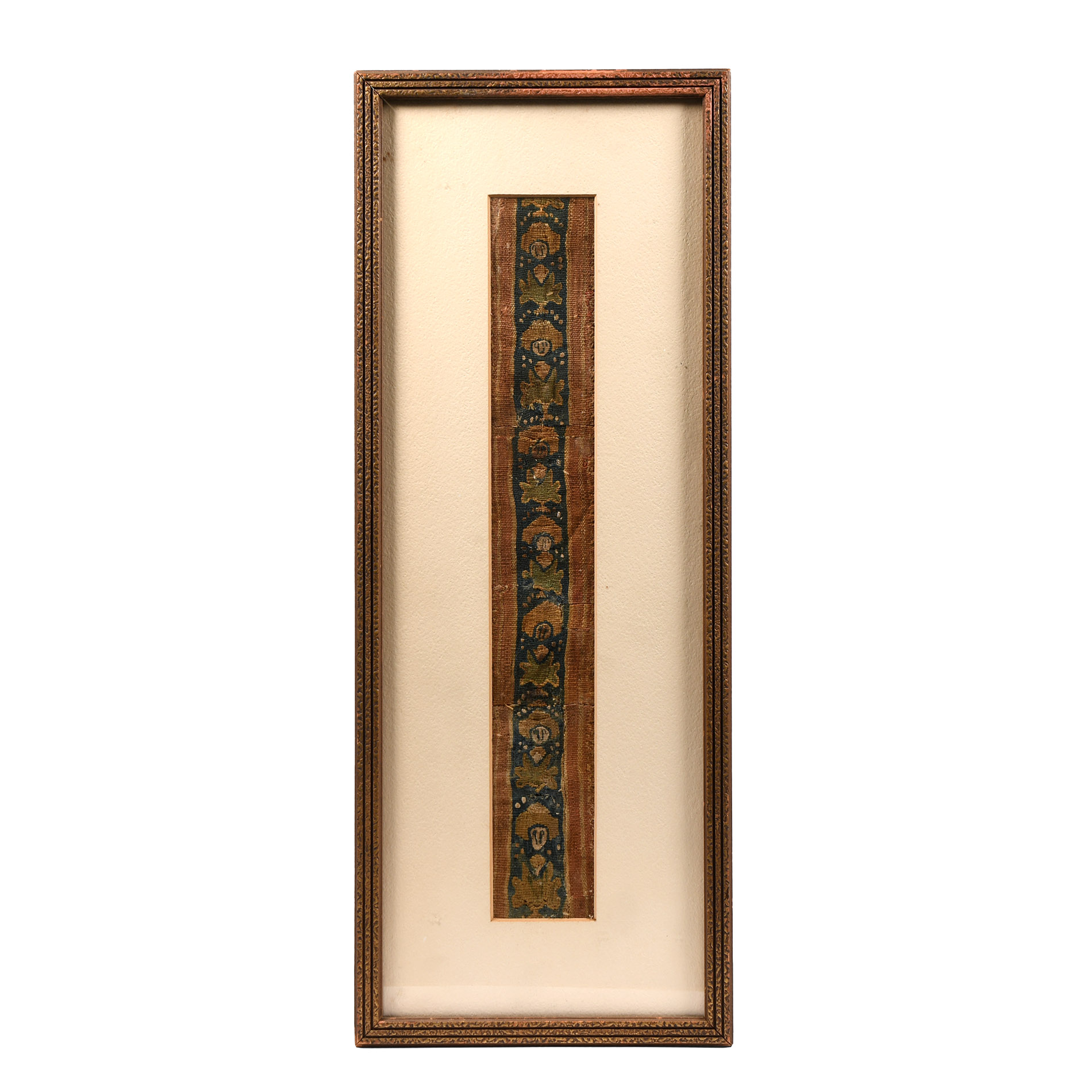
Framed Coptic Wool Garment Fragment with Female Heads
CIRCA 6TH-7TH CENTURY A.D.
18 1/8 x 7 in. (728 grams total, 46 x 17.5 cm including frame).
Comprising a vertical arrangement of female heads wearing proplomas, alternating with green foliage; enclosed within a red-orange border with yellow bands, wave motifs to the edges; mounted in a custom-made glazed frame by Jean Bohne Pictures & Frames, New York, with a handwritten dedication to the reverse. [No Reserve]
ProvenanceFrom the private collection of Mr Vladimir Gregorietch Simkhovitch (1874-1959), Professor of Economics at Columbia University, U.S.A.
Vladimir was a great collector of ancient art and works from his collection are kept in the Smithsonian Museum, the Metropolitan Museum of New York, and the Brooklyn Museum amongst others.
Cf. Del Francia Barocas, L., Museo dell'Alto Medioevo, Roma, I materiali Copti, pp.166-167, nos.41 A-B-C, for similar textile figures and warp.
FootnotesThe band was probably a segment from a curtain, carpet or parietal cover.
CONDITIONTimeLine Auctions follows a vetting process to ensure the authenticity and legality of all items, reinforcing our commitment to integrity and responsible trading. Each antiquity, antique, and coin lot undergoes thorough examination by a vetting committee of at least ten external specialists, professional trade association members, scientists, and archaeologists: Our Vetting Process
AUCTIONS:
TimeLine is a leading auction house specialising in antiquities, ancient art, collectables, natural history, coins, medals, and books. Our auctions offer museums, collectors, historians, and enthusiasts the opportunity to acquire unique and historically significant pieces.
-
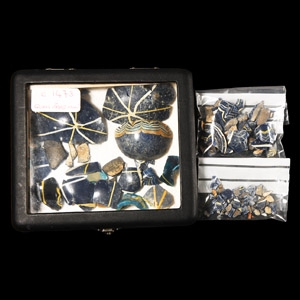
Egyptian Glass Fragment Collection
New Kingdom, 18th Dynasty, 1550-1292 B.C. and laterSold for (Inc. bp): £5,720
Comprising fragments of mainly opaque blue glass displaying polychrome motifs; held in a clear-topped presentation case with clasp. 319 grams total, 14.5 x 13.5 cm including box
Ex Japanese art market. London art market, 1996. -
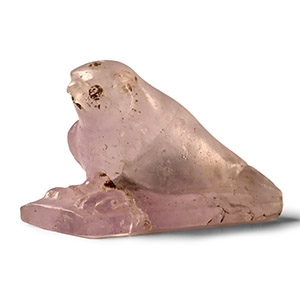
Egyptian Amethyst Horus Amulet
Late Period, 664-332 B.C.Estimate: £1,500 - 2,000 (+bp*)
Opening Bid: £750
Shown in the form of a falcon modelled perched on a rectangular base; drilled for suspension. 5.9 grams, 27 mm wide
From an early 20th century Home Counties, UK, collection. -
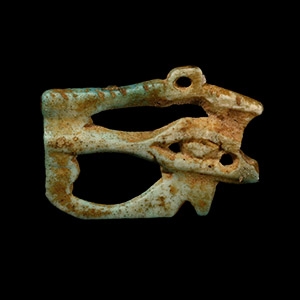
Egyptian Faience Eye of Horus
Late New Kingdom, circa 1570-1075 B.C.Estimate: £200 - 300 (+bp*)
Opening Bid: £100
Openwork faience wedjat pendant with suspension loop above and slender frame. 0.78 grams, 21 mm
Acquired 1970s onwards. Private collection of Michael O'Hara, Cambridgeshire, UK.
