
Loading, please wait...
LOT 0626
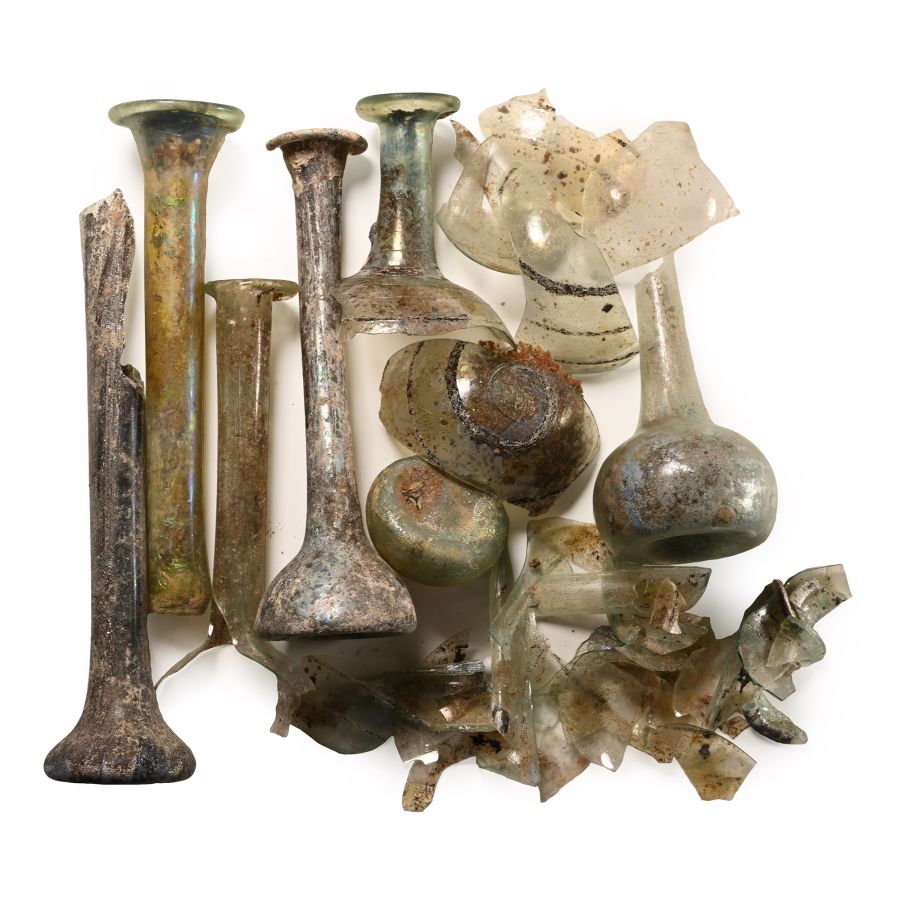
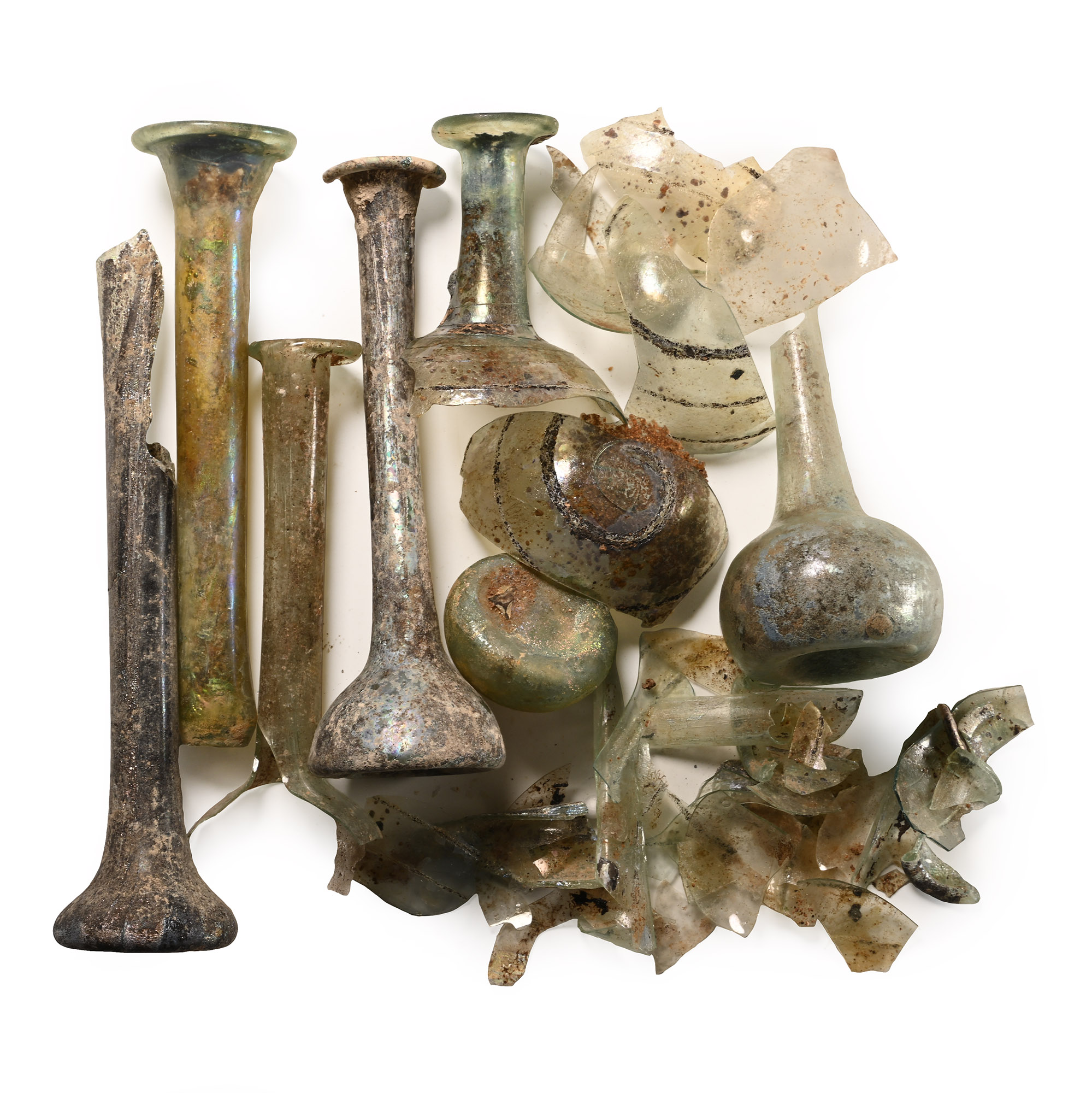
Fragmentary Roman Glass Bottle Group
1ST-4TH CENTURY A.D.
5 1/8 in. (123 grams total, largest: 13 cm).
Including unguentaria and other types in iridescent, amber, aqua and other glass. [No Reserve]
ProvenanceAcquired on the UK art market.
Ex London gallery, UK.
This lot is accompanied by an illustrated lot declaration signed by the Head of the Antiquities Department, Dr Raffaele D'Amato.
TimeLine Auctions follows a vetting process to ensure the authenticity and legality of all items, reinforcing our commitment to integrity and responsible trading. Each antiquity, antique, and coin lot undergoes thorough examination by a vetting committee of at least ten external specialists, professional trade association members, scientists, and archaeologists: Our Vetting Process
AUCTIONS:
TimeLine is a leading auction house specialising in antiquities, ancient art, collectables, natural history, coins, medals, and books. Our auctions offer museums, collectors, historians, and enthusiasts the opportunity to acquire unique and historically significant pieces.
-
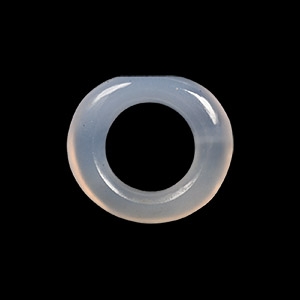
Roman Chalcedony Ring
1st century B.C.-1st century A.D. or laterSold for (Inc. bp): £124
Ellipsoid-shaped with carinated hoop on both inner and outer side. 3.95 grams, 25.55 mm overall, 13.70 mm internal diameter (approximate size British E 1/2, USA 2 1/2, Europe 3, Japan 3)
with H.A.C.A.G., Basel, prior 1999. This lot is accompanied by an illustrated lot declaration signed by the Head of the Antiquities Department, Dr Raffaele D’Amato. This lot is accompanied by an illustrated lot declaration signed by the Head of the Antiquities Department, Dr Raffaele D'Amato.
This ring, with a flat ellipsoid-shaped bezel, is related to type 2i of Roman rings from Gallia, which were usually considered as grave goods. Similar rings have often been found in Illyricum, Salonae, Zadar, Nin or Asseria. -
.jpg)
Roman Mosaic with Floral Motif
4th century A.D.Sold for (Inc. bp): £6,500
A large rectangular polychrome floor mosaic fragment with opposing large flowers and roundels; set in a modern matrix. 38.6 kg, 168 x 50 cm
Embedded in the floor of a reputable jewellery shop in Zurich, installed by the owner in the late 1970s to early 1980s. with Galerie Rhéa, Zurich, Switzerland. This lot has been checked against the Interpol Database of stolen works of art and is accompanied by a search certificate number no.12676-236416. This lot has been cleared against the Art Loss Register database, and is accompanied by an illustrated lot declaration signed by the Head of the Antiquities Department, Dr Raffaele D'Amato. -
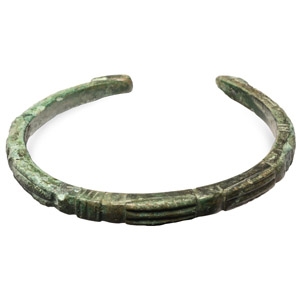
Late Roman Decorated Bronze Military Bracelet
4th-5th century A.D.Sold for (Inc. bp): £124
Thick penannular body with tapering finials, the upper faces divided into decorative panels with linear motifs. 24.1 grams, 65 mm
Ex German art market, 2000s. Acquired from an EU collector living in London. From the collection of a Surrey, UK, gentleman. This lot is accompanied by an illustrated lot declaration signed by the Head of the Antiquities Department, Dr Raffaele D'Amato.
