
Loading, please wait...
LOT 2406
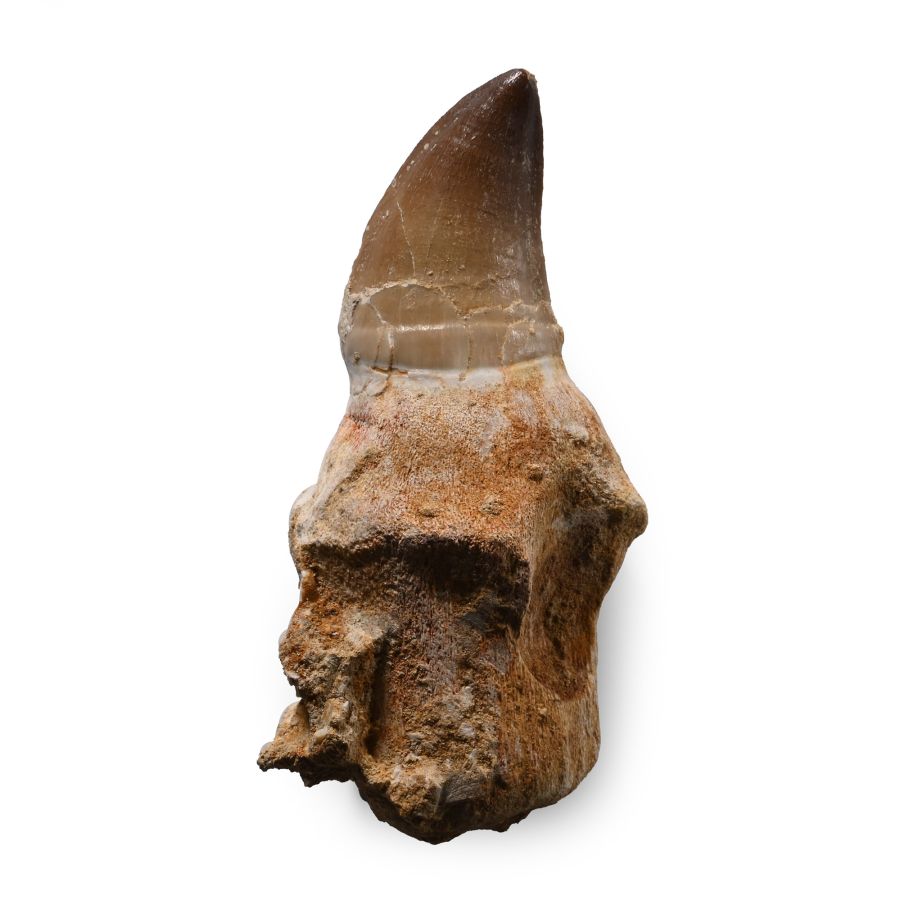
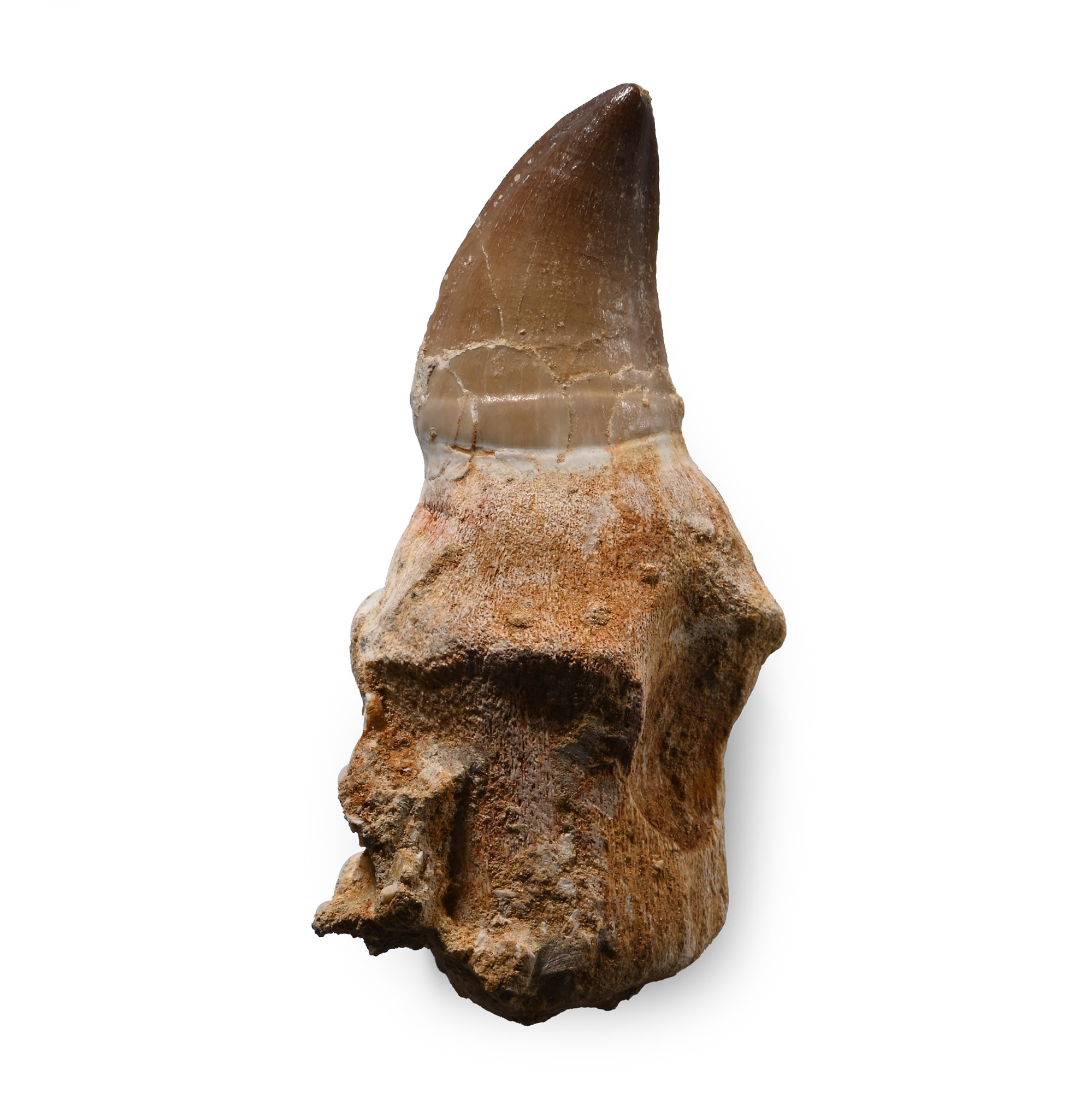
Fossil Mosasaur 'Marine Dinosaur' Tooth with Root
CRETACEOUS PERIOD, 145-65 MILLION YEARS B.P.
3 1/4 in. (60.3 grams, 82 mm).
Showing good enamel and some root. [No Reserve]
ProvenanceFrom Morocco, North Africa.
From a Cambridgeshire, UK, collection.
The Mosasaur is an extinct, large marine reptile dinosaur with an elongated body, long snout and paddle-like limbs. Found worldwide, they competed with other well-known sea predators of the Late Cretaceous, such as plesiosaurs and ichthyosaurs, for food, existing primarily on a diet of ammonoids, cuttlefish and fish.
CONDITIONTimeLine Auctions follows a vetting process to ensure the authenticity and legality of all items, reinforcing our commitment to integrity and responsible trading. Each antiquity, antique, and coin lot undergoes thorough examination by a vetting committee of at least ten external specialists, professional trade association members, scientists, and archaeologists: Our Vetting Process
AUCTIONS:
TimeLine is a leading auction house specialising in antiquities, ancient art, collectables, natural history, coins, medals, and books. Our auctions offer museums, collectors, historians, and enthusiasts the opportunity to acquire unique and historically significant pieces.
-
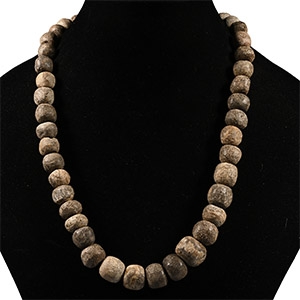
Woolly Mammoth Bone Bead Necklace String
Pleistocene Period, 2.6 million-11,700 years B.P.Sold for (Inc. bp): £104
Restrung using recently polished Mammuthus primigenius bone beads. 191 grams, 56 cm
Ex West country, UK, collection, 1990s onwards.
The mammoth lineage branched from the Asian elephant around 6 million years ago, and later on the Woolly Mammoth, Mammuthus primigenius, evolved in eastern Siberia. Woolly mammoths, being slightly smaller than living African elephants, were foragers and ate grass, as well as small, nutritious flowering plants that flourished in the environment where they lived. They may also have used their curved tusks to dig through snow and eat plants that other foragers were unable to reach. -
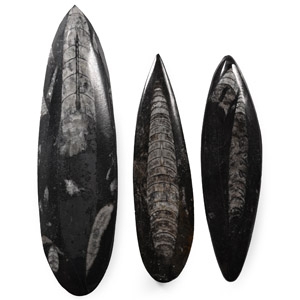
Polished Fossil Orthoceras Group
Devonian Period, circa 400 million years B.P.Sold for (Inc. bp): £13
Comprising three bullet-shaped examples. 271 grams total, 12.3-16 cm
From Atlas Mountains, Morocco, North Africa. From a Cambridgeshire, UK, collection. -
![Polished Mineral Specimen Group [12]](https://timelineauctions.com/upload/images/items/small/228188-s.jpg)
Polished Mineral Specimen Group [12]
Sold for (Inc. bp): £33
Comprising: rhodochrosite, lapis lazuli, labradorite, jade, danburite, quartz, red jasper, purple sodalite, aquamarine. 370 grams total, 20-57 mm
Ex Mineral Imports, London, UK. Gregory, Bottley & Lloyd (Gregory's), Harwich, UK.
