
Loading, please wait...
LOT 0253
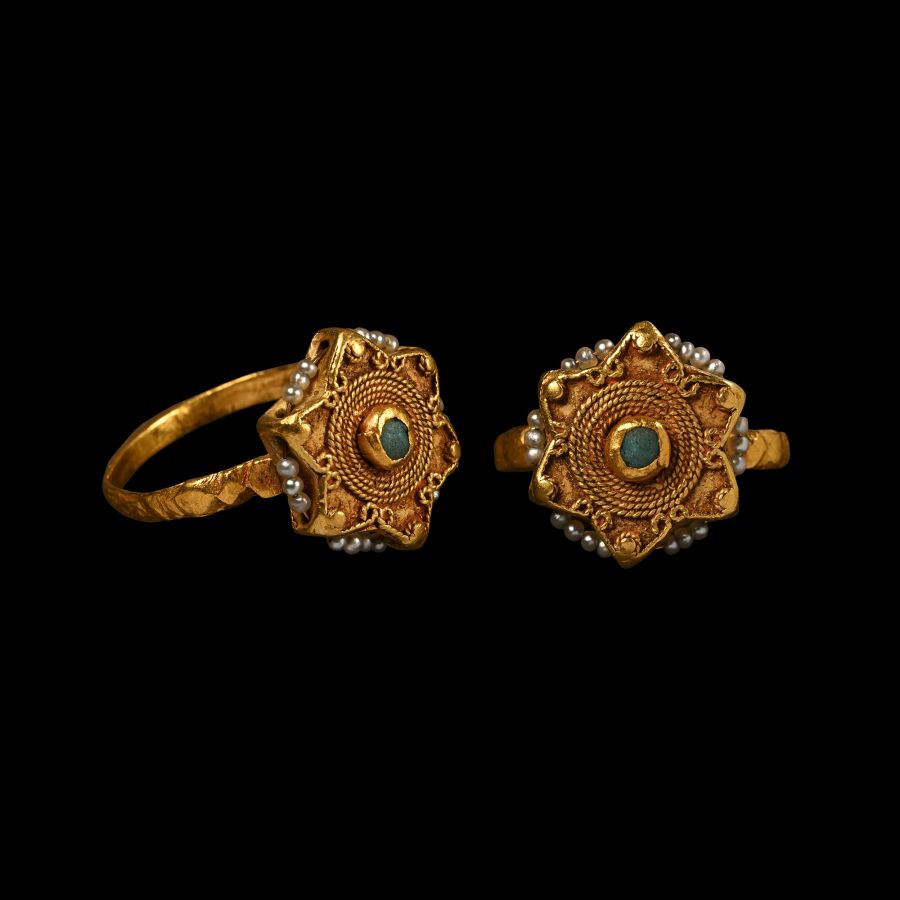
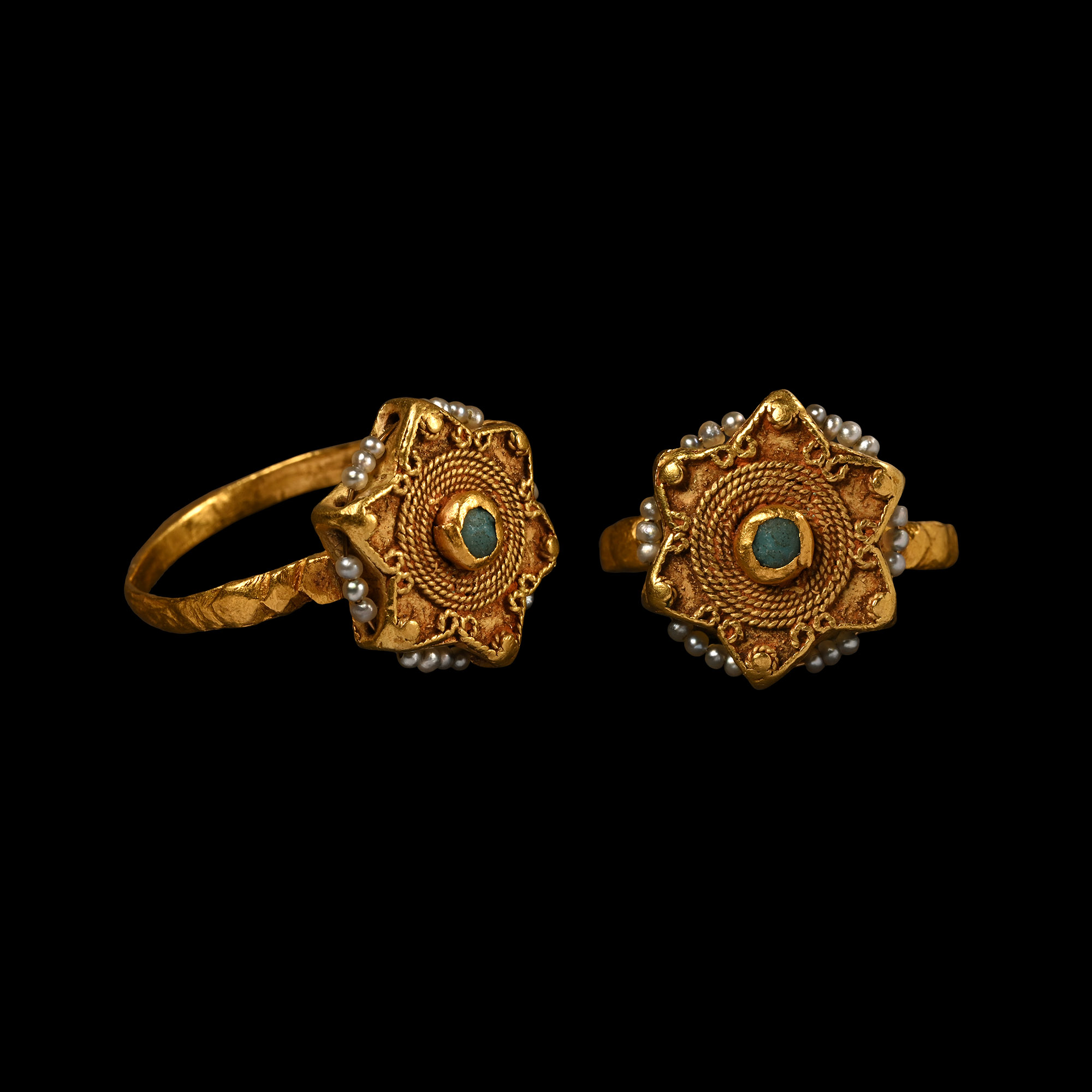
Fatamid Gold Ring with Star-Shaped Bezel with Pearls
EGYPT, 9TH-11TH CENTURY A.D.
1 1/8 in. (6.77 grams, 29.16 mm overall, 20.13 mm internal diameter (approximate size British T 1/2, USA 9 3/4, Europe 21.89, Japan 21)).
Comprising a slender hoop with baluster detailing to the shoulders, box bezel of six radiating points with seed pearls between, concentric bands of filigree surrounding the central cell with turquoise-coloured glass cabochon; replaced seed pearls on modern wire. [No Reserve]
ProvenancePrivate USA collection.
Acquired from the Alexander Gallery, New York, USA, in the early 2000s.
Cf. Content, D.J. (ed.), Islamic Rings & Gems. The Zucker Collection, London, 1987, item 43, for a less impressive example of the type.
CONDITIONTimeLine Auctions follows a vetting process to ensure the authenticity and legality of all items, reinforcing our commitment to integrity and responsible trading. Each antiquity, antique, and coin lot undergoes thorough examination by a vetting committee of at least ten external specialists, professional trade association members, scientists, and archaeologists: Our Vetting Process
AUCTIONS:
TimeLine is a leading auction house specialising in antiquities, ancient art, collectables, natural history, coins, medals, and books. Our auctions offer museums, collectors, historians, and enthusiasts the opportunity to acquire unique and historically significant pieces.
-
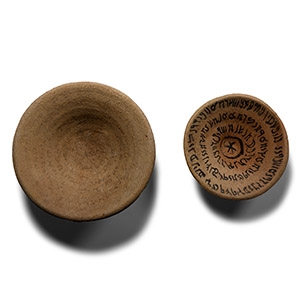
Aramaic Terracotta Magic Bowl with Cursive Script
4th-8th century A.D.Sold for (Inc. bp): £468
An unglazed terracotta trumpet-shaped bowl with the faint remains of Aramaic-script to the inside; accompanied by a smaller bowl with three concentric rings of recently overpainted pseudo Aramaic-script to the upper face. 277 grams total, 9.5-12.4 cm
Acquired on the German art market, 1989-1995. with The Museum Gallery, 19 Bury Place, London, WC1, UK, 1998-2003. Property of a London based academic, 2003-present.
Aramaic incantation bowls are particular to the Sassanian period and have been found in regions of modern Iraq. These simple ceramic bowls, also known as magic bowls, each contain an Aramaic inscription, written in ink, which spirals from the centre. The bowls seem to have played an important part in domestic life. For example, during excavation in Nippur in 1889, one or more incantation bowls were found in each house together with domestic artefacts, most often in doorways or under floorboards in the corner of rooms. The bowls are predominantly apotropaic, and the inscriptions tend to protect their owners from misfortunes such as those faced in child-birth, illness and evil spirits. -
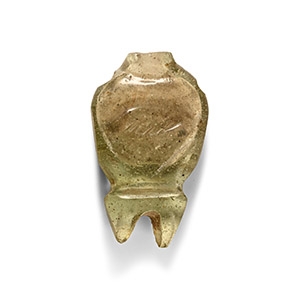
Western Asiatic Glass Balsamarium
Circa 12th-14th century A.D.Estimate: £300 - 400 (+bp*)
Opening Bid: £150
Teardrop-shaped glass vessel with low-relief eye motif to each face, low neck, 'molar' detailing to the base. 7.89 grams, 36 mm
Ex collection of the Chierroni family, Paris, France, formed between 1980-1990s. Property of a French collector. -

Neo-Babylonian Chalcedony Duck Weight with Engraved Figure
Circa 8th-6th century B.C.Sold for (Inc. bp): £169
The animal carved with its head and neck resting along its back; stylised figure with crescent horns or headdress engraved to base; pierced for suspension. 5.07 grams, 21 mm
From an early 20th century collection, Caernarfon, North Wales, UK.
A corpus of similar pieces was found by Italian archaeologists in the city of Karkemish. They were produced and in use in the Iron Age I-III (i.e. from ca. 1190 B.C., date of the collapse of the Hittite Empire and the rise of the “Great Kings” of Karkemish, to 605 B.C., date of the “battle of Karkemish”, when the Babylonian army conquered the city.
