
Loading, please wait...
LOT 0292
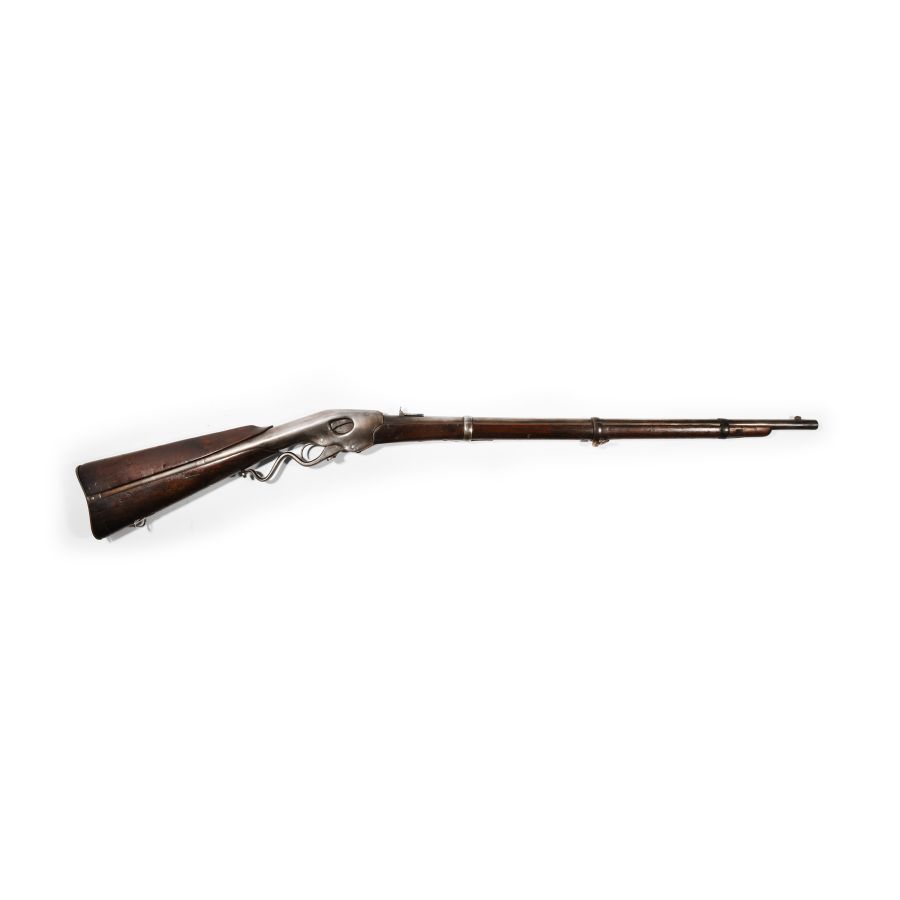
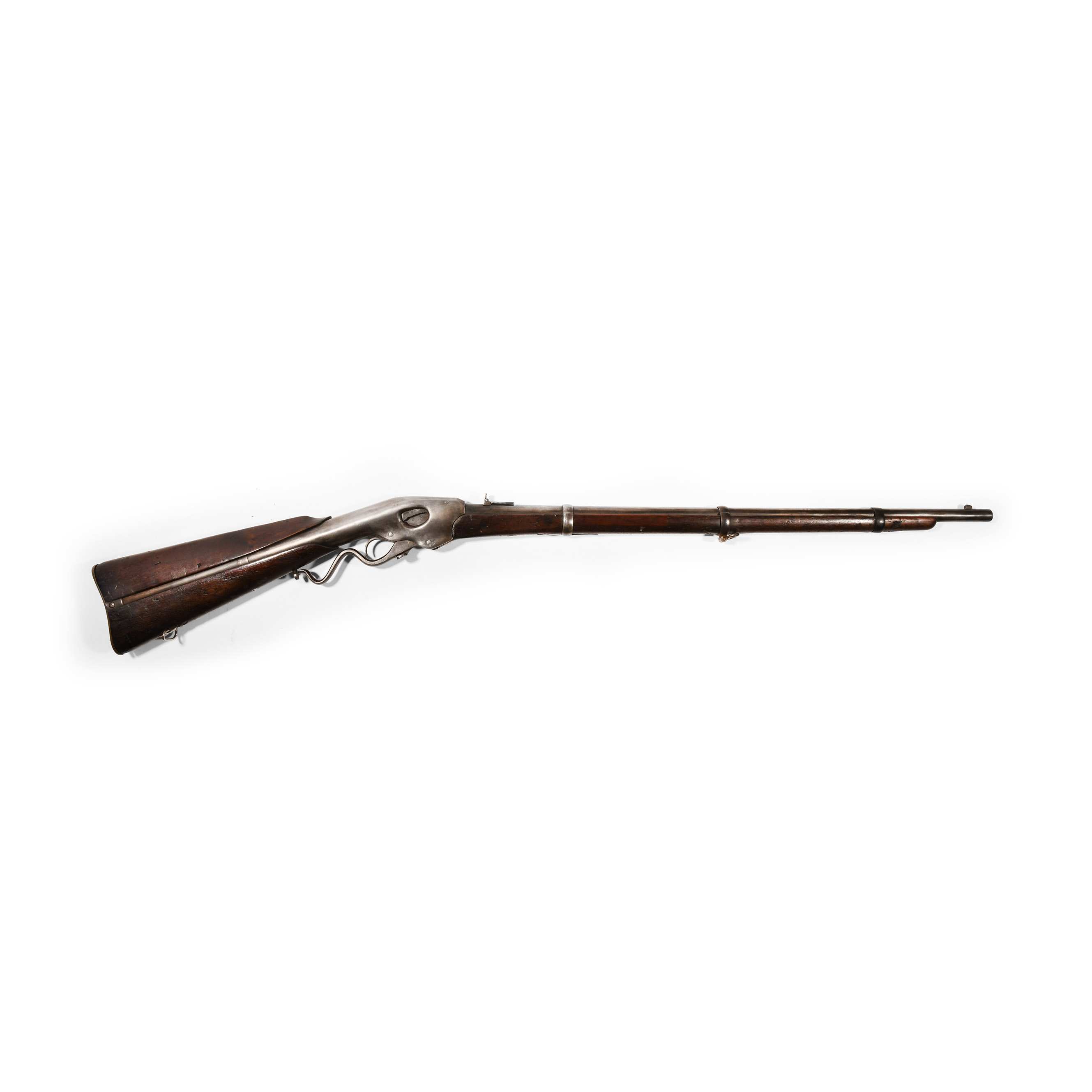
Evans Transitional 34-Shot Musket
1866-1867 A.D.
46 in. (3.85 kg, 117 cm).
By Evans Repeating Co, with 71 cm (28") round barrel with 34 shot tubular magazine in butt and hinged back-sight, two-piece wood stock with steel butt plate, sling swivels, and collars; action working well and believed only 150 made.
ProvenanceAcquired from M J Noble Ltd, UK, 2015.
The Kusmirek Collection, UK.
Accompanied by copies of the purchase invoice and listing.
See Flayderman, N., Guide to Antique American Firearms, 9th edition, 2007, pp.694-695, for details.
FootnotesSold as an exempt item under Section 58 (2) of the Firearms Act, 1968, to be held as a curiosity or ornament. No license required but buyer must be over 18 years of age. Overseas bidders should note that, due to UK regulations governing export of all firearms, overseas buyers will need to make arrangements for shipping this lot out of the UK directly, by air freight, with a specialist company or agent.
CONDITIONTimeLine Auctions follows a vetting process to ensure the authenticity and legality of all items, reinforcing our commitment to integrity and responsible trading. Each antiquity, antique, and coin lot undergoes thorough examination by a vetting committee of at least ten external specialists, professional trade association members, scientists, and archaeologists: Our Vetting Process
AUCTIONS:
TimeLine is a leading auction house specialising in antiquities, ancient art, collectables, natural history, coins, medals, and books. Our auctions offer museums, collectors, historians, and enthusiasts the opportunity to acquire unique and historically significant pieces.
-
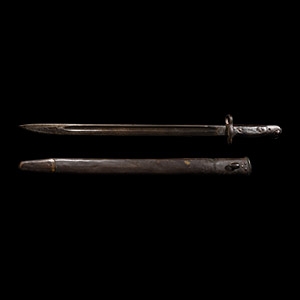
Siamese 'Wild Tigers Corps' Type 62 Pattern 1907 Bayonet and Scabbard
Dated 1919 A.D.Sold for (Inc. bp): £78
Stamped 2642 in Thai numerals at top of blade with 'tiger mask' mark for Siam, together with original British marks, fitted with wood grip scales and spring release button; the scabbard with original throat and chape, modified in Thailand to replace the original leather main section. 726 grams, 58.5 cm
Property of a Luton, UK gentleman, by inheritance.
The Type 62 is a re-badged British Pattern 1907 bayonet. Siam purchased 10,000 SMLE rifles and Pattern 1907 bayonets from Britain in 1919 to equip the 'Wild Tiger Corps', royal bodyguard of Vajiravudh, King Rama VI (reigned 1910–1925). The tiger figural on the ricasso is representative of the Wild Tiger Corps. Year 2462 on the Buddhist Calendar corresponds to 1919. SMLE rifles and Pattern 1907 bayonets were taken from British stocks, refurbished by Birmingham Small Arms (BSA), and remarked with Siamese markings. The bayonets were shipped with standard steel-mounted leather scabbards. However, the leather rapidly deteriorated in the tropical climate, so the Siamese made a replacement steel scabbard body to which the original steel mounts were brazed. -
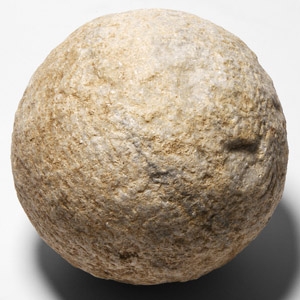
Roman Marble Ballista Catapult Shot
1st-3rd century A.D.Sold for (Inc. bp): £169
Suitable for use with an onager or other catapult-type siege weapon; with smooth surface. 1.4 kg, 10 cm
Acquired 1971-1972. From the collection of the vendor's father. Property of a London, UK, collector.
The operation of the onager (Latin for 'wild ass') is first mentioned in 353 A.D. by Ammianus Marcellinus in his Res Gestae and more fully in Vegetius's Epitoma Rei Militaris probably written in the reign of Emperor Theodosius I (378-395 A.D.). -
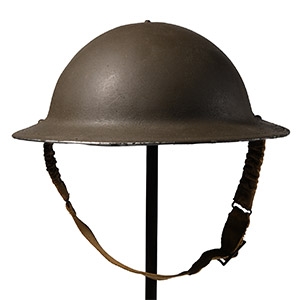
British WWII 'Tommy's' Helmet
1939-1945 A.D.Sold for (Inc. bp): £130
Standard issue steel helmet with leather liner and fabric chin-strap, finished green. 1.14 kg, 31 wide
The Kusmirek Collection, UK.
