
Loading, please wait...
LOT 1543
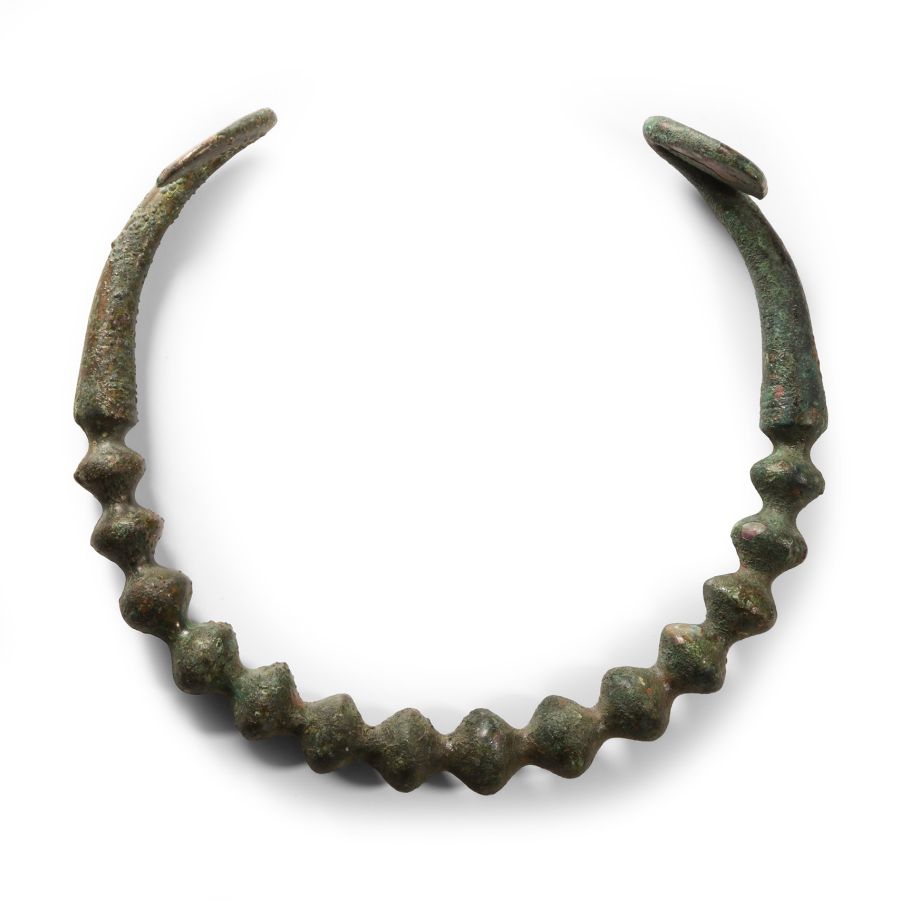
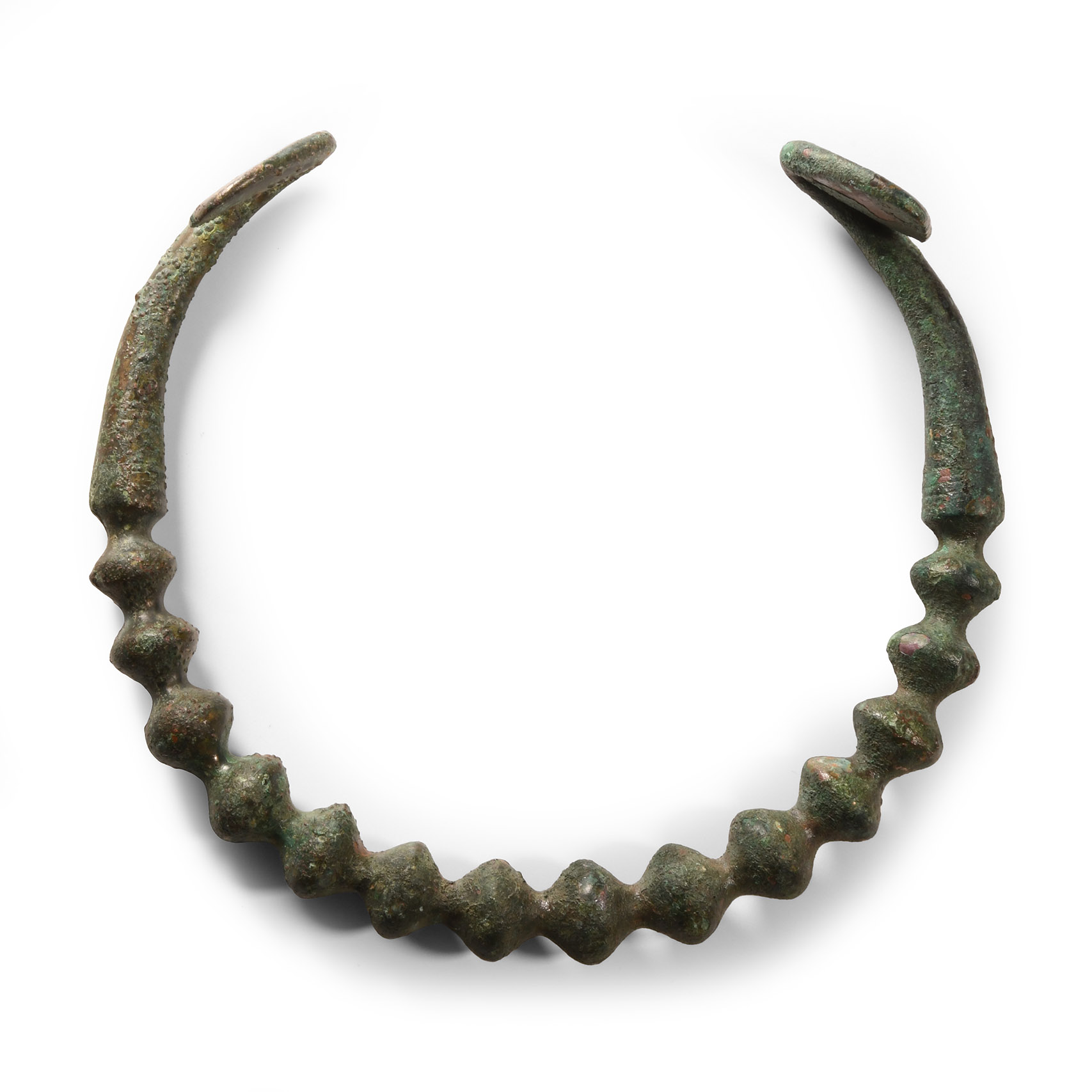
European Iron Age Celtic Bronze Torc
CIRCA 3RD-2ND CENTURY B.C.
5 3/4 in. (275 grams, 14.5 cm).
The penannular body formed with graduated biconical bulbs, recurved tapering terminals. [No Reserve]
ProvenanceEx old English collection.
London art market, 1980s.
TimeLine Auctions follows a vetting process to ensure the authenticity and legality of all items, reinforcing our commitment to integrity and responsible trading. Each antiquity, antique, and coin lot undergoes thorough examination by a vetting committee of at least ten external specialists, professional trade association members, scientists, and archaeologists: Our Vetting Process
AUCTIONS:
TimeLine is a leading auction house specialising in antiquities, ancient art, collectables, natural history, coins, medals, and books. Our auctions offer museums, collectors, historians, and enthusiasts the opportunity to acquire unique and historically significant pieces.
-
.jpg)
Iron Age Celtic Lead 'Wheel Money' Group
Late 1st millennium B.C.Sold for (Inc. bp): £65
Three Eastern Celtic or Gaulish cast wheels; two with eight-knops and one four-spoked type. 16.6 grams total, 15-24 mm
Acquired on the UK art market. Ex the late Walter Steinberg collection, London, UK. Acquired on the UK art market in 2014. From the property of a Kent lady collector. -
.jpg)
Romano-Celtic Bronze 'Raskelf' Dragonesque Brooch
Circa 75-175 A.D.Sold for (Inc. bp): £416
Comprising the majority of the S-shaped brooch with a transverse band across the centre filled with triangular and lozenge cells with enamel; the head with a large eye with light blue enamel, ridged and curving ear-terminal above; pin coiled around the neck of the beast. 7.4 grams, 50 mm
Found whilst searching with a metal detector near North Yorkshire, UK, in 10 May 2023, by Mark Didlick. Accompanied by a copy of the British Museum's Portable Antiquities Scheme (PAS) report no.YORYM-1AFB8C. -
.jpg)
'The Kilburn' Iron Age Celtic Bovine Bowl Mount
Circa 100 B.C.-300 A.D.Sold for (Inc. bp): £1,820
A substantial head with a convex front and concave back with a loop above, pierced eye sockets to accept glass inserts with one in situ; large projecting horns curving forwards in front of the ears; remains of two ferrous rivets to the reverse. 80.8 grams, 68 mm
Found whilst searching with a metal detector near North Yorkshire, UK, in 3 August 2020, by Mark Didlick. Accompanied by a copy of the British Museum's Portable Antiquities Scheme (PAS) report no.YORYM-76CAE2.
