
Loading, please wait...
LOT 1260
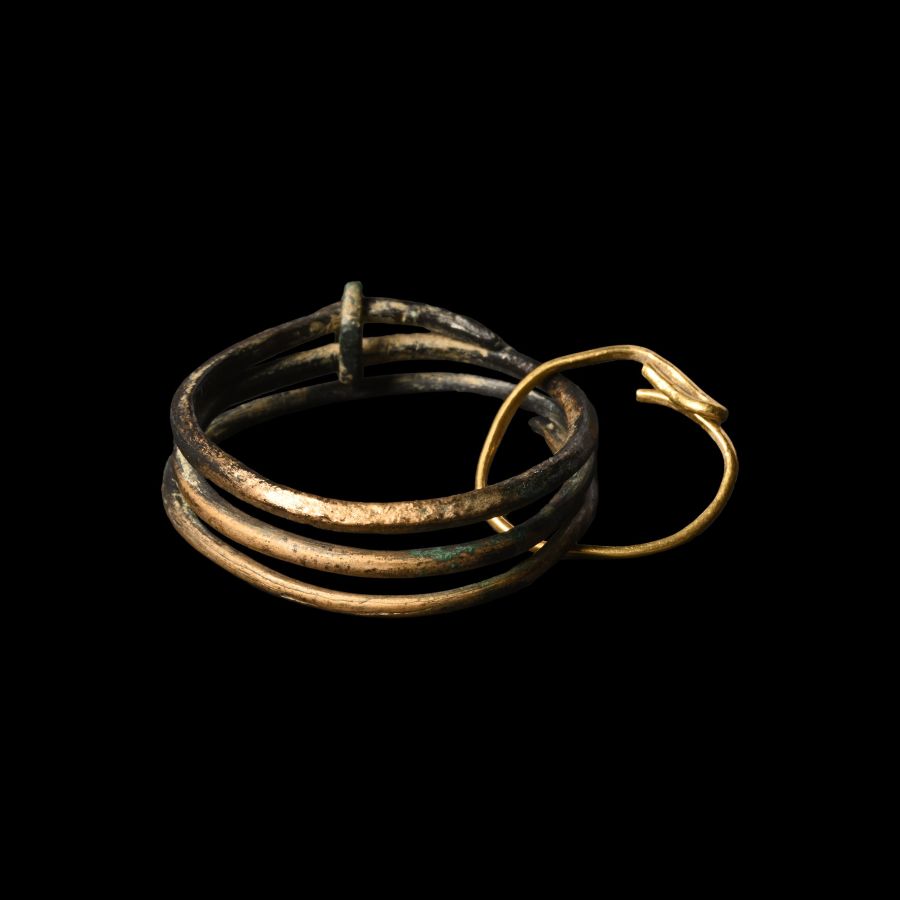
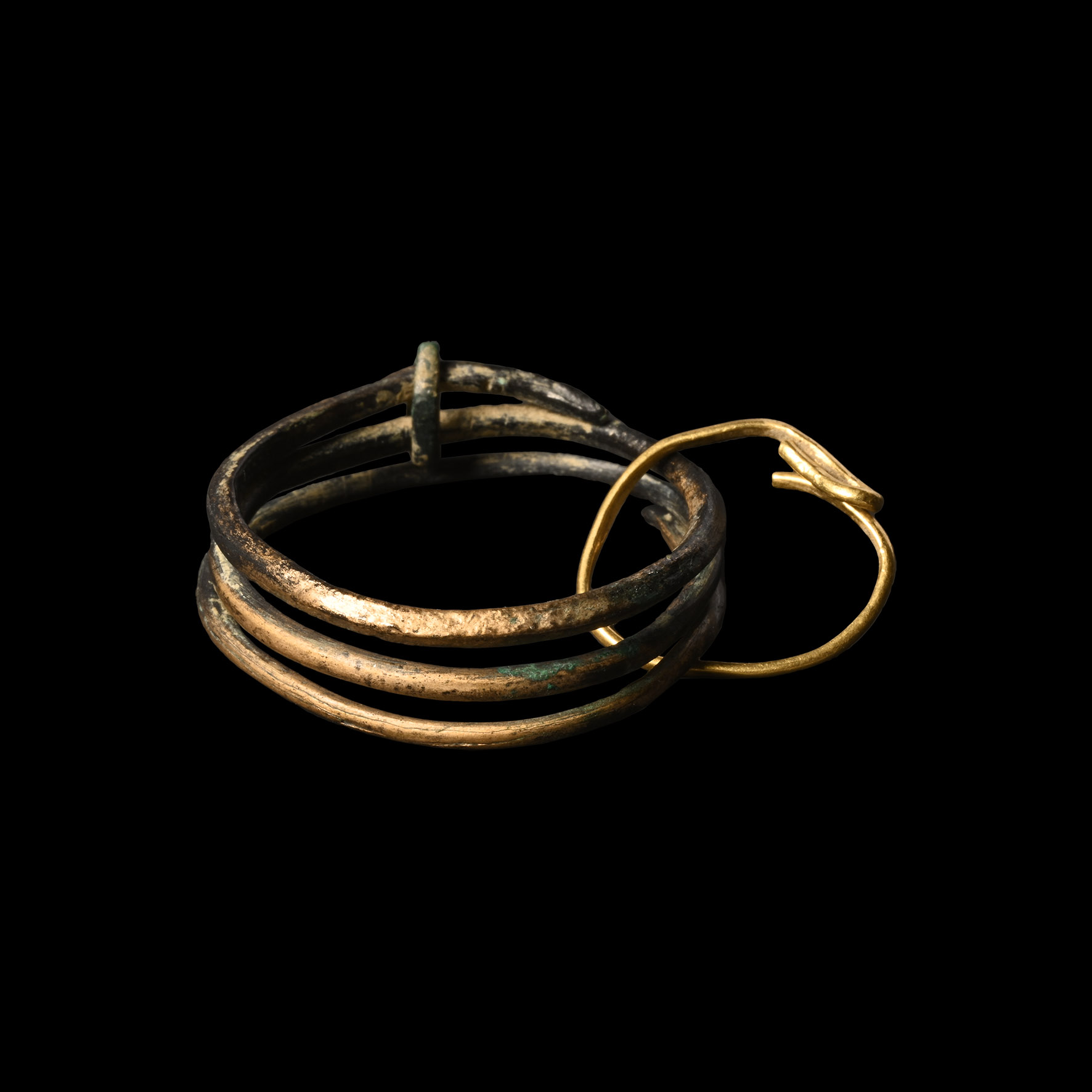
European Bronze Age Finger Ring with Attached Gold Earring
CIRCA 10TH CENTURY B.C.
1 5/8 in. (5.71 grams, 43 mm).
Coiled bronze square-section rod with small bronze securing collar, linked gold hoop earring with one returned end.
ProvenanceEx German art market 1980s.
J.L. collection, Surrey, UK, 1990s.
TimeLine Auctions follows a vetting process to ensure the authenticity and legality of all items, reinforcing our commitment to integrity and responsible trading. Each antiquity, antique, and coin lot undergoes thorough examination by a vetting committee of at least ten external specialists, professional trade association members, scientists, and archaeologists: Our Vetting Process
AUCTIONS:
TimeLine is a leading auction house specialising in antiquities, ancient art, collectables, natural history, coins, medals, and books. Our auctions offer museums, collectors, historians, and enthusiasts the opportunity to acquire unique and historically significant pieces.
LOT 1260
European Bronze Age Finger Ring with Attached Gold Earring
Sold for (Inc. bp): £140
-
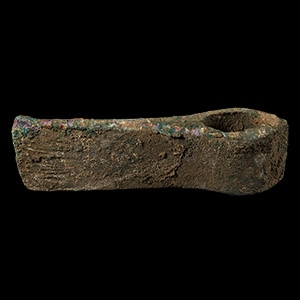
Bronze Age Central European Axehead
Circa 1st millennium B.C.Estimate: £100 - 140 (+bp*)
Opening Bid: £40
With an elliptical socket and wedge-shaped cheeks. 894 grams, 17.5 cm
Acquired 1990s-early 2000s. East Anglian private collection. -
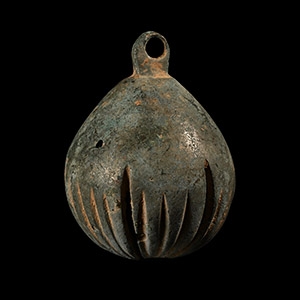
Bronze Age Rumbler Bell
1st millennium B.C.Sold for (Inc. bp): £98
With incuse rib detailing to the open lower body. 42 grams, 41 mm
English collection, early 2000s. Ex central London gallery. -
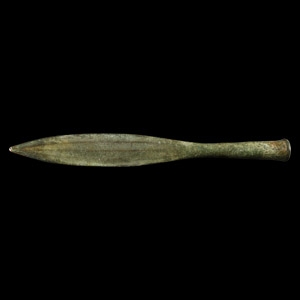
European Bronze Age Socketted Spear
12th-11th century B.C.Estimate: £400 - 600 (+bp*)
Opening Bid: £200
Composed of a round-section open socket, narrow leaf-shaped blade with shallow groove. 228 grams, 28.5 cm
From a German collection, pre 1970. Ex North American private collection, 1980s. Surrey, UK, collection,1990s.
The shape of the blade resembles a willow leaf. Its widest part is situated in the middle of its length; the origin of this shape is still not very clear. It was probably invented somewhere in Anatolia or the Near East. In the Aegean it appears for the first time in LH II A, but this particular type in South-eastern Europe found correspondence especially with specimens from Lessura and Krichim, and are possibly of Balkan origin.
