
Loading, please wait...
LOT 1255
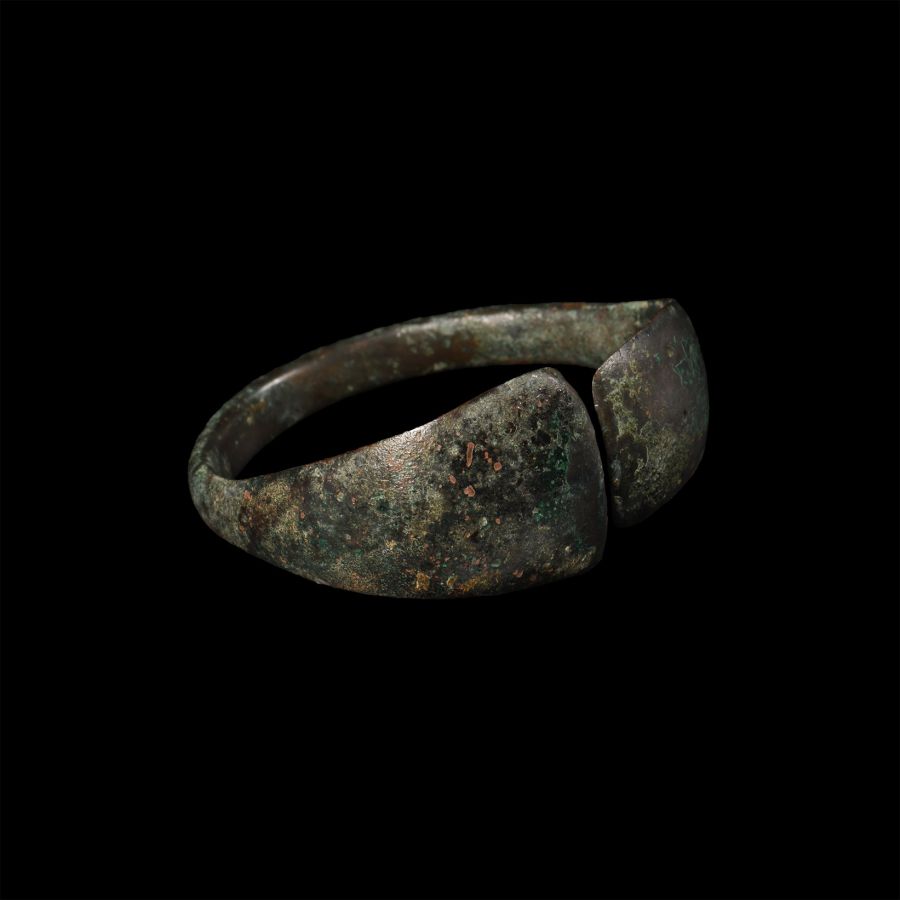
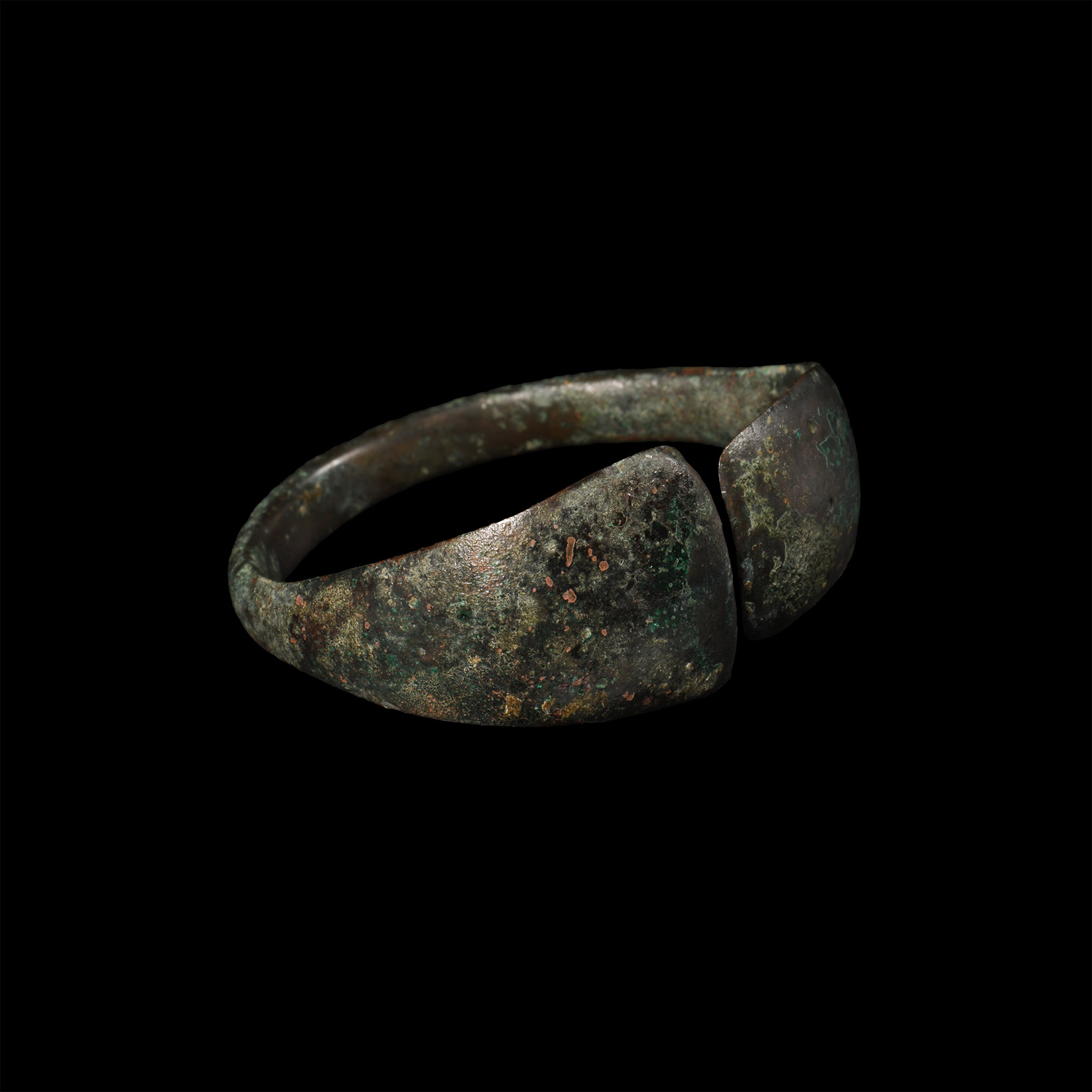
European Bronze Age Bracelet with Flared Terminals
CIRCA 8TH-6TH CENTURY B.C.
2 3/8 in. (33 grams, 60 mm wide).
Composed of a penannular hoop with convex outer face and enlarged terminals with recessed circles just visible. [No Reserve]
ProvenanceUK collection, early 1990s and before.
Acquired on the UK art market since the early 2000s.
From a private collection, Lancashire, UK.
TimeLine Auctions follows a vetting process to ensure the authenticity and legality of all items, reinforcing our commitment to integrity and responsible trading. Each antiquity, antique, and coin lot undergoes thorough examination by a vetting committee of at least ten external specialists, professional trade association members, scientists, and archaeologists: Our Vetting Process
AUCTIONS:
TimeLine is a leading auction house specialising in antiquities, ancient art, collectables, natural history, coins, medals, and books. Our auctions offer museums, collectors, historians, and enthusiasts the opportunity to acquire unique and historically significant pieces.
-
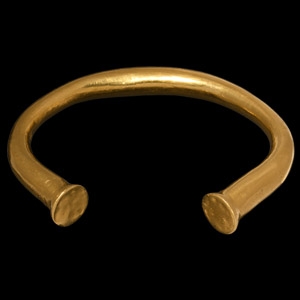
Bronze Age Gold Bracelet with Torc-Shaped Terminals
1st millennium B.C.Sold for (Inc. bp): £11,440
Of penannular form with expanded sections at the centre and to both shoulders. 138 grams, 79 mm wide
From the collection of a North American gentleman, formed in the 1990s. Ex old English collection, formed in the 1970s. This lot has been checked against the Interpol Database of stolen works of art and is accompanied by search certificate no.200277. -
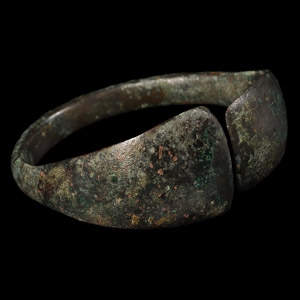
European Bronze Age Bracelet with Flared Terminals
Circa 8th-6th century B.C.Sold for (Inc. bp): £65
Composed of a penannular hoop with convex outer face and enlarged terminals with recessed circles just visible. 33 grams, 60 mm wide
UK collection, early 1990s and before. Acquired on the UK art market since the early 2000s. From a private collection, Lancashire, UK. -
.jpg)
Bronze Age Decorated Pick
13th-9th century B.C.Sold for (Inc. bp): £715
Comprising a central bronze tube with bulbs and flanged ends, two angled lateral spikes with lugs beneath and two more lugs to the sides of the shaft, pointillé starburst to the flanges, notch and other detailing to the shank. 700 grams, 24.5 cm wide
From a private European collection; formed in the 1980s. From the collection of a North American gentleman.
