
Loading, please wait...
_900x900.jpg "European Articulated Gauntlet Pair")
_200x200.jpg "European Articulated Gauntlet Pair")
.jpg "European Articulated Gauntlet Pair")
LOT 0276
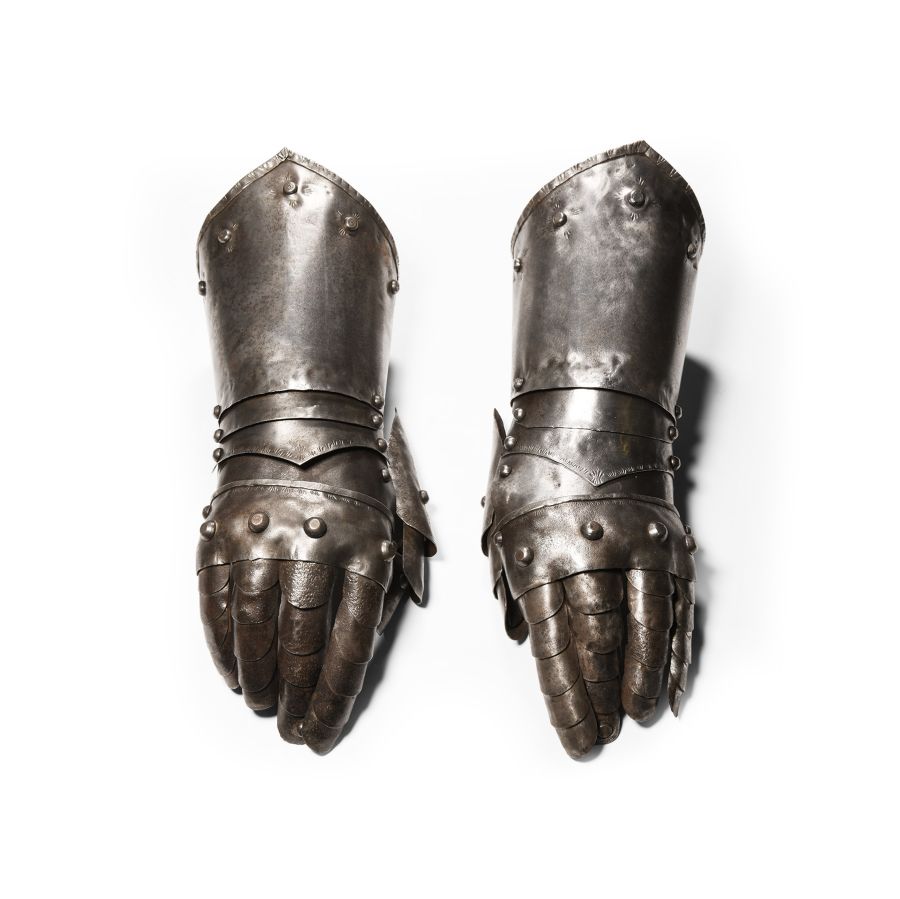
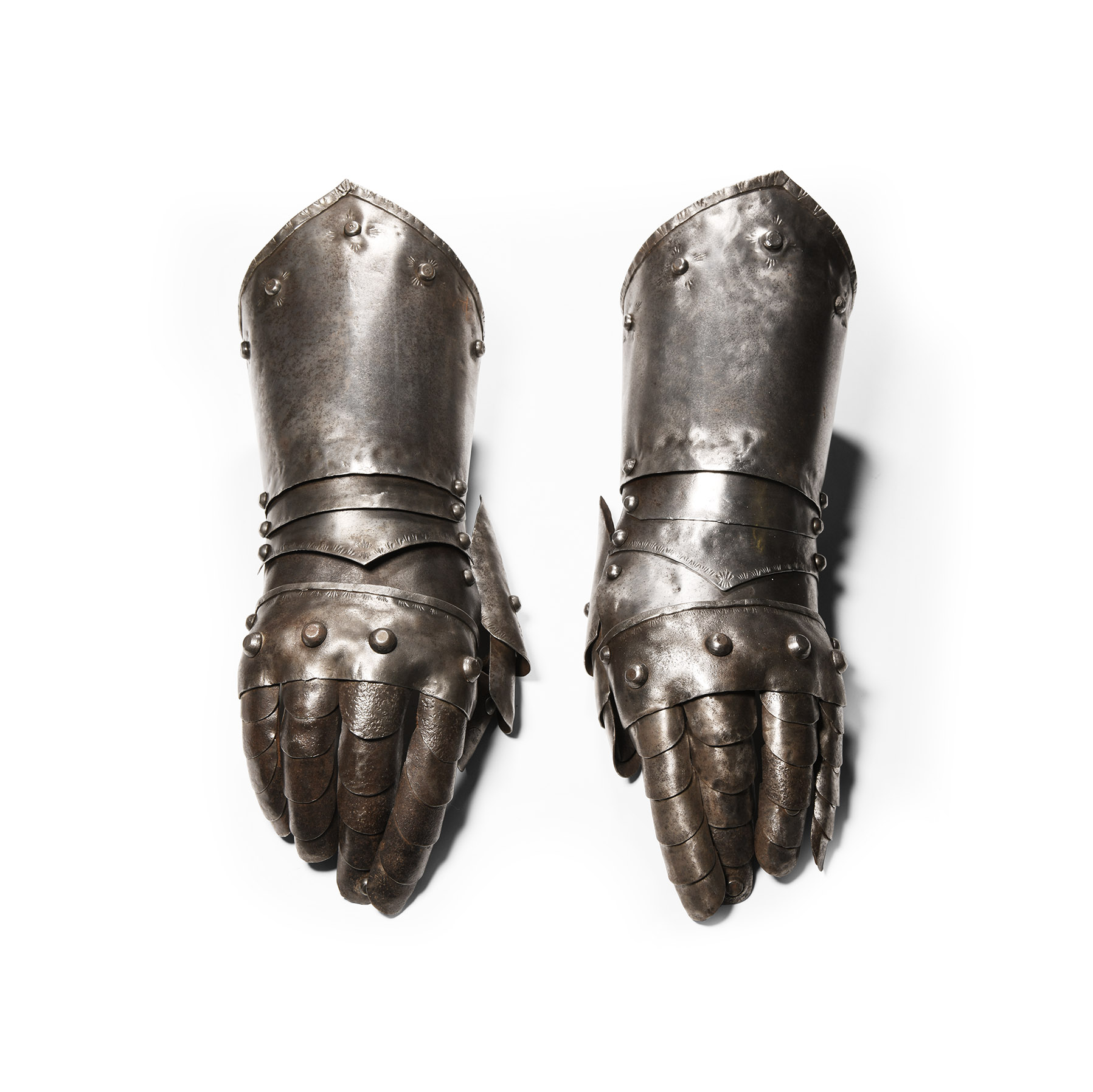
European Articulated Gauntlet Pair
CIRCA 1600 A.D.
13 3/4 in. (1.35 kg total, 35 cm each).
Each with nail detailing to the thumb and sprays of dashes decorating the edges, ridges and rivets of certain plates; leather lining possibly not original and rivets possibly re-fitted. [2]
ProvenanceAcquired from Peter Bunting Antiques.
The Kusmirek Collection, UK.
Accompanied by copies of an invoice and previous listing.
TimeLine Auctions follows a vetting process to ensure the authenticity and legality of all items, reinforcing our commitment to integrity and responsible trading. Each antiquity, antique, and coin lot undergoes thorough examination by a vetting committee of at least ten external specialists, professional trade association members, scientists, and archaeologists: Our Vetting Process
AUCTIONS:
TimeLine is a leading auction house specialising in antiquities, ancient art, collectables, natural history, coins, medals, and books. Our auctions offer museums, collectors, historians, and enthusiasts the opportunity to acquire unique and historically significant pieces.
-
.jpg)
Pseudo-Illyrian Chalcidian Variant Bronze Helmet
4th-1st century B.C.Estimate: £5,000 - 7,000 (+bp*)
Opening Bid: £1,667
Large rounded two-part bowl rivetted beneath the repoussé crest extending across the brow and around the circumference; repoussé arches above the eyes extending to the nasal; lateral D-shaped cheek-pieces with scallop to the forward edge, pierced for a chin-strap; some restoration of the bowl and one cheek-piece; mounted on a custom-made display stand. 4.7 kg total, 48 cm high including stand
Acquired 1971-1972. From the collection of the vendor's father. Property of a London, UK, collector. Accompanied by an academic report by Dr Raffaele D’Amato. This lot has been checked against the Interpol Database of stolen works of art and is accompanied by search certificate number no.11751-202770.
According both to Symonenko and Dedjulkin (2014, p.189, fig.9, nn.4-5-6), this category of helmet derives from Chalcidian types (with pseudo-Illyrian elements). As with Chalcidian helmets, our specimen shows vertical decorative lines on the bowl and triangular brow ornament. Distinct from Attic types, it does not have a protruding neck guard introduced on variant III of such helmets (Symonenko, 2014, fig. 15,2-3). According to Dedjulkin, these helmets derive from Greek prototypes, but are simplifications of the original models and made by local artisans. They were widely worn by mercenaries in the Hellenised armies of Pontus and other Hellenistic kingdoms across the Eastern Mediterranean. -
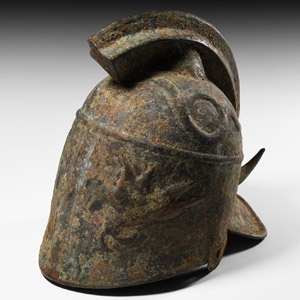
Greek Style Bronze Helmet
20th century A.D.Sold for (Inc. bp): £130
Featuring hammered helmet detailing together with mythical creatures and coiled snakes. 1.5 kg, 30.5 cm high
Acquired 1990s-early 2000s. East Anglian private collection.
The helmet is modelled upon the pseudo-Corinthian models of antiquity. The gryphon represented refers to the wars between these mythological creatures and the Arimaspes. -
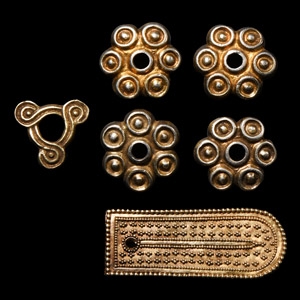
Avar-Byzantine Silver-Gilt Sword Belt Mount Group
7th century A.D.Estimate: £200 - 300 (+bp*)
Opening Bid: £80
Comprising six mounts: four 'floral' plates composed of six raised pellet-in-ring motifs arranged around a central hole, some mounting lugs remaining to the reverses; an openwork knotwork type with three mounting lugs to reverse; a hollow-formed rectangular plate with one rounded end, granulated borders framing granulated clusters arranged in orderly rows around a central arm and piercing; granulated border to reverse. 25.1 grams total, 18-48 mm
Fine condition.
Acquired in the 1980s-1990s. Ex an important central London gallery, London W1.
This type of belt element decorated with granulation, is present in the Avar graves of the second half of the 7th century, and was most likely produced in the workshops of the Eastern Roman Empire, from where they reached the Avar lands as imperial gifts (tomb of Kunbàboni) or spoils of war. They were part of multiple belts, to which sabers and knives were attached, commonly used among Avars, Bulgars and Romans during the 7th and 8th centuries AD.
